Taking A Blogging Break

I never quite know where I’m going with my writing, as I always just trust my unconscious has a plan and go with my intuition. After a week of not writing my blog, it seems like I’m taking a blogging break! I’m writing a new book now, and I write best when I turn off the internet and stay away from blogging and social media for a while.

So rather than completely disappear without warning I thought I’d let you know, that I’m taking a break, and will write less often, or perhaps not at all, depending on where my inspiration takes me!

And in the meantime I wanted to share about all the other wonderful Hand in Hand Parenting resources out there.

There is the main Hand in Hand website which has hundreds of articles on almost every possible parenting challenge you can imagine. Sign up to their newsletter and get a free e-book for handling tantrums. You can also sign up for the regular free teleseminars, the next ones are on Helping children after trauma and What To Do When We Mess Up As Parents.

And there’s other Hand in Hand Parenting instructors bloggers out there. Here are a few from the UK, Emilie Leeks, from Journeys in Parenting, Stephanie Parker, and Roma Norriss at Birthing A Better World, and in Germany there’s Anca Deaconu.

There is also our wonderful Hand in Hand parents support facebook group, with lots of experienced parents sharing advice for using our tools.

I’ll still be around on facebook and twitter, and offering workshops and consultations. I’ll be teaching a new online starter class beginning in the new year. So keep in touch and feel free to reach out when you need help with your parenting.

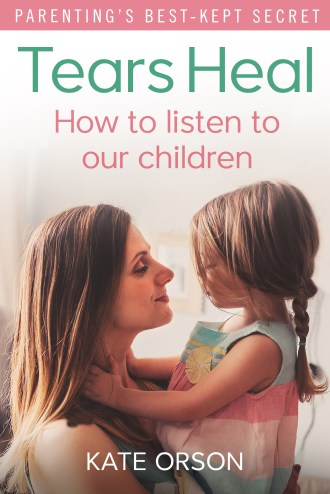
And if you’d like to read more from me, there is of course my book Tears Heal!

Tears Heal2016

Why Distracting Your Child From Having Tantrums Makes Parenting Harder

tantrum100.jpg

It seems natural to use distraction as a form of tantrum management. When parents sense a storm brewing they may quickly try to cheer their toddler up by making a funny face, or pointing out something interesting, getting them a snack, or just about anything. And then breath a sigh of relief when the storm has passed.

Distraction comes as easily as breathing. We all do it, or have done it, including me!

Tantrums are one of the most challenging behaviours we have to face, so why would I suggest that it actually makes parenting harder to distract children from them?

Here’s why: when your child is on the brink of a tantrum, She’s not feeling good. She’s feeling a storm of unhappiness and stress and tension. To feel better your child actually needs to get the tantrum out. She needs to rage and storm, and cry, and move through anger, so that she can come back to feeling good, as nature intended – by actually having the tantrum.

When we distract or try to stop a tantrum that tantrum is still there, inside of your child. It’s going to come out sooner or later. It might come out in another tantrum, five minutes or five hours later. Those upset feelings might also come out indirectly through off-track behaviour -such as aggression, whining, moaning, and just about any other form of ‘misbehaviour’ is actually due to unexpressed feelings. Distracting tantrums appears to work on the surface, but overtime those feelings will manifest in other more challenging ways.

This information won’t come as news to you if you’re a regular reader of my blog, but as I still often see parenting experts misinforming parents and telling them to distract their children I felt the need to write about it again! Distraction may be a good emergency measure for weddings or funerals, but as a regular parenting technique it’s going to make your job much harder, and it will also effect your child’s wellbeing.

I think sometimes we think that since our little toddlers are crying about such small and inconsequential things, that their emotions are inconsequential too, and so we should avoid them. However that red cup they wanted instead of the blue cup feels enormous in their world at that moment, so we can empathise with them rather than avoid, and also acknowledge that their may be a deeper upset below the surface that they can’t articulate in words.

I really like this blog post from MindfulMummyMission, in which she describes how we can learn about Mindfulness from the Disney film Inside Out. One of the big messages of the film is to stay with the sadness, to feel it and let it go rather than avoid it and try to fix things. No matter how small our little ones are, they need to have their big emotions heard.

Parenting becomes easier when we take a mindful, listening approach to our children’s tantrums. When we sense a tantrum brewing, we can slow down, and connect, set limits if necessary, giving them eye-contact, and offering hugs. When we do so we give them the message that their feelings are allowed, that we welcome them.  Our child’s tantrum may go on for longer, because they sense that we are available to listen to them. But over time they will have less tantrums  because they get their feelings out.

If you’re dealing with any kind of behaviour challenges with your child, things will improve radically if you move from distracting tantrums to listening. A lot of the behaviours that we dismiss as being unavoidable issues for toddlerhood such as sharing struggles, aggression, night-waking or power struggles can all be dissolved with a listening approach.

It doesn’t take long to turn around your parenting approach from distraction to listening. Even I am always amazed and overjoyed when I hear stories like this one from Cherry at The Newby Tribe blog who describes how she now has a deeper connection with her son, (and less tantrums!) since reading my book Tears Heal and putting the ideas into practise.

As well as the benefits for us, there are of course a myriad of benefits for our children. They get to know their emotions, and how to process them instead of bottling them up. They build their emotional intelligence and have more empathy and understanding of other children’s emotional moments because they know what it’s like themselves. They grow up having deeper relationships, because they don’t run a mile from their own emotions or other people’s.

And they will be happier. Research shows how adults in therapy make better progress in their lives when they cry during therapy. Really what our children are trying to do is have little (or big!) therapy sessions so that they don’t grow up to be one of the 1-4 people who will have mental health difficulties in the adulthood. It’s a pretty smart move really to throw a tantrum, and all we need to do is stay and listen.

Having said all that, although listening to tantrums will make your parenting life easier, it can still be challenging! We didn’t have this kind of deep listening for our own feelings as children. That’s why as parents we need to find support for our own feelings. Read my blog post here about how we can catch up on our own tears from childhood so that parenting can be a healing path for ourselves and our children.

Life with Baby Kicks

A Hand in Hand Parenting Approach To Screen Detox

ipad

With Hand in Hand Parenting we’re not a one-size fits all approach. We don’t recommend you breastfeed or bottle feed, or co-sleep or put your children in their own bedroom, or homeschool or send your kids to school. We know that with these big decisions, it comes down to you being the best judge of what is right for your family.

What we do have is amazing tools to help you figure out your decisions, (listening time), and then putting those decisions into action with lots of listening along the way through, special time, playlistening, setting limits, and staylistening.

Screentime can be a particularly difficult thing to make decisions about. I know I’ve often felt confused and overwhelmed about all the different ways to handle it, from complete abstinence to letting children have the freedom to set their own limits. Neither side of the spectrum has ever felt completely right for me, and so I jump around in the middle, setting limits depending on what the current situation seems to need.

I’ll add links to the various ways I’ve used the Hand in Hand tools to navigate the screentime challenge, but now I’m here to write about using Hand in Hand Parenting to have a screen detox for your family.

This is something that I’ve decided to do only recently. My daughter’s in Kindergarten now, and it had become a habit to come home and want to veg out in front of the TV. Due to a family crises I was feeling particularly disconnected myself, and it suddenly crept up on me just how much screentime we were having.

Although I set limits on screentime using the Hand in Hand approach my daughter does have screentime every day. I had resigned myself to the fact that screens are part of our lives, but now I was having second thoughts. With the daily separation of Kindergarten we need more time to reconnect and screens were getting in the way.

I found myself missing the days when my daughter was under 2 and hadn’t yet discovered TV, and mourning the fact that I couldn’t go back to them.

And then it hit me. I was the parent. If it felt right to go back to the screenfree days, then I could! Maybe not permanently, but perhaps for a day or week, or month, or whatever I decided was best for my family.

And so I introduced the idea of having a ‘together day’ where we would both get off our screens and simply be together for the whole day. Our first together day was spent, cooking and laughing together, and lots of listening to ”I’m bored.”

It was setting limits on my own screentime, that made me feel brave enough to try the detox. I knew how good it felt for me to have an afternoon and evening off the screen, so I knew it was a good thing for me to step in, be the parent, and set a limit. I’ve also been to Hand in Hand Parenting retreats recently which really gave me that deep feeling of being connected to people – rather than screens. I realised I could do that for my daughter, I could give her a daylong retreat where she could tell me how much she wanted screen, and release her emotional backpack by crying, and then show me how off-track she felt by throwing things on the floor, and laughing as I playfully set limits.

My daughter told me throughout the day that she ‘hated together days’ and I began to see that this was a ‘broken cookie’. All those upset feelings were bubbling up without the distraction of the screen, and she was projecting them onto needing the screen.

At dinnertime she helped me pour out rice to cook and some ended up going on the kitchen table. We ended up having a rice fight where my daughter was grabbing handfuls of rice, and trying to run out of the kitchen with it. At this point she said, ”I love together days!” This was the validation I needed that this was the right path for us to take.

The other great thing about the day, is that I didn’t want to be a hypocrite and I didn’t check my phone all afternoon except for a few essential messages. It felt so liberating!

I still haven’t figured it all out. I know TV is an inspiration for my daughter. She likes to make her own videos to send to family and friends, and she recently videoed herself singing a Kindergarten song to help her learn it. I think it would be pretty authoriarian of me to ban something that she will need to use for adult life, and can be a source of knowledge and a tool for creativity.

I’ve read a lot about unschooling, and allowing my daughter to set limits on her own TV use has worked to some extent. There’s been many times when she’s voluntarily stopped watching and gone to do something else. There’s so much to be learnt from unschooling about respecting our children, and allowing them to direct their own learning. But what I found when I was not setting many limits on TV is that we did have less time to laugh, to play and connect, to allow feelings to bubble up and be healed.

I’m happy I’ve named the concept of ‘together days’ to my daughter, and I’m planning to bring them into our life whenever it seemed necessary to reconnect. And part of me does feel like doing something radical like banning screens on weekdays, or banning them completely! I know I’m going to need a lot of listening time to sort through my thoughts and come to a decision that feels right. Although I’m writing this blog to share what I’ve learnt so far, I definitely don’t have all the answers!

From here onwards I can’t tell what our family policy on screens will be but this one of the things about Hand in Hand Parenting is you don’t need to be consistent. You can go with the flow of your family life, changing the rules to suit the circumstances. Because there’s one thing that’s always guiding your decisions; your love for your child and your commitment to building a strong connection with them.

6 Step To Having A Screen Detox With Your Child 

  1. Have some listening time. Prepare in advance by talking to your listening partner about your feelings about having the detox. What fears, and worries come up for you? Let out all your feelings about screens and how they impact your life and your child. See the further resources section for more info on listening time.
  2. Set some limits on your own screentime. Try out limiting your own screentime. For example check your emails 2-3 times a day only, or don’t have screentime first thing in the morning or after 7pm at night. Repeat step 1 if it’s hard!
  3. Tell your child what you plan to do. Let your child know in advance that you plan to have a break from screens, and although it will be hard, they’ll be lots of time for fun and connection.
  4. Listen, listen, listen! – Schedule some special time with your child/children, and be prepared to get through the detox with lots of staylistening and playlistening. You might find my 5 Ways To Encourage Independent Play article helpful. If it’s really hard then try not to give in to the pleas for the screen. If your children have been used to having a lot of screen, it’s probably not a sign that they are feeling deprived but more that they have been using screentime to avoid their feelings, and what you are seeing is all these unheard feelings bubbling up.
  5. Have more listening time to process everything. Talk to your listening partner about how it all went, and how you want to approach screens in the future. Do you want to stick with your current family policy, or change it?
  6. Don’t be afraid to change the plan. So you’re exhausted and need to cook dinner and just can’t listen anymore. Or the detox is going great, and you think your child needs more time to process their feelings? Don’t be afraid to change and adapt, using your best thinking for what suits your child’s needs, and yours!

If you try to out this detox plan, I’d love to hear how it goes!

Further Resources 

If you’re new to the concept of listening partnerships check out my introductory post here.

Here are a few of my previous articles on screentime.

What To Do When Your Child Just Wants To Watch TV 

Why Setting Limits On Screentime Starts With You 

Screentime Special Time

Are you looking for more in-depth help with screentime, or any other parenting challenge? Contact me to schedule a free 30 min introductory consultation, and find out how Hand in Hand Parenting can help. 
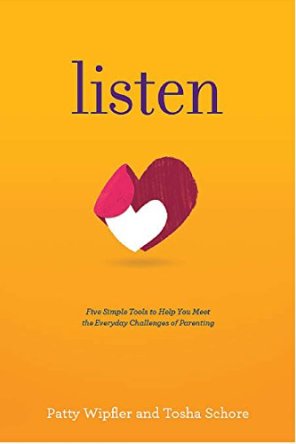
Listen: A Hand in Hand Parenting Book Review

listen

I was so excited to read this book by my mentors Patty Wipfler and Tosha Schore, although part of me felt like I wouldn’t learn anything new since I’ve been an instructor with Hand in Hand Parenting for over three years now. How wrong I was!

This is a wonderful book that manages to be perfectly accessible for those completely new to Hand in Hand, and offering new ideas and inspiration for seasoned pros.

I love how the book begins with stories of Patty and Tosha’s own childhood and what led them on their parenting path. As a writer I’m always really curious at how two people can actually write a book together and the results are seamless, their voices are interwoven perfectly.

In the first chapters Patty and Tosha introduce all of the five tools, staylistening, playlistening, special time, setting limits and listening partnerships. If you’ve been dipping in and out of articles about Hand in Hand Parenting, and wondering what all the terms mean, the book will really help get it all clear in your head so you can really start putting the tools into action.

Then the book goes more in-depth to introduce the idea of emotional projects; those big issues that can be a struggle for children because of their emotional charge. So whether your project involves helping your baby with a fear of the car seat, or helping a toddler sleep through the night you can learn how to use all the Hand in Hand tools to work through those bigger difficulties.

Then there’s a section on building co-operation, with advice and examples of how you can apply the tools to everyday family challenges like mealtimes, homework and screens, and chapters on fears, and separations.

What I loved most about this book is the stories. There are over 100 stories from parents describing how they apply the tools in different situations. This was such a wealth of inspiration to me. As I read stories about how families managed screentime, and picky eating, I felt re-energised to set limits in areas where I’d got permissive, and really remind myself to listen to the feelings behind that behaviour rather than just letting the behaviour slide.

As a Hand in Hand Parenting instructor, I do have a lot of in-depth knowledge of how to apply the approach. But just like anyone else, I’m also an everyday parent. I’m not sitting in a nice tidy office consulting with parents from 9-5. I’m usually at home in the trenches, looking after my daughter, and having the odd skype call here and there where I get to be a ‘parenting expert.’

I still have my struggles. I still get tired and exhausted and can’t think clearly, and then like an athlete with an injury, I know what I need to do, but sometimes I just can’t.

At times like those I’ll call a listening partner, and I’ll also try to get fresh inspiration. That might be reading an article, or writing one, or watching one of the online self-study courses from Hand in Hand. And reading this book! In our internet age it was so refreshing to get offline, rather than jumping from one parenting article from another, to relax and let my thoughts wonder, and come back to parenting refreshed.

So if you’re completely new to Hand in Hand then grab this book to get the full picture. And if you’ve been doing Hand in Hand for years then read it to have a wonderful break and come back to parenting completely refreshed. And don’t forget to call your listening partner too, of course!

You can buy Listen direct from the Hand in Hand Parenting store, or from Amazon.

A Giggle Parenting Song To Help Your Kids Sleep

musical-notes

So you’ve got your child ready for bed. Bath and a bedtime story, teeth and pyjamas are all done. Except there’s just one problem. Your child is full of energy, and ready to giggle rather than sleep.

Here’s a fun way you can help them release that last minute burst of energy. Tell your child, that you’re going to sing them a lullaby to help them sleep. You can start off by singing something in a slow sleepy voice like, ”and now it’s time to slowly close our eyes…” to give the impression that it’s going to be a very slow song, and then surprise them with an upbeat line like, .”..and then jump on the bed!”

This is a sure-fire invitation for your child to start jumping on the bed in a lively way. You can act all surprised that you sang that line, and say something like, ”hey that’s not how my song goes. I wanted a sleep song, not a jumping on the bed song!”

Tell your child you’re going to try again, and then start with the sleeply line, and surprise them again with another action line, like running out of the room, running and say hi-bye to your dad, pulling socks out of mummy’s sock drawer.

Each time come up with a crazy suggestion that is going to make your child laugh, while you act all confused about why the song isn’t coming out right. You can chase your child around the house to playfully get them back to bed and let them have the most powerful role as the giggles flow.

If this is all sounds completely wild and crazy to add to your bedtime routine, then here’s the science bit, about why laughter actually helps children sleep. And this is my introductory post about Giggle Parenting, and why beneath all that raucous play with your child you are actually building the connection they need to co-operate with you in the future. And here’s why I think staying up a little bit later to laugh, or listen to tears, can actually have benefits for your child’s overall wellbeing.

If you’re new to Giggle Parenting your child might want to play for quite a while, but if you add it in on a regular basis, your child will get their dose of wild and laughter, and won’t want to stay up playing till midnight! Check out my Giggle Parenting Archives, for more fun ways to add it into you family life.

Have you got a family challenge you’d like a Giggle Parenting solution for. Leave me a comment or send me a message on facebook, and your challenge could be the subject of my next blog post! 

Would you like regular Giggle Parenting ideas delivered to your inbox? Sign up to follow my blog in the top right hand corner of this page, or click here to follow me on facebook. 


How A Walk In The Forest Can Be Therapy For Kids

walkforest

I didn’t enjoy family walks as a child. There seemed to be nothing more boring than walking in a straight line for hours on end. I’m sure I spent a lot of the time moaning and whining, and being left behind as my parents were caught in a power struggle with me refusing to move.

I’m pretty sure it was these memories that made me reluctant to inflict the same thing on my own daughter. And yet all around me parents were happily going off on hikes with their children. We live in a small village surrounded by hills and forest, and on the weekends the place is filled with families happily hiking.

I can remember when my daughter was 2 years old we went for a lovely walk along a coastal path in Scotland. There were three older children who all had great fun taking care of her along the way, and she walked almost non-stop for about 4 hours! That gave me an indication of how long kids can walk if they feel in the mood for it!

As I’ve learnt more about children’s emotions, I’ve learnt that hiking can not only be fun for kids, it can also be like therapy. Here’s why:

It was something that Ariadne Brill of Positive Parenting Connection said that made me realise what was going on when my daughter complained about walking. She told me how she began to realise that the movement of walking was causing emotions to rise to the surface in her kids and then they began telling her about them.

When our children start moaning about how tired they are, and how they don’t want to walk any further, and how they hate walking, we can take their words at face value, perhaps they really are overtired.

But often, what’s happening is something called the The Broken Cookie Phenomenon. When children’s feelings bubble up, and they can’t think straight. The part of their brain responsible for rational thinking and language, literally doesn’t function well when children (and adults!) are upset. This means they may not be able to articulate the real reason they are upset in the moment, and so they’ll tend to pin it on the nearest thing: i.e the walking.

When my daughter started Kindergarten she really liked to have lazy afternoons at home. But after a while I began to think that although she needed less stimulus in the afternoon she might need some physical exercise. She’s always been a night owl and took a long time to wind down for sleep. I was having to wake her each morning. I really wanted her to wake naturally so her body could get all the sleep she needed.

After reading this article about sleep from Dr. Laura Markham I thought an afternoon walk might tire her out.

My daughter didn’t like the idea of a walk but somehow we got into a roleplay with her doll Kira, and her mum Avinda. Kira kept complaining that she didn’t want to go for a walk, while Avinda told her she would have to as it would help her sleep. Somehow we managed to get out of the house with my daughter projecting her reluctance onto career instead.

After a few minutes of walking though, my daughter began crying. I staylistened to her, stopping walking, and getting down on her level. I acknowledged her feelings, and told her we’d try to go a little further, and that I was sure she could do it. After a few minutes of crying, she asked for me to pretend Kira didn’t want to walk. We had a lot of fun and laughter (The Hand in Hand Parenting tool of playlistening) with Kira landing on the ground and refusing to go any further.

We ended up walking up a hill and down again at which point my daughter said, ”this walk has given me more energy!”

The next time we went hiking my daughter also cried and was reluctant for the first 20 minutes. I just kept listening to her, and sure enough, after the tears were over she was filled with energy and happy and enthusiastic about her hike.

These days when I suggest a hike my daughter is happy and excited. I think she’s gone through the process enough times to realise that if any upset feelings come up she will get through it with my empathy and listening, and end up having a great time. We always bring along her dolls and pack a few snacks.

We are the best judge of our children. We can learn their limits and energy levels. And we can also learn to see through their lethargic moments, and use a ‘listening hike’ as a way to help their bodies and minds feel better.

If you’re looking for some playful ways to help children with their feelings about walking check out 15 Playful Ways To Get Children To Walk

And if you’d like to learn more about The Broken-Cookie Phenomenon and how children need our listening to process their emotions check out my book Tears Heal: How to listen to our children

Tears Heal2016


The Cry It Out Debate Has Ended: Here’s Why

Human-Male-White-Newborn-Baby-Crying.jpg

This week I came across a debate on facebook about ‘cry it out’. Someone had posted this article,  in which one mum honestly describes her version of cry-it-out and why she did it. The mum also questions some of the research about cry-it-out, because they have an obviously anti-cry-it-out bias, and that articles presenting the science don’t talk about the studies’ limitations.

I’m not writing this post to assess the validity of the research. But I always feel a little sad and frustrated by the fact that we are still having a debate about whether cry-it-out is okay.

See, what the majority of parents don’t know is that the cry-it-out debate has ended. It actually ended over 30 years ago when psychologist Aletha Solter, and parent educator Patty Wipfler started sharing about the importance of listening to tears.

What they found, and what thousands of parents have since found is that babies cry for two reasons; one to get their needs met and also to release stress and upset. The stress hormone cortisol is released through tears. When a baby cries for a need we should of course meet that need as quickly as possible, but when they cry to heal and recover from stress and upset, we shouldn’t try to stop those tears. Dr. Deborah Macnamara says it best, ”crying is not the hurt, but the process of becoming unhurt.” If all our baby’s needs are met, and we are sure they are in good health, and not in pain, then we don’t need to do anything to ‘fix’ the crying, we can simply listen. When we go through this process of listening, holding our babies and staying close, then they  naturally sleep well.

This week a parent asked me if there was any science to show that babies who are listened to sleep better. There isn’t any direct science. And for good reason. Until recently the healing power of tears has been almost hidden in our society. When we were young there was almost no awareness of it at all. And so when we cried, our parents had no idea that there were times we simply needed to be listened to. We would have been rocked or ‘shhhed’ or bounced, or fed when we weren’t hungry, or pretty much anything our parents could think to do to stop the crying.

Our entire society is built upon not listening to feelings. The message to just stop the crying is deeply ingrained in every parent, and it takes a lot of self-awareness to begin to see it. That’s why scientists haven’t yet researched what happens when we listen to tears in babies. Until now the message has only been heard on the periphery of our society.

And this is why we are still stuck in a debate about cry-it-out. Society as a whole has been missing this vital piece of information that babies need to cry in the loving arms of a caregiver to sleep well. We have been trying to get our children to sleep by going against their nature to cry to heal. It’s no wonder that so many of us have struggled!

It’s testament to how distorted our society’s attitude to feelings is that leaving a baby alone to cry-it-out is considered a necessary option, because the idea of staying with a baby’s feelings, is not.

It was really hard for me to process this information when I first heard it. Was it really okay just to stay listen to my daughter cry without doing anything to stop the tears? It took me a long time to untangle my natural instinct to love and nurture my daughter from my ‘instinct’ to stop her from crying, when she didn’t have a need. Each step of the way I talked, and read and thought about what I was doing, so I was sure I was making the right choice.

The reason it’s hard to listen to tears is because it activates our own memories of hurt from our childhood. Memories, often unconscious of how our parents didn’t want to listen, they just wanted to stop us from expressing how we felt.

Through Hand in Hand Parenting, I’ve heard so many stories from parents who have helped their baby’s and children sleep better by listening to tears, play, connection, and giggles. Listening really does work.

We need to move on from the debate about ‘cry-it-out,’ and instead focus on listening. We need to tell our own childhood stories, and heal from them, so that we can then look honestly at our own reactions and impulses to stop tears. Not only will we as a society then have more sleep, we’ll be an emotionally healthier society too.

Further Resources

My story of how I helped my daughter sleep through the night

The Hand in Hand Parenting website has articles and anecdotes about helping with sleep.

Hand in Hand Parenting’s online self-study course, Helping Young Children Sleep.

My book Tears Heal How to listen to our children : has everything you need to know about listening to tears, and it includes a chapter on sleep.

Tears Heal2016

The Art Of Listening Tip 4: Say What You Think

saywhatyouthink

This is tip 4 in my series on the art of listening. If you’re new to the concept of listening time, check out my introductory post here, and find out how it can help your parenting. 

Imagine your toddler suddenly chucks their dinner on the floor. You might feel like you want to shout and scream. Perhaps you manage to hold it in and keep your rage to yourself while you clean up the mess, or perhaps you lose it and end up screaming at them.

Or a friend cancels an arrangement to meet at the last minute which makes you let down and disappointed. In this case you probably will text back a polite ”no problem’ while your thoughts may be saying something quite different.

Our culture is not very accepting of feelings. Ever since we were kids we were expected to hold our feelings in and not make a fuss. This can make the emotional baggage we carry very heavy indeed. And often it’s the smallest, most vulnerable people in our lives that end up being around when our feelings spill over.

Listening time offers a chance to have free rein to say exactly what we think, and feel. And if we have a regular listening partnership in our lives we’re far less likely to reach boiling point.

When you are listening to your partner encourage them to say exactly what they think. If you notice them holding back, then let them know their big feelings are welcome. Offer suggestions, like yelling into a pillow or punching it. Give your partner gentle reminders not to censor themselves, and that you will unconditionally support them whatever they say. Act as a contradiction to those times in the past where your partners feelings were not welcome. Let them know this is a safe space where expressing anger and rage is welcome.

Do the same in your own listening time. Say the first thoughts that jump into your head rather than the polite edited thoughts that come second. Be honest and you’ll also help your partner to feel safe to be honest in their time. The more you unconditionally support each other, the more your listening partnership will grow and develop into a safe space to lighten the load of your unexpressed thoughts.

Would you like regular tips to help you develop your listening skills? Sign up to follow my blog at the top right hand corner of this page. If you missed the previous tips click on the links below Tip 1Tip 2Tip 3

And if you’d like more in-depth help learning the skills of listening then check out Hand in Hand Parenting’s online self-study course, Building A Listening Partnership.


Giggle Parenting For Whining And Screaming

screaming

Does the sound of your child’s whining and screaming drive you crazy? Here’s how Giggle Parenting can help.

The main guiding principle of Hand in Hand Parenting is that when our children behave in off-track ways it’s because they are feeling disconnected and have upset feelings. When children need to re-connect with us they tend to ask in all sorts of ‘crazy’ ways because when they don’t feel good the part of the brain responsible for rational, reasonable behaviour isn’t functioning well.

When a child is whining and screaming we are often more likely to want to run away and shove our head under a pillow than connect with them, but here’s a fun game that will have you running towards your child for playful closeness, and it will help diffuse the behaviour too.

When your child starts complaining or screaming, or making any irritating sounds to express disconnection run towards them as quick as you can and give them what we call a vigorous snuggle, (you can read more about it here). Tell them in a playful, warm tone, exactly how you feel about the sound, ”Oh my you’re driving me crazy! I need to stop those scream with kisses,” etc. Nuzzle and snuggle your child, in a playful (not overpowering way) and soon all those whines and screams will be giggled away.

After that walk away. Your child will probably enjoy the game and repeat the behaviour. Or you can invite them to play again by saying as if thinking out loud, ”I’m so glad that screaming has stopped. Now I can have a peaceful time.” Then when they start up again you can exclaim, ”oh no! Not again!” And run back over and snuggle with them, again. The benefit is that you get to release your tension and frustration by expressing how you feel, but in a playful, warm way that actually increases connection between the two of you.

After playing this fun game your child gets to release the stress and tension that caused their behaviour so it’s less likely to happen in the future.

If screaming and whining are still making you stressed check out my article Screaming For Connection to learn how listening time can help, or read What’s The Cure For Children Whining? 

For more Giggle parenting solutions check out my archives here. Have you got a challenge you’d like a Giggle Parenting solution for? Leave me a comment or send me a message via facebook