Blog

The Real Reason Our Children Misbehave

misbheaviour

A few weeks ago my daughter had to go to the doctor to get a blood test. A receptionist came to hold her arm as the doctor took the blood. He kept telling my daughter how ‘good’ and ‘strong’ she was because she didn’t cry.

All the while I was looking at her face and seeing the fear, confusion and pain she was feeling. I knew that she wasn’t keeping quiet because she was ‘strong’ but because she was too scared to express herself. I also knew that those cries that we weren’t hearing in the doctor’s surgery were going to come out later.

A week or so passed and my daughter started randomly just coming up to me and pushing me. It happened a few times before I thought ”this is different.” She’s been through a few aggressive phases, which I’ve always been able to help her out of thanks to Hand in Hand Parenting. Where had this one come from?

Then one day we were playing doctor, and she started pinching me and telling me it wouldn’t hurt. Suddenly I realised where the pushing had come from. This was her way of telling me about the fear and upset she’d experienced in the doctor’s surgery.

In all the parenting information out there, we hear a lot about setting firm limits so our children learn right or wrong, about using time out, or teaching consequences. However as much as children need limits (set in a compassionate way) they also need us to look a little deeper at the real reasons behind their behaviour.

Thirty years ago Patty Wipfler, the founder of Hand in Hand parenting made a revolutionary discovery. Guess what? Our children are born, naturally good, loving and co-operative, they don’t want to hurt each other, fight or have trouble sharing. It’s just that sometimes their hurt feelings get in the way.

When children experience hurt or upset, they need to process the fear and helplessness they feel. They have a natural healing process for doing so. When children cry stress hormones are released through the tears. Laughter, and connection, also play an important part.

Nowadays Patty Wipfler’s discovery is supported by the latest brain science. When children get upset, or disconnected their limbic system – the emotional part of the brain senses an ’emotional emergency.’ In those moments the pre-frontal cortex – the part of the brain responsible for rational behaviour, and reasoning, just can’t function well.  In these emotional moments they lack the ability to control their behaviour. When children are upset they literally forget that it’s wrong to hit, or to snatch toys from another child.

This is the real reason behind children’s ‘misbehaviour.’ The hurt feelings that get in the way of their thinking. It’s why time out and giving consequences are ineffective because they don’t get to the root cause.

Toddler aggression, or sharing struggles are often thought of as being normal developmental phases that we can simply wait for our children to grow out of. However this actually does our children a great disservice. My daughter pushing me wasn’t simply ‘normal.’ It was part of her way of telling me, ”hey, I got hurt, and I’m not thinking well now. I need to tell you a story about what happened through play, and I need to laugh and cry with you to get it out of my system”

Think of all the times are children get persuaded or distracted out of their tears by well-meaning adults before they’ve finished crying. Think of all the little, and big moments in their lives where they got scared, or confused. Stress in pregnancy, a difficult birth, or just the everyday experiences of being in this world. For a baby even a stranger picking them up, or coming close while they are lying in pram can be frightening. All these experiences can gather up and manifest as behavioural difficulties.

So when we set limits with our children on their behaviour, lets do so gently and compassionately. We can be firm about keeping everyone safe so siblings or friends don’t get hurt. We can also understand the brain science of why our children can’t control their behaviour, but that we can do something to help them out of it. We can tell our children, ”I’m sorry you feel so bad. I can listen to you if you need to cry.”

Need more help with aggression? Check out Hand in Hand parenting’s online self study course No More Hitting.

5 Sleep Secrets For Peaceful Nights

helpingsleep

Sleep advice for babies and toddlers usually comes in two forms. There is the strict ‘cry it out’ approach where we leave children alone till they learn we won’t respond at night, or the more gentle ‘wait it out’ approach where we simply wait until they naturally start sleeping through the night.

Neither of these approaches tend to be that affective. If we ‘cry it out’, research has found it’s simply a short term fix that results in more sleep disturbances further down the line. If we ‘wait it out’ our babies may also continue to wake regularly into the toddler years and beyond.

Most of the sleep advice out there doesn’t mention the major reason babies, and toddlers (and adults too!) have difficulty sleeping – stress and emotional tension. This unspoken cause is the reason that so many parents struggle with sleep.

Here are the 5 sleep secrets that most sleep advice doesn’t take into account. Follow these tips for peaceful nights.

  1. Children need a close sense of connection in order to sleep well. Children experience sleep as a separation, even if they sleep right next to us. They need a strong sense of connection in order to feel safe to let go into sleep. Try some special time as part of your evening routine. Spend 10-15 minutes 1-1 one with your baby or toddler, doing something of their choice. Whether it’s simply lying on a playmat together gazing at the ceiling or joining them in their explorations, being there while they take the lead helps them internalise a sense of connection to you, that keeps them feeling safe to sleep through the night.
  2. Upset feelings can cause babies and toddlers to wake – The emotional part of our human brain is fully formed even before a baby is born. So babies fully feel a wide spectrum of emotions, and experience stress and tension, during pregnancy, birth, and in the early days of their lives. Babies, and children have a natural healing process for releasing stress and tension through crying and stress hormones are contained in tears. When babies or toddlers  cry or tantrum for what appears to be no apparent reason, (or a very small reason!) they are often releasing stress and upset. Because the healing power of tears isn’t widely understood many parents try to stop their children from crying, through distraction, ignoring, or ‘shhhing.’ Sometimes there are times your baby just needs you to listen to them, and stay close. Doing so can help them release the feelings that cause them to wake at night.
  3. Laughter is the best natural sleeping pill – Laughter has been found to cause the brain to release melatonin – the hormone that induces sleep. It’s also nature’s way of releasing the stress and tension that interfere with sleep. Most sleep advice focuses on ‘winding children down,’ and this is where we make things much hard for ourselves. We actually need to ‘wind children up!’ and get some laughter and fun flowing so that they can naturally regulate their own sleep. If you don’t have giggles in your bedtime routine you should add them now!
  4. Early Waking isn’t inevitable – Early waking is so common for babies and children that many parents feel it’s just an inevitable part of parenting. Ever woken at 4am in the morning with your brain whirring and being unable to get back to sleep? This happens with children too. Listening to their feelings whenever they arise during the day can help them to process them so they don’t interrupt their sleep in the early hours.
  5. You don’t need a strict routine for your children to sleep well – Routine is often presented as the most important factor for getting children to sleep well. However as much as we have a natural rhythm to our days it’s not the ‘be all and end all’ when it comes to sleep. Connection and listening are much more important factors. When we connect with our children, and listen to their feelings on a regular basis both in the day and night, they will naturally sleep well.

Would you like to learn more about the Hand in Hand parenting approach to sleep struggles? Check out the online self-study course Helping Young Children Sleep 

Giggle Parenting Inspiration N.O 7 – Unsticking Limpets

IMG_1656

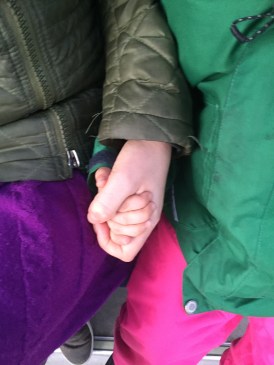
My daughter was going through a clingy phase, and we had invented a fun game to play to help her feel secure – I was the mummy limpet and she was the baby limpet and she had to stay stuck to me the whole time.

Then one day she was getting bored walking along. I sensed she had a lot of emotions attached to not wanting to walk rather than actual physical tiredness. Suddenly I had an idea. I suddenly got all unsticky, and wriggled my hand out of hers. Then I said to my daughter, ”oh no! Baby limpet, I’m unsticking, help quick catch me!” Then I’d run ahead of her, and tell her ‘quick, catch up with me!”

With a fun game to play she would fun forward chasing me. When we got stuck together I’d keep roleplaying being limpets, saying, ”phew, we’re stuck together. I hope we don’t get unstuck again. Please hold me tight!” And then I would keep repeating the game.

It’s funny how my daughter was complaining about being too tired to walk, but with a game she was able to run and chase me, so we got to where we were going much quicker. Kids have so much physical energy, but often find walking with grown-ups a bit too boring. A bit of playlistening can make it much more fun.

Wondering what playlistening is? Visit Hand in Hand parenting to learn more.

Playlistening Inspiration No.6 – Doctor Giggles

doctor'set

Does your child like playing doctor? It’s often the case that children try to work through difficult or traumatic experiences through play. Sometimes playing doctor can be a way to work through feelings about a difficult birth, or medical intervention in their early lives. Our children may not even consciously remember these incidents, but they can effect their overall wellbeing and confidence.

Bringing a bit of laughter to this kind of play using the Hand in Hand tool of playlistening helps children to heal. Through laughter they can work through their feelings, and release some of the stress and tension. It can also help build children’s confidence for when they really need to go to the doctor.

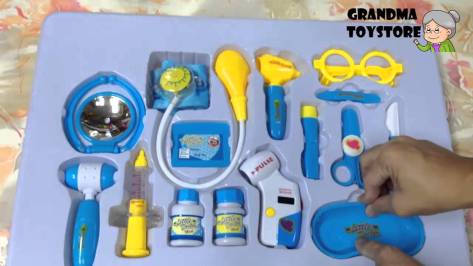
If your child had difficult early medical experiences it can be great to buy a doctor’s kit and see if this inspires any play. Then you can see if there are ways to bring laughter into the play. For example if you’re the doctor perhaps you can act silly and make mistakes. You could give yourself an injection instead of a teddy, or try to take the blood pressure and get all muddled up about what you’re supposed to do. Making mistakes helps your child to release tension, as the ‘all-powerful’ doctor isn’t so powerful at all.

If you child decides to treat you, perhaps you can try running away, but always get caught or, act all reluctant saying you don’t want to go to the doctor and would rather stay at home. If you’re playing with cuddly toys you might want to role play them ‘escaping’ from the hospital saying ”I don’t like it here, I think I’m going to go home.” Then your child can be in the more powerful role, catching the toy and bringing them back.

My daughter recently had a blood test, and today while we were travelling by train, she grabbed my hand, and put it into my rucksack strap and told me it had to go to the doctor. She started ‘pinching’ my hand, and I would wriggle around and object as she giggled and held me tight. I complained that it made me feel itchy and scratchy, so that I was acting powerless. It was clear to me that she was working on feelings about the blood test, this time in the more powerful role.

This play can build safety and trust for your child to show big feelings, about any times they were hurt or scared by medical intervention. If you notice that later after lots of giggly doctor play your child has a big meltdown or upset about something small, it’s possible that they are healing from their early experiences. In these moments, it’s good just to stay close and listen. You can read more about how children heal through play and crying on the Hand in Hand parenting website.


Laughter Lists

laughingmumgirl

Are you looking for a laughter-solution to your family challenges? Below are the lists I’ve come up with so far for playful solutions to our everyday parenting solutions.

Have you got an issue you’d like to dissolve with fun and laughter? I’m taking requests for future lists so just leave me a comment 🙂

10 Ways Laughter Can Transform Your Day 

20 Playful Ways To Heal Aggression 

20 Playful Ways To Heal Separation Anxiety

20 Playful Ways To Help Picky Eaters 

25 Tips For Having Fun Tidying Up With Kids


How Giving Up Caffeine Transformed My Parenting

IMG_1633.JPG

The first time I gave up caffeine it was by mistake. I’d bought a jar of instant decaf and didn’t realise till weeks later. It’s funny I hadn’t noticed any side effects apart from being slightly slower to get going in the morning. Without the awareness I was actually giving up it was relatively pain free.

That was over ten years ago, and when I suddenly realised I rushed out to the shop to get some proper caffeinated coffee. After drinking some I felt jittery and nervous, and realised that this was what caffeine was doing to me. I was so used to the feeling I had never even noticed till then. Anyway I decided to give up properly considering the placebo effect had worked so well for me and I didn’t like that anxious feeling now I’d become aware of it.

A few years later I moved to Vietnam where I enjoyed lots of real, strong green tea. Pretty soon I was upping my dosage, and getting that nervous, jittery feeling again. When I left Vietnam I decided to give up. I didn’t have any caffeine until I became a new mum and would have tired days, days where my daughter was napping and I’d suddenly have the chance to write but wouldn’t have the energy without caffeine. Or days when I’d go and try a new baby-group and felt like I needed an energy boost to cope with a room full of parents I’d never met before.

Then I started my training to become a Hand in Hand parenting instructor and tried listening partnerships for the first time. I found that they were such a powerful way to restore my energy that I didn’t need caffeine anymore. Since talking about my emotions was a natural boost I also began to wonder if my caffeine addiction was about giving me ‘energy’ or more to do with masking my emotions so I could get through the day. Now I had an outlet I could finally let them go instead of simply managing them.

A year or so later my grandmother died and my caffeine intake rose again. Even with lots of extra listening time, I needed something to keep my emotions under control so that I could cope with looking after my daughter and get through the day. Shortly after that I got a book deal and I became completely focused on meeting my deadline. I tried writing without caffeine, and couldn’t cope with all the anxious feelings about getting it done on time, or if it was any good.

When it was finished the time seemed right to give up caffeine. I was aware that it was much easier for me to be in the moment, to play with my daughter, and do playlistening with her, when I wasn’t all revved up with caffeine. But could I really write without caffeine? The clincher was meeting a friend who told me there was a  study that showed that people on caffeine are no more productive than those who are not.

So I gave up just after Christmas. I was lucky that we had a few days extra holiday so we could have a mini ‘staycation’ where I could completely rest, and listen to my body. And though it was hard at first it got easier. And I began to notice all sorts of surprising benefits.

  1. I had more energy – I could actually jump out of bed in the morning and do some pilates or meditation to give myself a natural energy boost. (I must admit though, after a stressful few weeks this benefit is wearing off!)
  2. I was much more relaxed – Before giving up I’d had this sense that I just wanted the world to slow down. Then I suddenly realised that I was speeding up my body with caffeine to try and keep pace with the busy world, and that actually the first step to slowing down, was simply to give up. I felt like I could never really deeply rest, until I got rid of this substance in my body that was revving me up.
  3. I could be in the moment with my daughter – I could play with my daughter much more easily, without dashing around thinking about cooking, tidying or my facebook notifications. I could just chill out, and lose myself in play with her, slowing down to her pace.
  4. I could think up lots of playlistening games – When my grandmother died I kind of lost touch with my natural instinct to play. I couldn’t think of fun games that made my daughter laugh. Giving up caffeine helped me recover it. Instead of focusing on ‘doing’ I was in a intuitive creative state of ‘being’ instead. Fun and laughter naturally followed.
  5. I was much happier – When I was addicted to caffeine, I had this sense that life was hard and a struggle and I needed this substance every day just get through. Now I don’t feel that desperation. When I stopped artificially trying to alter my mood I was able to figure out ways to manage the real feelings that I was now feeling. I got listening time. I started swimming a couple times a week which before I didn’t even have the energy for. My natural wellbeing started to shine through.
  6. And I could write – After the initial detox period it didn’t effect my writing. I had built my confidence by finishing a book and without those anxious fears in the way, I could just get on and do it. I think I’ve been even more productive as I’m sleeping slightly less, and able to write in the evening, when before I was always too tired.

I hesitated to write this post for a long while. I didn’t want to sound puritanical, that caffeine is a bad substance that we should all give up immediately! I actually think that like many of the naturally occurring substances on this earth, it’s here for us to use when we need it, and enjoy guilt-free! Life is too short for either internal or external guilt about for what we put into our bodys. I wonder if the guilt we feel is worse for our health than the substance we are consuming.

The time won’t always be right to give up caffeine and we may not want to. I think our attempts to give up have to come from a place of desire rather than deprivation. If we desire the substance more than we desire giving up, maybe the time just isn’t right? Maybe we need to get our emotional needs met first, so we have the strength and the inclination? Addictions expert Johan Hari, says that ‘the opposite of addiction is connection.’ In our busy stressful lives, we don’t always have our own connection needs met so it’s no wonder that we are trying to mask our feelings with addictive substances.

I may not have completely given up. I will sometimes grab a few squares of dark chocolate if I’m having a hard day, and notice the next day, I’m craving it again. If next month ends up being overwhelming stressful perhaps I will end up being addicted again! Still my intention is to be caffeine free, at least 99% of the time!

However, I did want to share some of the benefits, of giving up caffeine, slowing down, and letting our body naturally rest. We parents are doing one of the most challenging jobs in the world, for no pay, often without the benefits of having sick days or rest. If there’s a chance for you to drop the non-essential items off your to do list, and let your body relax and find it’s natural energy, there are a myriad of benefits.


20 Playful Ways To Heal Aggression

attack

Aggression is common in toddlers, but that doesn’t mean it’s inevitable. The Hand in Hand parenting philosophy is based on the fact that all children are naturally, good, loving and co-operative. Sometimes hurt feelings overwhelm their limbic system – the emotional part of the brain, and when this happens, their pre-frontal cortex – the part of the brain responsible for rational and reasonable thinking can’t function well. In moments of upset children lack impulse control, and can’t always remember in the moment that it’s wrong to hit, or kick other children or us.

So what can we do? Patty Wipfler’s article here explains how we can heal the deep fears that get in the way of our child’s thinking and cause them to lash out aggressively. When we sense our children are acting off-track, or we know the kind of situations in which they hit or kick then we can do a ‘friendly patrol.’ and be right there to catch the aggression before it happens. For example we can gently take our child’s hand and say, ”I’m sorry you feel bad, but I can’t let you hit.”

When we do this some of the feelings might bubble up that were behind the behaviour. For example our child might cry, with frustration and anger, at the child who has the toy he wants, or who said something that made them cross. We can staylisten to these feelings, knowing that every time we do so we prevent the likelihood of aggressive outbursts occurring.

It might be that our child starts wriggling away from us and laughing, releasing the stress and upset they feel through giggles. Then we can use playlistening to playfully set limits, providing we feel calm and can continue to keep everyone safe. By being playful we are not giving the message that aggression is okay. We can still set limits, telling a child ”I can’t let you hit” while allowing them to have their feelings.

Laughter might not always seem an appropriate way to handle aggression in the moment. It can be jarring with the strong emotions that our child is feeling, and they may simply need us to set limits and staylisten.

However playlistening and roughhousing can also be used proactively at other times to help a child to release the fears that can cause aggression. Playlistening puts them in the more powerful role, and can build the physical confidence so they’re less likely to lash out for real. This as well as setting limits and staylistening in the moment can help to get to the root cause of aggression.

Many parents assume that if we laugh and play around the topic of aggression, that it gives our children mixed-messages and can encourage it. However have you ever noticed the way mammals like kittens or puppies play? They tumble around and play fight without inflicting real damage. This kind of rough and tumble play has actually been shown to improve children’s social skills, and build their emotional intelligence – the very things that will help them to be less aggressive. Our children have a deep sense of what is play and what is real aggression when they are thinking straight. And when they’re not we can be ‘on patrol’ to set limits.

Below are a list of 20 playful games that can help to channel our toddler’s aggression into fun and giggles, with lots of physical connection tho help them build their confidence and release fear and stress. Thanks to all those instructors who contributed their wonderful ideas!

  1. My lovely sweet baby – When my daughter was about 12 months out she would sometimes scratch my face when she got tired. One afternoon, I moved her hands away from my face and said  in a playful tone, ‘’you are my lovely sweet baby, so sweet and gentle.’’ I would look into her eyes, and gently stroke her face or her foot. Then she would attack me with her arms grabbing or her legs kicking. I would respond by moving in close and giving her a hug to ‘protect’ myself. This elicited a lot of giggles. She really got into this game, and understood that my words and gentle stroking where a signal for her to attack! I could see her becoming more and more relaxed as we continued. She was peaceful and joyful. We finished the game and she fell asleep within seconds. That was rarity at the time.
  2. Lovely Daddy From Stephanie Parker, Hand in Hand parenting instructor in the UK  My daughter Innes was going through a stage of being really aggressive to her dad, I started to intervene in two ways. If she went to hit him I’d get there first and I’d hold her arm and hand and stroke him instead saying ‘ah, this is how we touch Daddy, stroking Daddy’ and she’d giggle and pretend to go along with it but then try and hit him again and I’d keep repeating it until the tension had gone and she no longer needed to hit him. Secondly when she called him names like stupid daddy, I would say ‘lovely daddy, beautiful daddy’ and she would giggle and continue to say stupid daddy and it would go on again until the tension was gone.
  3. Swing Giggles – When your child is on a baby swing, invite them to kick you when they swing towards you by saying ”I hope you don’t kick me!”Catch their kicks in a playful, gentle way. Or end up falling over with mock exaggeration, or fly back across the grass with the ‘power’ of their kicks. This will have them laughing and relishing the power.
  4. The vigorous snuggle – This is a wonderful way to heal aggression in the moment, by moving in close, snuggling with our child, planting raspberries, and meeting your child’s aggression with play. Rachel Schofield, explains how it works in this post here.
  5. Push me off the sofa – I used to play this game with my daughter and her friend who I would sometimes babysit. It often helped to diffuse tension between them if they could conspire against me, and push me off the sofa with lots of giggles. I would sometimes resist a bit more, to give them more of a chance to push against me, and struggle before finally falling on the floor. You can also play this one on a bed. Clare Harrison says, to her daughter “please, please don’t push me off the bed! Oh, I’m so scared! I don’t want to fall off the bed!” She laughs and pushes me off the bed; I’m very dramatic and loud with limbs akimbo, falling down as messily as I can, protesting all the while.
  6. Push me off the sofa – extreme version – My daughter would push me off the sofa, but I would fly off across the room with the ‘strength’ of her push. I would end up as far as the kitchen or the bathroom. Sometimes I would even open the front door and fall out and tell her it was because her push was so strong!
  7. Push Me Over – I would kneel on a bed while my daughter was standing, and say, ”I’m so strong, I’m the strongest mummy ever. I bet you can’t push me over.” My daughter would try and I would put up a bit of resistance at first, and then always let her win.
  8. Interception Games from Isabela Budusan, Hand in Hand trainee instructor. When I see my daughter approaching her sister about to be aggressive I take her in my arms before she reaches her, and make the airplane game with her, or take her like a bag on my shoulder and run through the house saying ”look what I`ve got here; a bag of potatoes!” or peanuts, depending on her mood.
  9. Bed Chase –  This works well on a soft bed. Tell your child you’re really fast and they wouldn’t be able to catch you. Let them chase you then catch you, and then  say, ”I bet you can’t pull me down,” and then let them wrestle you onto the bed.
  10. Bed Wrestling From Clare Harrison. I have two big boys (12 and 9) and a 2.5 year old girl who can get really frustrated being the little one. When I notice she’s starting to go off track (hitting, for eg), I will make space to play outside of a tricky situation, usually to wrestle. I looooove to wrestle with her, it’s really open, but all about her having the power and getting to be the tough one. I might get her onto our big bed and say things like “you get to be the boss, you tell me what you want me to do.” If she’s not sure, I might say “shall I crash you?” and “chase” after her lumbering and silly. This gets her leading pretty quickly as it will either be “yes” or “no mum!” I pretend that she is sooo much faster and stronger and cleverer than me: I fall off the bed, I let her “shove” me over, anything to get her laughing and feeling powerful. If she is still not sure about what she can do I might say “gosh, I hope no one hits me with that pillow” or something like that.
  11. The love gun game, from Larry Cohen’s Playful Parenting book.This is a game in which the adult getting shot simply has to love the child who shot them. While playing this game, the adult opens up his arms and takes a step toward the child with a big, silly, love-struck smile on his face, saying “Now, that you shot me, I just have to love you!”. As soon as the child shots him, a chase starts around the house and, when the child is caught, he gets hugged and loved.
  12. Dinosaur Bites By Anca Deaconu, Hand in Hand trainee instructor. Ever since my son was three, he has shown an increasing interest into the world of dinosaurs and one of his favorite games is about him being a strong carnivore dinosaur who “bites” (and eventually “kills”) a weak herbivore, his meal (and that is, of course, the role assigned to me 🙂 So, inspired by Cohen’s idea above, I thought I would give it a try. Each time he would bite me, I would pretend that I was given “the love bite” and that I am now under its spell. And, the more he’d “bite” me, the more I’d love him. So I chased him around the house, hugging and kissing him and enjoying his laughter and giggling. I was amazed to see how this game, that I have initially perceived as an aggressive one, has turned into a connection game, one that led to an unexpected surprise: later that day, my son made a drawing for me: a pink unicorn. Because – he said, “girls like unicorns, mommy and you are a girl”.
  13. Butterflies from Rachel Schofield. My 4 yo had gone to story time at the library with his granny which had been about butterflies. He came home and was offtrack which culminated in him wielding a tennis racket aggressively. I moved in and stopped him, got the racket off him, stayed close. He tried kicking and punching and I protected myself saying, “I’m not going to let you do that”. After a little while I sensed he was a bit stuck. The aggression was losing intensity but not going to release feelings. So I shifted to Playlistening. He had his feet against me and I was holding his hands, “Look! You’re like a butterfly” and waved his hands around. He smiled, “pick me up so I can fly” So I picked him up and flew him around waving his arms, he giggled and smiled and was in better shape when I landed him back on the ground.
  14. Sock Fight – This one is fun for all the family. Everyone has to try to take each other’s socks off. Put up a bit of resistance with older children, but go for the giggles and let them win eventually. You could try making a big fuss out of how good you are at sock fights, and never lose, and then be a ‘bad loser’ when you end up losing your socks.
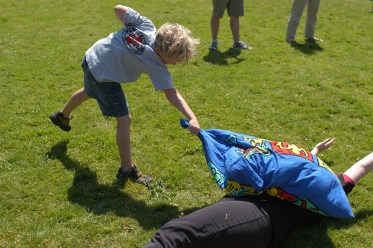
  15. Grass Fight – If you’re somewhere with freshly moan grass tell your child how much you hate having grass thrown on you, inviting them to play. You could also try it with dried leaves on an autumn day. Or just tell your child, ‘I really hate having grass thrown in my hair,” I hope no-one does it. Run away, let them chase you and catch up with you, and let them tackle you to the floor.
  16. Pillow Fight – Pretty self-explanatory really. Let the kids win, and always take the less powerful role, so they don’t feel overpowered.  
  17. My precious object -Pick up a book, cushion, or any object that isn’t really too precious. Tell your child it’s your precious object that you never want to let go of. Hold it really tight then let them wrestle you for it.
  18. Indoor snowball fight – Check out this link for a set of pretend fluffy white snowballs, so you can have an indoor fight. Or alternatively just roll up some socks and use them instead.
  19. Splashing Games – In the bath, or outside with a hose or water pistols, on a warm day, or at the pool. Make a big deal about how you want your clothes/hair/face to stay dry. Tell your child that you’re the world best expert on staying dry. Let your child get you soaking.
  20. Catching And Escaping – My daughter loves to have music on and run across the room from one side to the other while I sit in the middle on the floor with my arms outstretched waiting to catch her and missing her each and every time. Then I might also catch her, and hold my arms really loose but say, ”my love is so strong, that I’m not sure you’ll be able to escape” and let her escape each time. This is a fun physical game that helps release tension, and build connection, giving a big dose of love.


Need more help? Check out Hand in Hand Parenting’s online self study course Help Your Child With Aggression.

Giggle Parenting Inspiration – The benefits of laughter at bedtime

IMG_1620.JPG

When it comes to bedtime, most advice centres on getting children to wind down and relax. It’s all about slowing everything down. No screen-time, having a relaxing warm bath, a lavender candle or a meditation CD.

This can be helpful but one of the problems with most sleep advice out there is it doesn’t focus on the major cause of sleep issues : the emotional struggles that our children go through. Upset feelings often bubble up to the surface in the evening or in the middle of the night. Feelings are often what makes it hard for babies, children (and adults too!) to fall asleep, wake in the night or wake too early in the morning.

Listening to children’s upsets whenever they occur while giving lots of warmth and connection, can help them to release the feelings that cause sleep problems. Laughter can also help too.

Contrary to popular belief we should actually wind our children up before sleep! Roughhousing, and lots of giggles, can help children release any stress or remaining tension from the day. It also helps to build the connection that children need to feel safe to separate from us and fall asleep.

So bring on the laughter! If your child runs a mile when you suggest it’s bedtime, then perhaps have a fun game of chase, letting them escape so they take on the more powerful role. Or try to dress them in their pyjamas but ‘dress’ the pillow. Read their bedtime stories in a silly language, or have the book upside down, and wonder why the words are coming out all wrong. Put yourself to bed instead of your child. Each time you make a ‘mistake’ exclaim to your child about your confusion at how you just can’t seem to get it right. Repeat as long as you have the time, (or energy!) Laughter has been clinically proven to induce melatonin, the sleep hormone, so with every giggle your child will be closer to sleep.

Don’t be afraid for things to get a little wild! Connection breeds co-operation so play and laughter can actually help to dissolve the power struggles we may get into at bedtime. The best kind of laughter at bedtime is where children are in the more powerful role (what Hand in Hand Parenting calls Playlistening) so no tickling is allowed! Tickling can make children feel powerless, and causes involuntarily laughter, rather than the natural- tension releasing laughter that helps sleep. You can read more about why we don’t recommend tickling here.

So add a little laughter into your bedroom routine, and see the difference it makes!

Need more help?
Check out Hand in Hand Parenting’s online course Helping Young Children Sleep

Two Tiny Hands
Diary of an imperfect mum
A Mum Track Mind

thumbnailsize

Brilliant blog posts on HonestMum.com

3 Little Buttons
My Random Musings

Playlistening Inspiration N.O 4 – How To Leave The House

IMG_1610

We needed to leave the house to go to the supermarket for a few things and my daughter was not in the mood! The Hand in Hand parenting philosophy is based on the idea that our children will co-operate with us providing three conditions are met.

  1. They feel well-connected to us.
  2. There are no hurt feelings getting in the way of their thinking.
  3. If what we are asking is rational and reasonable.

3. I do try not to drag my daughter on long shopping trips. The shop is only 5 minutes away. We only needed a few things, and we’d be back home playing in no time. I do try and give my daughter as much power and control in our life as possible in order to avoid those everyday power struggles. I try also to be as aware of her need to play and have fun as much as possible.

So, I assumed that the issue was 1 or 2. That my daughter wasn’t feeling well-connected to me, and she had some hurt feelings getting in the way of being able to listen to my rational, and reasonable explanations of why we needed to go to the shop.

I could of tried bribing with chocolate! ”If we go to the supermarket I’ll buy you a kinder egg, or a chocolate croissant.” That might have worked. And it’s not that I’ve got anything against chocolate. But using food as a bribe isn’t the gentlest option. Those upset feelings would be still under the surface, likely to come out when I next needed to try to get my daughter to co-operate. Bribes would also create a more ‘transactional’ relationship, based on us both getting what we want, rather than focusing on the underlying connection between us.

So somehow, in that frustrating moment of trying to get out of the house, I stopped the rationalising and reasoning talk that never works, and came up with an idea.

I told her that we had a magic chair, and all we needed to do was say abracadabra, and the food we needed would be magicked onto the chair. So I would say ”okay we need some pasta, tomato sauce and some apples. Lets try this. Abracadraba” and then I’d race and put a few random objects on the chair, like a toy banana, my wallet, bowls and a plate. Then I’d say ”oh no! That’s not right. This magic doesn’t seem to be working. This isn’t what I wanted from the supermarket.” My daughter would laugh and laugh.

I repeated this again with other random objects. Each time I would acted all frustrated and confused when we ended up with the wrong shopping. My daughter found this hilarious, and in the end she said in a sensible voice, ”come on mum, lets just go.”

This was such a great reminder to me. All the times I find myself repeating myself, and trying to rationalise and reason with my daughter. I don’t need to tell her 100 times. All I need to do is just explain once, and then use play and connection when things don’t work.

So next time you need to get out of the house, try a bit of play and connection. It can take a bit of a time but it’s surprisingly quicker than persuasion tactics!


How Children Heal Fear Through Play

Children-dont-have-to-take-on-our-fears (1)

This Christmas we flew to Scotland and as the plane landed it was pretty windy. The plane was descending bumpily, and rapidly, which to me as a nervous flyer felt as if we suddenly falling out of the sky!  My daughter was sitting next to me, and caught sight of my nervous face. “Lets hold hands,” she said.

I knew instantly that I’d made her feel afraid. Up to that point she’d been enjoying the journey, and had never shown any fear of flying before. We flew a couple more times that holiday and everything was fine.

Then today, we were doing special time, and her Sylvanian families were flying. We each had a book which we were pretending were planes. Then my daughter said, ”this is when the plane has a rough landing,” so I would roleplay a sudden landing with everyone falling off. I suddenly knew where this idea of a rough landing had come from, that my daughter was trying to work through some of the fear she felt when we flew.

When we do roleplay we have a crazy sheep that often does silly things, so when we set off in the plane again I would have the sheep sing, ”a few lumps and bumps on the way down,” and have my plane bounce up and down a lot. She laughed at this. Then I would have the sheep, bump into her plane by mistake or do zig zags, or even stop and try to have a conversation with the passengers on the other plane. She found all of this really funny.

I would add some commentary like, ”um, excuse me sheep. I don’t think we should be stopping for a conversation in mid air!” My daughter found this hilarious. Then I would try to think up other silly scenarios, like sheep’s friends who were not invited on the holiday would hide on the plane and then they would all take a detour to the ‘soup swimming pool.’ (I was cooking soup at the time). She would chase after the plane, to try and stop them from diving into the soup.

Our parenting will never be perfect. Our children will inherit some hurts and fears from us. But play is a wonderful way children can make sense of their world, and tell stories. When we can play with them we can pick up on what makes them laugh, and help them release fear and upset. And as we listen to the stories we tell, we get an idea of where we need to heal as well. I think it’s probably time I had some listening time about my fear of flying!

For more info on how to help your child read Helping Children Conquer Their Fears from Hand in Hand Parenting.