Blog

Special Time Solution For Screen Time

Set-Limits-467x700.png

Screen time is an ongoing dilemma in our family. How and when, and if to set limits. When to allow my daughter the freedom to explore and enjoy screens and everything they offer so that she feels that her own desires and choices are respected. How to manage my own fears and anxieties about screen time. (listening time helps with that!).

One thing I’ve realised is that I’m no expert when it comes to having a one-size fits all approach to how to deal with screens, I’m more likely decide moment by moment, how to handle the issue. It often depends on what my daughter’s done that day, if she seems disconnected, or has been acting off-track, then I usually try and offer some connection using one of the Hand in Hand parenting listening tools.

Today my daughter was watching her ipad, and I could feel myself getting into a kind of downward spiral in my mind. I felt upset that she was watching the screen, but after a late night watching the fireworks for new year, I didn’t feel like I had the energy to offer much in the way of connection.

Then I remembered the blog post I’d written the day before. 10 Ways To Use Special Time To Transform Your Day. It was time to take my own advice! I didn’t have much to offer in the way of energy, but I could spend 15 minutes of my time, knowing that the timer offered me an escape route so it didn’t seem too foreboding!

Often my daughter will turn off a screen if I offer special time, but not today. She was pretty tired as well. So I snuggled down next to her, and we watched her favourite you tube videos where a mum makes some Lego Friends sets.

As I watched the videos, talking about the sets with her, and seeing how they were built I realised the importance of not just using TV as an electronic babysitter, but also of going into our child’s world. The joy and interest they have in the programmes and videos they love is real. I think we create a disconnect when we try to always to get our kids off screens to do something else, they want to feel like we are their ally, on their side, and facilitating their interests. And as I stepped inside my daughter’s world, we could share connection, and I realised that perhaps the screens aren’t the real problem.

Perhaps the problem is that we were born into this world longing for a deep sense of connection that our parents weren’t always able to provide. Perhaps it’s that we are trying our hardest to parent, in busy, stressful times, when we have to juggle so much, paid work and housework, often without extended family near us. Perhaps it’s because it’s hard to meet our children’s deep, emotional needs, all of the time, because our needs weren’t always met when we were young.

We are doing our best to work it out, to heal our lives, and keep striving for connection with our children. We have some wonderful tools to help us to be the parents we want to be, even when times are hard.

So this New Year’s Day, give yourself a break and snuggle up in front of a screen, if that’s what’s going to work best for you and your family!


10 Ways To Use Special Time To Transform Your Day


specitla

Special time is a simple yet powerful tool that can transform family life. Simply tell your child they have 10-15 minutes to do whatever they like with you there to shower them with warmth love and attention.

Set a timer so you and your child has a clear idea of how long it will last. Don’t skip this step! There’s something magical that happens when we put the timer on, and set the intention to really give our child our complete  attention. No mobile phone checking or dinner preparing allowed!

Here are ten ways that you can use short bursts of special time to transform your day, and make things go more smoothly. Even 5-10 minutes can make a difference.

  1. First thing in the morning – If we have to rush out of the house to go to daycare and school then our focus can be on results rather than connection. But before trying to persuade our child to get dressed, brush hair and clean teeth, it can be really powerful to start the day on their terms instead. Connection builds co-operation with our children. It’s been scientifically proven. So if we spend 5-10 minutes doing special time, we’ll often find that it’s an investment of time that makes our kids more likely to co-operate when we tell them to get dressed etc. I love this story of how just 5 minutes can make a difference.
  2. Before doing household chores – When we do special time with our children something magical happens. They begin to internalise that close connection with us, so that after special time is finished they’ll be more likely to be happy to continue to play independently while we get on with a bit of cooking and tidying up. You can read more in  this story. This isn’t 100% guaranteed to happen all of the time. Sometimes our kids might be upset that special time has finished. This isn’t necessarily a bad thing. After soaking up our warm attention often children’s feelings of upset bubble up to the surface, and crying can be a healing process to let them go so they feel better connected to us. Staylistening through the upset can help us stay calm until we get to the other side.
  3. Coming home at the end of the day After a busy day out of the house, whether or not that involves being separated from us, our children may hunger for some warm 1-1 time with us. Special time can act as a bridge between the outside world and home life, helping our child to relax, and get connected to us again.
  4. When your child is whiney, moany or acting off-track – The brain science behind children’s ‘misbehaviour’ points to the fact that they don’t want to act in ways that drive us crazy. It’s just that when children feel disconnected from us, they literally can’t think. The emotional part of their brain, the limbic system senses a kind of ’emotional emergency’ so the pre-frontal cortex – the part of the brain responsible for rationalising and reasoning can’t function well. When children act off-track it’s like they’re sending a red flag saying, ”hey I can’t think I need some connection!” Giving special time during these moments is the ultimate unconditional connection, so our children know we will be there for them no matter how off-track they are. They can soak up our connection, and that along with the other Hand in Hand parenting listening tools is how their behaviour gets back on track.
  5. When you are feeling slightly off-track If you are not having a good day, and are feeling a bit low yourself, but still have a bit of attention to give, then special time can help the parent too! Just like our children long for deep, quality attention with us, we also of course long for those deep, connections with our children. It’s just that sometimes our own responsibilities, and stress can make it hard to give. If we take a leap, and offer a short 1o minute special time, then we get to soak up that warm sense of connection too. If even a short special time feels like too much, then we have a tool that can help!
  6. Before a playdate or when company are coming over Does your child have trouble sharing when their friends come over? Or do they struggle to let you have an adult conversation when extended family or your friends are round? Special time can help to give your child the warm sense of connection they need to be able to share you with others. Also when children are well-connected they can think well, they’ll be more likely to be able to share their toys naturally without us having to persuade them to do so.
  7. Before bed – Children experience sleep as a separation, and often it’s late at night that feelings bubble up that they need our help to deal with. Adding 5 or 10 minutes of special time to our evening routine can be really helpful for children who take a long time to fall asleep, or wake in the night. They internalise a close connection with us, so don’t wake in the night feeling disconnected and needing us.
  8. When you need your child to do something and they aren’t co-operating – If you need to leave the house, or brush your child’s hair and they just aren’t co-operating then special time can help you both take a breather from a frustrating power struggle. After a short special time, they may be feeling more connected and be more able to co-operate with you.
  9. If your child has been watching TV or using electronics – Sometimes the lure of a screen can make our children feel disconnected from us. They don’t seem to ask or need our connection as much while they’re having screen time, but later they may need an extra dose of connection with us. If I’m worried my daughter’s been glued to the screen a lot. I’ll offer her special time, and she often prefers this to TV! I just need enough energy myself to be able to give attention rather than rely on an ‘electronic babysitter.’ Listening time is essential!
  10. If you need to go out – So if you’re lucky enough to have the time and energy for a date night, or night out with friends, then special time can be the perfect way to say goodbye. A 5-10 minute dose of quality attention, can help your child to internalise that deep sense of connection with you, so even if you’re away for an evening or a night, they feel safe and secure.

I hope you’ve enjoyed this list of ways to make special time a part of your daily life.  Feel free to comment if you have any stories or questions. I’d love to hear how you get on with this wonderful tool!

Brilliant blog posts on HonestMum.com

Travelling Tips

trainstation

My family spent the Christmas holiday visiting friends and relatives in the UK. We were all ill, and the travel combined with exhaustion meant that I didn’t spend much quality time connecting with my 16-month-old daughter.

When we arrived back home she started fighting me over everything; getting dressed, nappy changing, and going in her buggy. I assumed it was because she was getting older, and I was nervous about how things would become more difficult and challenging as we neared the “terrible twos.”

But I’d also learnt through Hand in Hand Parenting is that ‘off-track’ behaviour is a sign that a child feels disconnected from us. It is their way of telling us, ‘’I need connection!’’ From this perspective our children are naturally, good, loving and co-operative, it’s just that sometimes, upset feelings, can get in the way of their feeling our warmth and love.

I knew that reconnecting with my daughter would help improve things, but I was still feeling exhausted and recovering from being ill. The first thing I did was to call my listening partner. A listening partnership is a free scheme where two parents exchange listening time with each other. They don’t offer advice, tell their own stories, or try to fix things. The idea is, that when someone truly listens to us in a warm and supportive way, without interrupting to “help,” then we can release our negative feelings. Anger, stress, and exhaustion all evaporate when we can really talk to someone about how we are feeling. I’m always amazed that often just ten minutes of listening can restore my energy, enthusiasm, and patience for being with my daughter.

Now I was all set to try some playlistening. This is play where we take on a less powerful role, and try to get our children laughing (not the involuntary laughter of tickling). Laughter releases some of the stress, tension and frustration that can accumulate when children feel powerless. It’s ideal for dissolving toddler power struggles. Children often laugh when we try and fail to do the things they’re trying to learn, or when we make “mistakes.”

That morning while I was putting on my sock, I pretended to struggle with it, and then ‘pinged’ it across the room and acted surprised. My daughter laughed a lot at this so I repeated it. I kept struggling to put on various items of clothing and she kept laughing. Then I started to walk and fell over again and again over. My daughter found this hilarious. I tried to hang some washing up, and kept saying, ‘’Oh no!’’ as it repeatedly fell down. Then we were playing on my bed, and my daughter would laugh gleefully as she threw some clothes off the bed, and I would keep trying to retrieve them, only to have her throw them off again. At naptime, I chased her around the house, and she kept laughing as she managed to “escape” me!

Understanding what makes our children laugh is a hit and miss thing, and sometimes my attempts would fall flat, but I kept trying, using my intuition, to see what would work. We had a really laughter packed morning, as if we were making up for all the playlistening missed while we were on holiday. When she took her nap, she fell asleep much more easily than normal. I was also feeling much more relaxed.

After this morning my connection my daughter was much better. She stopped fighting me about everyday things. She happily went in her buggy, and let me change her nappy without a fuss. More than once, behavior that I thought was difficult and “toddler-like” has actually turned out to be just a period of disconnection that we overcame by using the Parenting by Connection tools.

Traveling as a family can be fun and exciting; it’s a wonderful opportunity to spend quality time together and get really connected. But it can be stressful, especially when things don’t go exactly to plan. When we are busy rushing to catch planes or trains, routines get upset, and emotions run high. As parents, we try so hard to make happy memories for our children, and it can be frustrating when we spend our holiday time dealing with our children’s off-track behaviour and tantrums.

These days when I travel I’m sure to factor in connection time on the road, so we don’t arrive home exhausted and disconnected! Here are a few tips based on the Parenting by Connection listening tools, to help make your travels go more smoothly.

  1. Listening Partnerships

Did you know that there are mirror neurons in the brain that recreate our emotional states in the brains of those around us? Children can pick up on our stress, so if we are relaxed and happy then it’s likely they will be too. Sometimes going back home to visit friends and family can evoke strong emotions in us. Having someone that we can talk to who doesn’t offer us advice, but simply listens can help us to release the feelings that get in the way of us enjoying our travels. On a practical level, try to save plenty of time for packing and getting organized so it isn’t a last minute rush to the airport.

  1. Special Time

Spending one-on-one time with your child, following their lead, is a wonderful way to connect. For a time period such as 10 or 20 minutes, tell your child they can do anything they choose (as long as it’s not dangerous!) while you simply delight in their presence, giving them lots of eye contact and affection. For your child, it’s the perfect antidote to rushing around according to mum and dad’s schedule. When you are waiting around at the train station or airport, why not tell your child it’s special time, and let them set the pace for a while? It can turn boring moments into a fun adventure that you share with your child, making everyone feel more relaxed and connected. If you are staying with relatives, then special time with your child can help her feel well connected to you even during busy times with other people.

3, Playlistening.

Finding ways to laugh along the journey can help everyone stay relaxed. A game of peek-a-boo with a toddler in a backpack, or even a mini pillow flight on an aeroplane, turns getting from A to B into a game filled with fun and laughter. Recently, when I took a plane flight, I put a blanket over me, and said ‘’I hope no-one tries to pull my blanket off,’ cue my daughter delighting and giggling as she repeatedly threw my blanket on the floor, and I had to put it back on. Setting up these pretend power struggles, helps our children co-operate more easily with us when we really need them to.

  1. Be Prepared for Tears

It can be disheartening when we do everything we can to create happy times for our child, and they end up crying or having a tantrum about something that seems small and insignificant. When our children get upset about something small, they are more than likely expressing upset feelings about a bigger issue, or perhaps about an accumulation of upset feelings from times that were more difficult.

Crying is not just for babies. It’s a healing process for older children, and adults too. Tears contain cortisol the stress hormone, and other toxins are released in tears, so when we cry, we are literally releasing stress and becoming more emotionally balanced. If your children do get upset about something, it’s helpful to simply give them your full attention and listen, without trying to distract them or tell them to stop. Often when a child has finished crying, they will be in a much better mood, having shed some emotional baggage.

When children feel well-connected to us, such as on holiday or after having a long family outing, then they often cry easily because they sense our availability to listen. It’s not that they are ungrateful for all the effort we’ve gone to make sure they have fun. Rather, they cry more readily because they feel secure enough to release their feelings.

Listening to crying children is not always easy! This is where listening partnerships come in again. Releasing our own feelings about how hard it is when our children cry gives us the renewed patience to listen. When our children cry, it doesn’t mean we’ve failed as a parent. On the contrary, they feel safe and loved enough to show us how they feel.

I hope these tips help you to make your travels as fun as possible. Happy Travels!

You can find out more about the Hand in Hand listening tools in this intro here.

Aeroplane Games

IMG_1082

When my daughter was about 12 months old we went on a long summer trip and took quite a few plane flights. If I was lucky my daughter would sleep, but if not, she would be restless and frustrated because she couldn’t get down and crawl. I had a big bag of toys to try and keep her entertained but she never seemed that interested in them.

On this occasion, she was sitting on my lap. I pulled my cardigan over me to keep warm, and she grabbed it, threw it onto the floor and laughed. It became a game. I would make a big deal out of trying to put my cardigan over me, then she would pull it away, and delightedly throw it onto the floor. We played it over and over again, as she laughed and laughed. Then we enjoyed the rest of the flights as she sat contently on my lap, playing with a plastic cup.

When we travelled a lot by public transport, and when I saw her looking a bit bored and listless in her buggy I try to initiate a quick playlistening session with her. It could be tossing around her socks, and being surprised where they land, or begging her not to throw her toy onto the floor. The laughter helped us both to relax, and gave me more patience, so I wasn’t just focused on getting to our destination, but also enjoying these little moments of connection along the way.

Playlistening is any kind of play where are child laughs while we are in the less powerful role. It can help our child to release stress and frustration that can be common while travelling.

When we go on a journey we may focus on the ‘things’ we need to entertain our baby or toddler but often what they actually need most is a warm relaxed connection with us. If you are travelling this summer be sure to pack some playlistening games in your suitcase!

To find out more about playlistening read my post Giggle Parenting: The Best ‘Discipline’ Tool Out There!

Feeling and Thinking

waldspiellgrupee

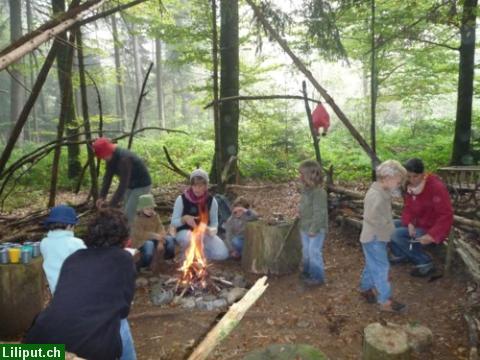
A few weeks ago my daughter R started at a German speaking forest playgroup. It’s a lovely group where they walk into the forest, build a fire, sing songs, and make crafts out of clay and natural materials. She looked happy setting off on the adventure for the first time without me, and returned happy and excited to see me again.

A few days later, my English friend told me she would be visiting the playgroup with her daughter K, (R’s best friend). They were thinking of starting in the next school year in August. A few days after that R said she didn’t want to go back to the playgroup. I wondered why as she’d seemed so happy with the whole experience. For a few days I talked about it with her from time to time, and she seemed adamant she didn’t want to go back, that she didn’t like the things they do there.

Although I was loving the time to myself, I didn’t want to go against my daughter’s wishes, so I sent a message to cancel her place. She had tried one forest playgroup before, that she hadn’t liked. It had been very different and much longer, but I became resigned to the fact that she just didn’t like forest playgroups!

I didn’t want to cancel the place entirely, as it really is a lovely group. So I asked R if she wanted to start in August instead when her friend K was starting, and she said yes. I then sent a message to the playgroup leader.

An hour later my daughter was swinging on the swing in our garden. I was pushing her really high, and she was having fun. Suddenly she said, ‘’I do want to go to the forest playgroup on Thursday!’’ I told her that I’d cancelled the place, that I wasn’t sure if she still could. She started to cry.

I’m so glad to have discovered the Parenting by Connection approach, and to know that when she does get upset, it’s a natural healing process, that releases stress and upset, and that it helps so much just to listen rather than fixing things immediately. So I hugged her and allowed her to finish crying, and said I was sorry I cancelled the place, I just thought she didn’t want to go. I didn’t rush off to sort out the issue immediately. In that moment I just concentrated on listening to her, as I felt that would help release whatever feelings were tied up in her indecisiveness about the playgroup. My mind was focused on listening rather than ‘’fixing’’ so it took me a few minutes to think about the fact that since I’d only just sent the message I could probably ask for the place back and it wouldn’t be too late, and Ruby was happy with that.

She finished crying, and as we walked back inside, she said to me, ‘’I think I should listen really carefully to what M says.’’ M is a German speaking girl she knows well from her dance class, and another playgroup they go to together. They seem to like each other a lot even though they can’t communicate verbally.

It always amazes me just how the brain works. That when we can release our emotions, in the natural process of crying, then we can often come up with new solutions to the problems we face. This was a perfect example of this. That the root of my daughter’s indecisiveness, was her feelings about being in an environment where she didn’t speak the language. The disapointment about the playgroup was like a trigger which seemed to release some of those feelings, so she could think more clearly and come up with a new plan – to listen carefully to her German friend, and start learning German.

Our children are amazing! They can often figure things out for themselves and come up with their own solutions, provided we are there, to help them through their emotional upsets.

After that my daughter was completely sure that she definitely wanted to go back. She enjoyed her second week at forest playgroup, and I’m so glad to have these tools, to help her overcome her anxieties, and worries, so that she can build confidence and resilience as she explores the big wide world.

Creating Safety With Words

skeleton

This Monday morning my daughter woke up in a wild kind of mood. She started throwing the cushions off the sofa, pulling the magnetic letters off the fridge, and seemed much more manic than usual. She poured water on the floor, and orange juice down her top, both on purpose. She had a couple accidents as well, which was very unusual. What was the matter with her?

In the evening she tried to let off steam by throwing cushions at her dad, and laughing a lot. We had fun together, but by the end of the day she was both exhausted, and still finding it hard to relax, which made for a frustrating bedtime of endless stories!

After she eventually fell asleep, my husband and I reflected on what had happened. The day before we’d gone to a theme park, and it had been a very stimulating environment. We’d had fun going on the rides, and then there was a Halloween parade, with ghosts and witches walking through the park. They weren’t doing anything really scary, and were smiling and waving at the children, but I noticed my daughter look away. At the time I wasn’t sure if she was scared, or if it was all just a bit too much after a long day. But it was so unusual for her to have accidents, that I became sure some fear had been triggered.

We’d planned to go to local Halloween event in a nearby village, and now I was thinking, should I protect her by not taking her?

When she woke up the next day I decided to talk to her about the parade. I explained to her about Halloween, how the people were dressed up, and might look a bit scary, but they weren’t mean, and that she was always safe with us.

As I told her this she started to cry, and the more I explained that she was safe, the more she cried. After a couple minutes she was happy again, and said, ‘’I want to dress up too!’.

Sometimes crying can be an indication that something’s wrong in the present, that there’s something that we need to fix or change to make our children happy. But here I was simply giving her information, creating safety, by explaining Halloween, and as my daughter began to feel relieved, she let go of some of the earlier fear by crying. I listened to her feelings, and didn’t talk to much, just enough too reassure her that she was safe.

Releasing that fear, allowed her to get excited about Halloween. If I’d never provided the opportunity to hear her feelings, perhaps I’d have tried to ‘protect’ her, which wouldn’t have helped her build resilience or allow her to enjoy the festival. I’m still careful to stop her being exposed to the real scary stuff, but I can relax and not be too overprotective.

Our children’s off-track behavior can sometimes come out of the blue. We might not always know exactly what’s bothering them, but we can be sure that they aren’t simply behaving this way because they are ‘naughty’. It’s much more likely that they are trying to tell us about an emotional hurt. Parenting by Connection, offers a way to help our child to process their emotions, and when it works well, they don’t need to tell us with challenging (and irritating!) behaviour. We don’t need to talk a lot, or try to get our children to use words to describe their feelings, but sometimes verbal reassurance, and listening is exactly what they need.

Happy Halloween everybody!

Next time try this instead of rushing to the ER

T21

Over and over again, I’m reminded that the best remedy to just about everything is simply acknowledging feelings. As parents, our first impulse is often to fix – clean up the spill, soothe the child, bandage the wound. But if instead, we simply Listen, situations actually resolve, and our children become smarter and more resilient. Let me explain.
This morning, just like every morning, my seven year old and I were riding our bikes to school. Only this morning, he scrubbed – big time. He was behind me, so I didn’t see what happened, but we were riding fast, and I heard the crash of his bike on the asphalt, and then the screams.
I’m on year 12 of parenting three boys, so I’m not shaken by these things, but I could tell he needed help. I parked my bike and got him and his bike out of the road. And then I sat on the curb, pulled him into my lap, and Listened.
He screamed…a lot. I was shocked that no one came out of any of the surrounding houses (but that’s a blog post for another day).
“It hurts! It HURTS! It’s feels cold. I’m bleeding!” he shouted with the intensity of someone who had lost a finger, not cut and bruised it. He was in pain. But he was also really scared.
I held him and he cried big tears. He hugged me tightly and buried his face in my neck. And every once in a while he would gather a big breath of air, shake a bit, and then go back to crying. I just held him close and Listened.
After about 15 minutes, his words changed.
“Get someone to pick us up!” he shouted, panicked. “Take me to the DOCTOR!”
And then he yelled at the top of his lungs, “I want to know what it is!!!”
I’ve noticed lately that he’s been really focused on “what (an injury) is”. From birth he’s been one of these kids who gets bumped or scraped and pops back into action pretty quickly. He’s never been one to dwell on a booboo. But over the last few weeks I’ve noticed a change. He gets hurt, and even more out of character for him, notices things about his body with concern, and REALLY wants to know “what it is” and “what it does”. Just last weekend my mom was driving him somewhere and she called me terrified that something was horribly wrong. She said he was complaining that his chest hurt, and she was obviously worried. And then he was worried. It’s true, it could have been his heart. But my guess was indigestion.
“What is it?” he pleaded with me to tell him over the phone.
I said I didn’t know, and then I remembered a family friend from childhood who, after losing an argument that the spoon he was holding was called a fork, proclaimed, “Well, you could call it a fork!” I suggested we could call the feeling he was having whatever we wanted – let’s say, “Fred,” and I let him know I’d be home soon to check him out.
My young son has experienced loss in his short life. The deaths of both his grandpa and great-grandma were blows to his world. And he knows that I’ve lost two very close friends to diseases, and that a friend of mine is currently battling lung cancer.
These things are scary for all of us. I could come up with some theory around this, but honestly it would only help to quench my own thirst to know how and why he functions the way he does. I won’t likely ever know why he’s been so scared lately, but I am grateful for the ability to recognize that he is obviously scared in a way he has never been scared before. And he’s trying desperately to bury the fear by pinning a name on it. Which is great, in that it soothes him and gets him through whatever the current struggle is, but the fear has just been sitting there, brewing under the surface, waiting for something to happen so that it could get the hell out of there.
And that’s what happened this morning when he crashed his bike. Eventually, he stopped screaming for me to take him to the doctor, and we walked our bikes a couple of blocks, and then hitched a ride home with a neighbor. I cleaned his cuts and scrapes and taped his little swollen finger to the strong one next to it, and we got in the car and headed for school. He bounced into the classroom no problem, and when he was dropped home at the end of the day, he hopped out of the car with a big grin on his face and announced that he had taken off the splint (half of a plastic spoon I found in the kitchen drawer – extra brownie points for resourcefulness, please;) and that it was still a little sore, but that he could almost bend it all the way now. He demonstrated, and then he ran off to play with his brother.
Interesting. This day could have gone many ways. Had I answered to his fears, and taken them on as my own, I could have easily spent my day going from doctor to x-ray tech to pharmacy… You know the drill. Instead, I offered myself to my son for an hour, supported him to heal, and even had time to write about it!

Tosha Schore is the mother of three boys, and the owner of Tosha Schore, Your Partner in Parenting. She is a Certified Parenting by Connection Instructor and Trainer who has empowered thousands of parents to conquer their parenting challenges, so that they experience less struggle, and more joy, play, laughter and ease in their families. Tosha is particularly interested in the issues of raising boys, sibling relationships, setting limits, and helping children work through fear. She lives in the United States, and supports parents all over the world through her online programs. You can learn more about Tosha and her parenting services at www.toshaschore.com.

Dancing Your Way To Connection

teddys

Recently I’ve sometimes felt at a loss to know how to start connecting with my daughter. When she’s whiny and grumpy, or if she’s non-co-operative, and doesn’t want to let me get her dressed or brush her hair, then laughter and play is the best way to shift her mood, But recently I can’t always think of things to make her laugh, or feel in a playful mood. If I don’t feel in a good mood myself then it’s almost impossible to help my daughter feel better.

Now I have found the perfect solution, dancing! I’m not sure how exactly it started, but we have been dancing almost every day for the last few weeks. We put on my daughter’s favourite song, (the Locomotion), and start moving. It doesn’t involve me having to think up some way to giggle or initiate play, it’s as simple as just putting on our ‘dancing song.’ And what happens is that play and laughter naturally follow. My daughter will try to pull me across the other side of the room, and I’ll resist at first and then fly across, which starts her laughing. Or her teddy’s like to dance too, and they’ll start getting a bit ‘rough’ and ‘fighting’ on the dance floor. This has made her laugh a lot, and help her release some tensions about playing with other children. She recently started a new playgroup, which has triggered a lot of fears, so I know the chance to do some playlistening, and be strong and powerful on the dance floor will help build her confidence.

The best thing about dancing, is that my mood shifts along with my daughters. As parents, we can get weighed down with our responsibilities, and it can be hard to be what our children need us to be; fun loving! Dancing is a simple way to get your body moving, your heart racing, and start to remember what it means to be fun and in the moment.

In a recent study researchers looked at what happened when 14 month old babies were bounced in time to music with an adult, and then tested to see if they would pick up a dropped item and hand it back. The bounced babies were more likely to help out, which the researchers took as a sign that having shared experiences makes you more altruistic. 

This really sums up the Hand in Hand parenting approach, that if we want to raise co-operative loving, children, then it’s as simple (and as challenging!), as connecting with them, offering them warmth, love, play, and perhaps some dancing!

Punishment and reward, don’t help children to become genuinely co-operative, because they are based on children’s desire to get what they want, or avoid what they don’t want. To allow the children the gift of staying in touch with their natural, altruistic selves, we need to show them that we aren’t going to use our power to give or take away to control them. We can just be loving and connect with them.

It’s not always easy, we frequently run out of patience and energy. But Hand in Hand parenting supports parents to overcome the hurdles that get in the way of us being the fun, playful parents we want to be. Could 5 minutes of dancing a day before school, or after dinner bring more joy and laughter into your family life? Try it and see!

Sad Stories Bring Happiness

ruby reading

One evening my daughter seemed full of manic energy, running around the house, everything was making her giggle. We played lots of games, she pulled pillows off our bed, and ran away. I grabbed the pillows back, and picked her up, pretending she was as a pillow, saying, ”I must put this pillow back on my bed.” She laughed and laughed.

I think she’s going to have a big cry soon, I told my husband, wanting him to know in an advance, as it can be a big shock, when suddenly fun and games turns into a big meltdown. Beneath the wild energy, I could sense some big emotions.

We started getting ready for bed, and my daughter suddenly said, ‘’I want to read sad stories!’’

It seemed such a funny thing to say, but I started looking for our ‘sad’ books, which are stories about seperation, usually involving a mummy animal who gets separated from her child, and then they are united at the end of the book.

In ‘‘Bedtime Billy Bear,’’ a mummy bear goes out for the evening while a babysitter looks after Billy. Billy can’t sleep well as he’s worried about his mum getting home in the dark.

We read this story a lot when she was going through some seperation anxiety after trying a new playgroup, and being babysat with my friend. She would ask to read the story over and over again, and each time the mummy bear came back, she would have a big cry.

Evenutally, we had read the book so many times that she just smiled at the end, as if whatever emotion the book evoked had been healed. When she’d let out all of her own emotion, we could talk about how I’d leave her, but I’d always come back, and she understood and felt confident about it.

We also have a book called ”Monkey Puzzle” by Julia Donaldson. This is about a monkey that gets lost in the woods, and a butterfly helps him to find his mum, but she keeps taking him to the wrong animal, a spider, frog, and an elephant. Eventually they find his mum and have a big hug. My daughter always burst into tears when they hug at the end.

We hadn’t read this one for a long time, as she said she didn’t want to read it. The moment at the end just seemed to sad for her, and I never suggested we read it. But tonight we couldn’t find ‘‘Bedtime Billy Bear.’’

‘‘How about Monkey Puzzle?’’ I asked my daughter.

‘No, that one is too sad,’’ she said.

‘’But remember at the end when the baby monkey finds the mummy monkey? It’s nice isn’t it?’’

‘‘Okay, I want it.’’ She said.

I started reading the book, and at the end when the mummy hugs the baby monkey she started crying. I gentle reassured her, that the monkey was safe and back with his mummy, which made her cry even more. It was as if the sense of safety of the reunion, allowed her to release her own fears about seperation.

Then she asked to read it again! We read Monkey Puzzle one more time, and then she said, ‘’I want to read a happy book now!’’

Afterwards she was really relaxed, and all of the mania of earlier had gone. She fell asleep really happy and contented.

Feelings can sometimes seem big and scary, and adults and children alike get stuck in patterns of running away from them. This evening was such a great example of what can happen when children have regular experiences of fully feeling their feelings, and releasing them, without adults trying to distract or stop them. She actually knew she wanted to let go of the upset, and that sad books would help.

We all want our children to be happy and sometimes that means being sad for a while. It’s not about forcing our children to face their feelings, when they aren’t ready to, but gently listening, so that they learn that feelings aren’t always so big and scary after all, that sadness, is just something like grey clouds, that pass by, revealing sunshine beyond them.

What to do when your child ‘just’ wants your attention

beach2

We recently got back from a three week trip to the UK. Lots of travelling, and stressful at times, even if it was fun.

One morning, I started tidying up the house, as a friend was coming over. My two year old daughter immediately started ‘untidying,’ pulling books off the shelves and putting them on the sofa, and putting pillows in the kitchen. Suddenly all sorts of random objects appeared in random places, and all my time was taken up, rectifying the mess she was making! I felt frustrated, and only hoped my friend would forgive me for the state of my house!

This behaviour was certainly ‘attention-seeking’, but that didn’t mean it wasn’t for a good reason. I’d noticed in the evenings she’d take ages to fall asleep, sucking her fingers — a sure sign she was feeling tense. I suspected that the stress of the holiday was coming out in her behaviour. Making a mess became the theme of the next few days. She would pull all her alphabet letters off the fridge, and throw clothes onto the floor.

One mainstream response to ”attention seeking behaviour” is to ignore the bad and praise the good. But this doesn’t address the underlying upset feelings that are always beneath our child’s off-track behaviour. So these feelings are going to come up again at some point, possibly in worse behaviour, or our child will feel withdrawn and distance from us, angry, and hurt.

Attention is a biological need, the same as eating and drinking, and it literally builds a child’s brain, to have adults connecting with them. Contrary to popular opinion, children only ask for the attention they need, even if they ask for it in infuriating ways.

I responded by playing the role of the exasperated parent but in a very playful way. I’d exclaim”oh no, what are all these letters doing on the floor!!”, making sure she knew that I was turning it into a game, and not really annoyed. Then I’d pick all the letters back up and invite her to make mess again. Soon she was running around pulling books off the shelves, clothes out of my drawers, all the while giggling hysterically as I fumbled around making failed attempts to get her to stop.

Then when I sensed that my patience was beginning to wear thin, and the mess was starting to overwhelm me, I gently set a limit, and said it was time to stop playing. I asked my daughter to help clean up a bit, and she happily put books back on the shelf with me.

After a few evenings of playing this game, my daughter was back to her normal self, respecting our living environment and not making a mess just for the sake of it. She was always happy to help me clean up.

It might sound crazy to allow our children to do something ‘naughty,’ but this kind of ‘sanctioned disobedience,’ gets feelings out of their system, so it doesn’t result in larger off-track behaviours later on. If we can relax our limit of what is acceptable and have some fun, our children do understand it’s just a game. And afterwards, they’ll be more likely to co-operate with us, because they are no longer full of the upset feelings that were driving their misbehaviour. And they’ll be less attention-seeking because we’ve actually given them the attention they were asking for.

If you don’t want your child bashing up your favourite paperbacks, or messing up your clean laundry, then you can create a harmless scenario, and invite them to make a mess. You could put a stack of scrap paper on the table and say, ”I hope you don’t mess up my important paperwork!” in an inviting tone, or create a drawer of old junk, and say to yourself, ”I hope you don’t empty that drawer!”

Understanding the benefits can help us let go of those old ideas about behaviour being ‘just attention seeking,’ as can seeing the result of having a more co-operative child afterwards. Have fun, and monitor your own feelings, so you can end the game while you still have some patience left. Listening time helps too!