Blog

Is The Screentime Issue A Connection Issue?

ipad

Screens are addictive, we all know that. Right? Or do we? Today my daughter came back from Kindergarten, and ate her lunch while watching her ipad. A few minutes after eating she begged me for special time. She turned her Sylvanian house into a hotel with rooms and beds for all the guests and we did an hour long special time.

Then we went to the shop to get snacks and hang the washing out. Then she told me that she’d go inside and have a rest and watch her ipad, then do a bit more special time. So she watched again for a short time and then we played a bit with her toy Octonauts. Then she made some ‘youtube’ videos to show the viewers around the hotel ( I don’t really put the videos on youtube but our family and friends are her subscribers!).

She watched TV a bit longer and then she told me she was bored of it and started to prepare a snack for Kindergarten the next day (on her own initiative). As I write she’s hanging out with her dad and choosing an outfit for tomorrow – also her idea!

I’m always going back and forth about the screentime issue, constantly readjusting my game plan, and trying to follow my instincts. When my daughter first started Kindergarten, I found myself setting a lot of limits with screens, particularly if she asked for it first thing when she walked in the door. I felt like she had a lot of feelings coming up about starting Kindergarten, and that I need to set a limit and staylisten. (You can read more about the Hand in Hand Parenting approach to setting limits here )

But then I began to feel like I was setting too many limits, and it was no longer about listening to my daughter’s feelings but about my own controlling attitude to her screentime. I felt that this was getting in the way of us having a good connection.

When I stopped hovering around her trying to think of creative suggestions to get her off screen, she would watch for a while and then stop, completely of her own accord. I began to focus on respecting my daughter’s genuine interest in screens, allow her to use them until she feels ready to stop, allowing her to soak up inspiration for her own film-making!

Screens can be addictive but not always. Today reminded me that when our children are well-connected, they can use screens in a healthy way. Focusing on our own addictive use of screens can also make it easier to help navigate the screentime dilemma. Taking a leap of trust in our children’s ability to self-regulate is also helpful, as well as stepping in and setting limits when they need them.

As I finish writing I can hear my daughter playing independently as my husband makes dinner. She just came in to drop me off a little note with her name on and some kisses.

I don’t have any foolproof answers, but I do think that when we fill up our child’s connection cup, and give them plenty of opportunity for emotional release, then it’s much less likely that they’ll use screens addictively. As addictions expert Johann Hari says, ‘the opposite of addiction is connection.’

I also think it’s important not to use the screen as a pacifier to give to our child when we are busy and unavailable. I think that can actually create an addiction because our child then learns to gravitate towards the screen rather than to us when they are feeling disconnected. In this article here Patty Wipfler explains that a bored child is actually a disconnected child. If we can give our children connection when they are bored rather than entertainment in the form of an electronic device, we reduce the chance of them becoming addicted.

How about you? How is your family handling screentime? What has worked for you and what’s not working? If you’d like some tips based on Hand in Hand Parenting then feel free to leave a comment below!

You can read more about the importance of connection in reducing addictive behaviour in my book Tears Heal: How to listen to our children

Tears Heal2016

A Mum Track Mind

Brilliant blog posts on HonestMum.com

How Tears Help My Daughter Find Her Confidence

14356089_10154439399166668_1544360305_n

Thanks to Ariadne Brill of Positive Parenting Connection for contributing this guest post about the power of listening to tears. I see this so many times fear and upsets can cloud our child’s thinking, and after having a good cry, they are filled with confidence and ready for new adventures! 

With tears streaming down her little face my daughter turned to me and said “I can’t go in, mama, I just can’t.”  We were standing just outside her new classroom on her very first day of first grade.

We had prepared for starting the first grade. In fact, the entire year before, her pre-school teacher and the elementary teachers had collaborated beautifully in preparing the children for this new adventure.

Aptly named Harmony days, the elementary school hosted several occasions in which children had a chance to visit the elementary school, try gym, art, music and other school activities.  Right before the school year started, my daughter also had an individual meeting with her new teacher. At that meeting, she appeared confident, at ease and determined to start her schooling adventure. She knew the classroom and had even decided which classmate she wanted to sit with.

But tears showed up right before the door frame anyways. It looked like there would be no way to get her inside. Her feet were planted firmly on the ground, her hands squeezing her backpack.  But knowing my daughter, I just waited, quietly. Offering reassurance, I listened but never insisted the tears go away.

Tears are just want my daughter needs before starting anything new.

Even as an infant, my daughter often cried (or laughed wholeheartedly) through transitions.  

Waking up from a nap at age one usually came with tears.

Falling asleep even now at age six happens more easily if we laugh up a storm.

Trying new foods,  traveling to a new place, a shift in our usual routine…it’s a sure thing that tears are going to show up.  And my job is clear: I get to listen. I don’t get to fix, shush or coddle. But it’s a delicate and fine balancing act. I have to trust my daughter a great deal.

“Don’t fix, don’t soothe.”  Reminds Patty Wipfler of Hand in Hand Parenting. And I often allow these words to guide my mind  when my daughter’s tears do show up.  So that I can provide the space needed for her to offload her emotions and find her own inner strength to face her challenges.

The amazing thing about these tears is that when they show up, if I listen, if I allow my daughter that time and feeling to fully pass through, she bounces back into calm so very quickly. It’s like this gentle but needed tornado of emotions must sweep through her. And then in the place of tears unwavering confidence and determination appears.

This day in front of her classroom was no different. And so I stood by her, offering a hand to hold and patiently waited for my daughter to signal she was ready to step over that threshold.  

The tears came full force for about a minute. Her little face red, her mind working fiercely. One hiccup and a long sigh later, the tears subsided.  A request for a big hug and smile showed up next.

“Ok. I can go in. I am ready. I love you mom. I ACTUALLY CAN DO THIS.”  She said, enthusiastically putting one foot in front of the other and marching towards her new classroom.

Peace & Be Well,

Ariadne

Author’s Bio

Ariadne is a happy and busy mama to three children. She practices peaceful, playful, responsive parenting and is passionate about all things parenting and chocolate. Ariadne has a B.S. in Communication, is a certified Positive Discipline Parenting Educator, and has completed several graduate courses in child development, psychology and family counselling. She lives on top of a beautiful mountain with her family, one cuddly dog and “bluey” the fish.

Positive Parenting Connection http://positiveparentingconnection.net

Positive Parenting Connection on Facebook http://facebook.com/positiveparentingconnection

14285632_10154439574821668_207363665_o


3 Little Buttons

How Connection Helps Picky Eaters

thanksgiving-dinner-illustration

Do you have a child who has some irrational eating preferences? For example they eat certain foods at nursery but not at home, or there are foods they used to love that they now claim they don’t like? I know this situation well! Some of my daughter’s preferences have been that she eats cashews at her best friend’s house, but only almonds at home (even though she used to like all nuts apart from hazlenuts). Or that she will eat chips but not potatoes, (!?) or that she will eat spaghetti with sauce if she’s at a restaurant, but at home the sauce is ‘yucky’ and she wants it plain, (even though she used to like it!).

If this sounds like your child, then you may have given up hope that there’s anything you can do. I know I’ve gone through phases like this. You may have put it down to just ‘toddler irrationality’ and hope they grow out of it. You just want to make sure your child has some calories in them, and you just want to relax and eat your own dinner.

However there is a solution! Chances are if your child is acting irrationally in their food choices, the problem is not really about the food but with their feelings about the food.

Hand in Hand Parenting is based on the understanding that when children feel good, their thinking brain works well, and they can make rational choices, and co-operate from us, even from a very young age. However when children experience stress and upset the feelings get in the way of their behaviour. They start telling us that they aren’t feeling good by acting in ‘off-track’ ways.

When your child is acting picky about food, it’s hard to tell what to do. We may not want  to force them to eat anything they don’t like, but we also want to make sure they are getting enough vitamins. And also just as important is that if your child’s pickiness is a sign that they aren’t feeling good, so we want to address those feelings, so they don’t get in the way of them enjoying life, and all the wonderful opportunities out there!

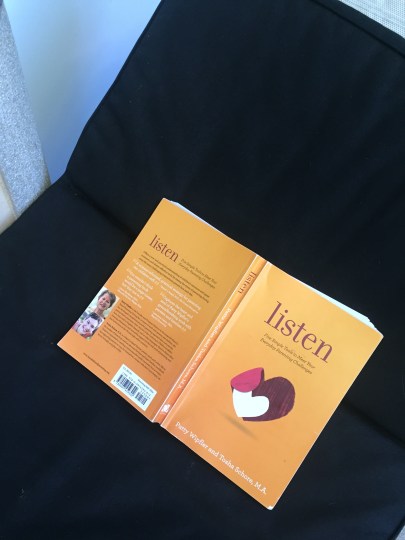
If your child is acting afraid of food, it’s often a pretext for deeper fears from difficult experiences your child has had. As Patty Wipfler and Tosha Schore describe it in their book Listen: Five Simple Tools To Meet Your Everyday Parenting Challenges, ‘those feelings are stored away, raw and powerful still, in the child’s emotional memory. There they sit uneasily, tangled with information about the sights, sounds, smells, tastes, and textures of the experience.’

So when a child gets picky with food, it’s often that they are projecting their fears and upsets, onto the smells and tastes. It’s hard to be adventurous with new foods when our children are still re-experiencing fear from the past.

I have gone through periods where I have let my daughter’s picky eating slide. I was learning and observing to try and figure out the best approach. I noticed that she was highly sensitive to smells and tastes. As she got older she would sometimes complain about the smell of my food and not want to sit near me! However I began to notice that when she was feeling good she didn’t get so irritated by unusual smells and tastes. So it really wasn’t actually about the food.

Here’s how connection can help. When a child connects with us, they get to feel safe, and they also get to be listened to. One strategy we’ve tried is doing special time before dinner. (You can find out more about Special Time here) My daughter carries that sense of happiness and connection to the dinner table, and then when she sees the food there she sees it through a lens of connection and joy rather than fear.

Another strategy is play and laughter. Children (and adults!) naturally like to giggle away our fears, and  and we can bring play to the dinner table with fun and powerful results. (see my article 20 Playful Ways To Help Picky Eaters, for some inspiration).

We can also set limits about food, and listen to the feelings. It’s not about forcing our child to eat something they don’t like. But proposing they try it, and then listening to the upset. (You can read more about this approach which Hand in Hand Parenting calls Staylistening, here).

A few years ago, I wanted to help my daughter expand her pallete. So I decided we would try some new fruits. I told her my plan and we went to the shop and bought a mango and some kiwi. We laughed at these ‘funny fruits’ and took them home. The next day I proposed we tried them, and my daughter cried for a long time. In the end she did try them, and ended up eating two kiwis! After that she liked them and now mango is one of her favourite foods.

At that time we used to go to a music class for toddlers. All the children would play with musical instruments, and then put them back in a basket when it was time to finish. My daughter had always been shy to go up to the basket and didn’t like the rush of children all together. However the two days after I staylistened to her feelings about the new food, she happily rushed up and put her instrument back in the basket. It was amazing to see how listening to her fears about the food was not just about the food, but helping her with fears that were getting in the way of her living life to the full.

I know I go through phases where I just don’t have the energy to figure out how to work on this big emotional project for my daughter, and that’s where listening time helps (You can read more about listening time here). Because every family is different we need time and space to think through the emotional projects we want to help our children with and see how we want to tackle them. Having space to vent our worries, and also talk about how eating was for us as a child allows us to get our head clear to figure out an action plan for our family.

I hope you find these suggestions helpful, and I wish you many happy adventures at the dinner table!


Giggle Parenting For Getting Up In The Morning

clock1

As I talked about in my previous post, I’m trying to adjust my daughter’s sleep so that she can wake naturally for Kindergarten in the morning rather than me having to wake her. Until that happens we’ve thought of a fun way to start the morning off and get the giggles flowing; a radio alarm clock!

My daughter’s eyes lit up when I said we could get a free radio alarm clock with our Co-op supermarket points, and that could wake her up instead of me. She doesn’t really like to talk to me for the first few minutes of waking up and prefers to be left alone.

Then I realised there is a much more modern version. I downloaded an alarm clock app (bedr alarm clock radio in itunes) for my phone which will wake you up with a choice of hundreds of different radio stations from around the world. If you don’t like the idea of mobile rays floating around your sleeping child’s brain then you can also put it on airplane mode and choose songs from your own itunes selection.

This morning my daughter started dancing around happily the instant she woke up and heard the music. Then I put the alarm on snooze but didn’t tell her. A minute later the music started up again. I acted all surprised and confused saying, ”Hang on, what’s going on. I thought I turned that off.” My daughter started dancing again and laughing at my confusion. ”Okay, let me try again,” I said. ”I’m sure it must be off now,” and then I snoozed the alarm again. Cue lots of laughter and dancing as I repeatedly snoozed the alarm while pretending I was trying to turn it off.

If your child struggles with morning grumps, but loves music and dancing, then try this to wake up! I hope it helps your day start smoothly 🙂

Would you like to learn more about Giggle Parenting? Check out my introductory post here, Giggle Parenting: The Best Discipline Tool Out There!

Do you have a parenting challenge you’d like a giggle parenting solution to? Check out my Giggle Parenting Archives for solutions to common family challenges. If your problem isn’t listed, then leave me a comment or pm me via facebook and your challenge could be the subject of my next blog post! 

Why Listening To Feelings Is Just As Important As A Good Night’s Sleep

feeling.jpg

The other day a friend (who also practises Hand in Hand Parenting) were chatting. I was talking about how since my daughter’s recently started Kindergarten that I’m trying to shift her bedtime routine. She used to go to sleep between 9-10 but now she has to fall asleep earlier. Ideally I’d like her to wake up naturally each morning, but I’m finding I have to wake her each day, which sometimes results in her being overtired. What could I do to shift her sleep, I wondered? Should I impose a strict routine now instead of going with the flow like I used to?

As my friend and I talked we remembered something. We’ve noticed anecdotally that children who’s feelings get listened to,  (what Hand in Hand Parenting calls staylistening) tend to need less sleep and often drop their naps earlier than other toddlers. (although this is a slight disadvantage, there are many bigger advantages to having a child who’s feelings don’t erupt through their behaviour all the time, I promise you!)  It got me thinking about how sometimes, if my daughter has a big play, or a big cry the night before she wakes up in an amazingly good mood, even if she ends up having less sleep. Now I think about it, I have also needed more sleep at times when I was full of emotion. A couple years ago when my grandmother died I could easily sleep for 12 hours if I had the chance.

When our children have to get up in the morning for an exact time it can put a lot of pressure on family life. We feel like we have to get serious, put a stop to fun and games, and live our lives by the clock. One way around this that I tried this week was to set a timer for our evening roughhousing play, so that we could still have fun, but fit it into our stricter routine.

On Friday night I was going to do the same, but then I remembered the conversation with my friend. My daughter seemed to need to play and release some feelings so we ended up playing for longer. I knew she could sleep in the next day. I didn’t want to throw off her whole routine, but since she’s started Kindergarten, she’s taking longer to fall asleep at night. She’s often singing German songs or counting in German last thing at night, and I know her brain’s processing all the learning she’s doing. I know that as much as she needs a good night’s sleep she also needs extended play to relax first. And last thing at night seems the perfect time to do it!

If your child regularly takes a long time to fall asleep at night, it can make you feel anxious. You’re worried your child is going to be exhausted the next day. You’re frustrated and want some me-time. Play offers us the chance to relax. To be a little flexible with the routine for a few nights, and give our child concentrated, intense play to work on any stress and tension that’s been gathering up. Don’t be surprised if your child also needs to cry after having lots of laughs and giggles. It’s all part of their natural healing process for releasing stress and tension. Going with it rather than against it will help your child to sleep better in the long run, even if it disrupts the routine for a few nights.

After a few nights of having their feelings listened to, you may notice that they fall asleep much easier, and it’s much easier to implement your bedtime routine.

So if you find yourself getting stressed and tense waiting for your child to fall asleep. Remember that giggles are just as important! And you can go with your child’s natural instinct to play and release tension, rather than focusing on the clock.

If you’re looking for some bedtime inspiration try these suggestions below. 

Giggle Parenting For When Your Child Just Won’t Fall Asleep 

The Benefits Of Laughter Before Bedtime 

Silly Bedtime For Kids Leads To Better Sleep 

And if you’d like to learn more about how Hand in Hand Parenting can help your child fall asleep easily and sleep through the night check out the sleep chapter of my book, Tears Heal: How To Listen To Our Children 

Tears Heal2016


How To Stop ‘Doing’ Parenting And Simply Be A Parent

IMG_2096.JPG

Last week my daughter started Kindergarten, and I had written out a 3 page to-do list. I had planned out my schedule of all the things I was going to do, from learning German, to cleaning my house, making dinner every day and writing 3 more books. However I was so nervous about this new beginning I hadn’t got very far on my list.

This morning after dropping my daughter off, I finally felt like I could relax. This was the 7th day she had gone to Kindergarten, happy and excited. I finally trusted that she was safe there, and enjoying herself. And I went onto my balcony and curled up with Listen, the book about Hand in Hand Parenting by Patty Wipfler and Tosha Schore.  And I wondered why I was feeling guilty.

My head was full of shoulds. I should tidy up the house before my daughter’s birthday party this weekend. I should prepare everything before we go out to the parent’s evening tonight. But instead I was reading this wonderful book, listening to the wind rustling in the trees, and looking at the sunshine. I felt guilty, but then I became aware of my body. I noticed how nervous and tense my muscles were. I remembered how last week, I’d relied on caffeine to get through the day and manage the strong emotions that I had about my daughter starting Kindergarten, even though it makes me feel even more nervous and edgy.

I thought of all the play I’d done every evening, all of the special times, and all of the tantrums my daughter’s had as she processes learning a new language, and being in a new environment every single day. I realised that being the parent of a school child is no less intense than being the parent of a child you are with all the time, because that child brings all their feelings home to you in concentrated form!

And I realised that the most important thing right then was to stop ‘doing’ parenting and simply ‘be’ a parent. I know that if I rush around the place that’s when I’m more likely to get stressed and shout. I knew that resting my body for an hour or so, would mean I’d be in much better shape to connect with my daughter when she got home. And so I took a guilt free rest, knowing it was the best thing I could do for my family.

In this world of doing, fuelled by the demands that our busy modern, capitalist society puts on us, we need to make a conscious choice to return to being, without guilt or apologies. You are doing a wonderful job, putting your heart and soul into caring for your little ones, and you deserve a rest!

3 Little Buttons

Giggle Parenting Inspiration For Picky Eating

soupbowl

My daughter came home from Kindergarten and I was warming up some soup for lunch. Suddenly she started complaining that she didn’t want soup, even though she’d asked for it the day before and gone shopping with her dad to get the ingredients.

I had a feeling, that like many of our children’s big emotions, it wasn’t really about the soup. Although my daughter is loving her new adventure at Kindergarten, I know she’s got lots of feelings to process too. So I decided to set a limit. I told her that I wasn’t going to cook anything else. She cried, and I gave her a hug, empathised with her, and let her cry for as long as she needed without interrupting her (what Hand in Hand Parenting calls Staylistening). And I also kept holding the limit.

After a few minutes she was feeling a bit better, and started eating the soup. Although she’d finished crying, it seemed like there was still some feelings simmering beneath the surface and I sensed she needed to giggle.

So I did some silly stuff with my soup spoon. First it tried to go into her bowl to get her soup. Then it tried to feed me really quickly spoon after spoon when I wasn’t ready. Each time I would complain and talk to my spoon asking why it was being so silly. ”Hey spoon, you’re feeing me too fast!” I would exclaim exasperated. Then the spoon would respond by feeding me too slowly and I would complain about that too. My daughter laughed and laughed. After that she ate happily and even said, ”this soup is too delicious not to eat.”

Food is complicated for a lot of us. We want to honour our children’s preferences, and tastes. But we also want to notice when their feelings around food are masking deeper feelings of disconnection, and hurt. That’s the time we can set in, and use limits, and giggles to connect with our child so that they feel better.

Using a connected, listening approach to meantime helps our children to grow up with a healthy attitude to food. It helps to teach them to recognise when they have upset feelings, rather than masking them by comfort eating. I don’t always find it easy to set limits around food, but listening time, helps me to get my head clear so that I can see whether my daughter’s need for a certain food is genuine or a pretext for some hurt feelings.

Being able to listen to my daughter meant that she was able to return to Kindergarten with her emotional backpack a little lighter, ready for more adventures.

For more playful approach to picky eating check out 20 Playful Ways To Help Picky Eaters

For more information on the Hand in Hand Parenting approach to setting limits download your free Setting Limits E-Book.  

Brilliant blog posts on HonestMum.com

The Invisible River Of Feelings Underneath Our Lives

sadness2

Holy the mysterious rivers of tears under the streets! – Allen Ginsberg

Imagine the scene: your toddler throws their food onto the floor. You feel enraged, and want to shout. Or you might actually shout, particularly if you feel like they’re old enough to know better. What’s going on here? Parenting can be frustrating and exhausting, and when your child does things that almost seem to deliberately make your life harder it can leave you at breaking point.

The most important thing to know is that it’s not just about the food. Yes it’s a hassle to clean it up, and it’s a waste, and you might be worried about your toddlers’ eating habits, whether they’re getting enough vitamins, and if they are ever going to learn right from wrong. But it’s actually about much, much more.

When we are stressed the emotional part of the brain – the limbic system, senses a kind of emotional emergency, and the pre-frontal cortex- the part of the brain responsible for reasoning, and logical thinking can’t function as well. When this happens, implicit (unconscious) memories from our childhood get activated and often because we can’t think clearly we often tend to respond in automatic ways, often mirroring the way we were treated when we were children. That’s why we tend to lose our temper and act in ways we sometimes regret.

When we are having a hard time in the present, it’s often because these implicit memories start bubbling up to the surface, often without us being consciously aware of what’s going on. Even if you don’t act on these memories, if you don’t shout or hit your child, then they are still there in the background, whispering away, and making it hard to stay calm and relaxed.

When you look at a toddler, you’ll probably notice how much they are in the moment, and full of joy at the simple things in life. And if you’ve been reading my blog for a while, you’ll know all about the healing power of tears, and how we can listen to our children’s upsets, play and connect with them, so in difficult times they can keep returning to their natural state of joy.

But what happened to us? When we were growing up most parents had no idea that we need to express our emotions, to release our feelings to recover our sense of joy. And so we gathered a lot of hurts which we carry with us to this day. It’s as if as well as the present moment, we also have this invisible river of feelings that flows beneath our lives, that we may not even be aware of much of the time. This is one of the reasons why parenting feels so hard.

When life gets tricky. When we get angry, or anxious or depressed, it’s like this river is calling us home, reminding us of who we were as children, and how we got hurt.

It’s not too late to return to our own joy. Think of your child and how much connection, and attention they need, of how they need an infinite amount of love, and listening, to feel good. Hand in Hand Parenting is an approach about listening to our children, but it’s also about joining together as a community of parents, to listen to each other, so that we can heal from our own hurt and pain. We call this listening partnerships, and you can find out more about them here.

Imagine next time your toddler tries to throw food on the floor, and you can react with lighthearted playfulness instead of frustration and exhaustion. It is really possible, when we begin to listen to that invisible river of feelings beneath our life.

To find out more about how our past effects our present day parenting and what we can do about it check-out my book Tears Heal: How To Listen To Our Children

Tears Heal2016

Diary of an imperfect mum

Brilliant blog posts on HonestMum.com

Order Your Copy Of Tears Heal!

Tears Heal2016.jpeg

You can order your book now using the paypal links below, and receive a signed copy.

UK orders £13.99 incl postage 

Europe orders, 20 Eur incl postage

International orders, $25 incl postage

Tears Heal allows parents to discover parenting’s biggest paradigm shift, the way they respond to children’s tears.

One of the most challenging things parents of babies and young children have to deal with are tears. When babies cry, parents shhh, or rock them to try to get them to stop. When toddlers’ tantrum parents may distract them, attempt to reason with them, or ignore their crying in the hope it won’t last long. It seems natural to judge the success of parenting by how much children cry. Tears Heal will allow readers to discover parenting’s biggest paradigm shift, the way they respond to their children’s tears. Here parents will learn how to transform their parenting by moving away from stopping feelings, towards listening instead. Tears Heal – How To Listen To Our Children is warm, and full of empathy for the hard work, and struggles that parents go through. It also has a strong leaning towards helping parents with their own emotions, as they deal with their children’s challenging moments. It explains why we find children’s feelings hard to handle, because our feelings weren’t fully listened to when we were children, and shows how we can nurture and support ourselves so that we can be the parents we want to be.

A Mum Track Mind
3 Little Buttons
Diary of an imperfect mum

Why Setting Limits About Screentime Starts With You

womanonphone

Ever since my daughter discovered screentime at two years old, I’ve been thinking about how to set limits around it, and although I discovered some good solutions, I have never felt completely comfortable with the way I was handling the screentime dillemma. No matter what I tried, I always remained feeling anxious that I wasn’t making the right choice.

I experimented with the unschooling approach to screens (allowing our children complete freedom) and learnt a lot about trusting children to self-regulate. I saw many times that my daughter did put her screen down to do something else, and I learnt a lot about how important it was for me to be in good emotional shape to have the energy to offer her alternatives and to be there to connect.

Her screentime wasn’t excessive. Screentime hadn’t destroyed her imagination, and there were still many things that she often preferred to do other than watch TV. But I still felt that she was using the screen for emotional reasons and for boredom. When she wasn’t sure what to do, she seemed to automatically gravitate towards the screen.

I did offer alternatives, but I didn’t want to be constantly entertaining her by having a long list of fun activities we could do together. I wanted her to be happy to play alone, sometimes, and to come up with her own ideas.

As time went on I became convinced that she did need limits about screentime, and I began to use the Hand in Hand Parenting approach to do so. Sometimes she’d get upset, have a big meltdown, and then her mind would clear and she’d think of something fun to do that was completely her own initiative. At other times she wouldn’t feel particularly upset about the limit, and for some reason I didn’t feel good about setting a limit.

I kept questioning whether I was right to set that particular limit, that I was depriving my daughter of a learning tool, something that she loved, something that actually did inspire her creative play. So I seesawed between allowing freedom and setting limits, and never felt completely comfortable either way. When I allowed her freedom I felt scared, and depressed. When I set limits, I felt uncertain.

Then something happened. Over the summer when my husband was off work, I started to get more relaxed, I started to get more of my own needs met, and feel more present. I bought a book that I couldn’t wait to read every morning when I woke up before everyone else (the rest of my family does not like early mornings!).

It had been my habit to grab my phone every morning, and scroll through my facebook feed before my eyes were even properly awake. I’d look at my messages and notifications throughout the day, often when I was feeling low and needing connection. But this book was so addictive I forgot about my phone.

When I finished the book, I was tempted to pick up my phone again when I woke in the morning, but I tried hard not to. I stocked up on some of my favourite magazines from the UK and read them instead. Or I just tidied up the kitchen, or did some Pilates.

And then I noticed something interesting. I began to feel more confident when to set a limit and when not to. And when I did set a limit it felt right. When it comes to screentime we don’t live our lives by the clock. My daughter doesn’t have a set period of time to watch each day, instead I go with my gut (not my fear) about when it feels right to set a limit.

As much as technology is useful, and has changed our lives in many positive ways, it is addictive, and that addiction is widespread. I realised I was in no position to help my daughter with her addiction, until I’d begun to figure my own. Of course how could I possible know when to set limits with her and how, if I couldn’t even set limits with myself!

Parenting really is a healing path that we walk with our children. When we have a difficulty with our child, often the first step is to look at our own behaviour and emotions, and why we find their actions particularly challenging. It is always just as much about us as them.

If you are struggling with screentime in your family, I can totally relate! It is scary, watching our children disappear into the screen world, and wonder how to balance their genuine desire and interest for screentime with it’s addictive quality.

If you can find ways to handle your own screen reliance then you may find that like me that your mind becomes much clearer and you can see how to help your children. Listening time (one of the Hand in Hand Parenting tools which you can read about here) can really help.

If you have a tendency to grab your phone first thing in the morning, or feel you must check your messages last thing at night, then why not phone a listening partner instead. Set a limit with yourself and talk about how desperately you want to check those messages. What feelings come up for you?

Screens do make our lives richer, but they also create disconnection. When we want to build a connected world between our hearts and minds rather than our wifi signal then we need to begin with ourselves.

Find out more about how to set limits in my book, Tears Heal: How to listen to our children 

You might also like to check out these articles about the Hand in Hand Parenting approach to screentime, Setting Limits Around Screentime, and Setting Limits On Screentime With The Help Of My Parent Rescue Squad