Blog

The Flip Side To Being Told Your Child Has ‘Good’ Behaviour

angel

A few days ago I was travelling on a train from Scotland to London. I ended up having to move to another seat away from my daughter and husband, as another woman came to claim her reserved seat. A few hours into the journey another woman who’d been sitting opposite us, came up to me, and started gushing, ”I just wanted to tell you that you have the most adorable daughter. I hope she doesn’t feel embarrassed because I just can’t stop looking at her. She’s just so well behaved. In fact she is the most well-behaved child I’ve ever seen!”

I felt incredibly proud. Like all parents I get tired, I have grumpy days, and I can’t always be the parent I want to be. So it was really nice that someone recognised that I am doing a good job.

And it was also interesting that I noticed the flip side of the comment. We were only half-way through the journey.  I suddenly felt like we had a reputation to live up to! As the train became an hour late due to ‘hot tracks’ (I haven’t missed the classic British late train excuses!) my daughter did start to get bored and bounce around the carriage, and I began to notice how self-conscious I became.

I wanted to write this blog post for a few reasons. One simply to show just how amazing these Hand in Hand Parenting tools are. When we listen to our children’s feelings, it is reflected in their behaviour. This is the secret formula for getting comments like that by strangers!

The second reason is this. We as parents can often feel like we are being judged when we go out in public. Our fellow passengers want a few hours of quiet to read a book, or use their Ipad. Our society is adult-centric, and it can feel like it’s our job to keep our children behaving well in public, so that other adults can retain their sense of peace.

Our society focuses on parenting approaches that control behaviour. Time out, consequences, rewards, and punishments, are all parenting methods that focus on fixing our child’s behaviour. A lot of these methods come with the implicit method that our child is to ‘blame’ for their misbehaviour, and must be punished, fixed or taught a lesson.

This ‘blame’ culture is also implicit in how parents are judged for their parenting skills and their child’s behaviour. We feel bad when our children behave ‘badly’ when in actual fact it’s rarely our fault, but more to do with difficult and challenging life experiences that our child has or is experiencing. In reality whether we are in moments where are children are behaving well, or not so well we are all doing the absolute best we can as parents, figuring things out as much as we can with the information we have available to us.

When an adult comments on your child behaving ‘well,’ or behaving ‘badly,’ what that actually means is that your child feels good, or feels bad. Children naturally regulate their emotions, and their behaviour, by expressing feelings, but our cultural attitudes towards crying, or other expressions of emotion, make it doubly hard to parent. Our society expects good behaviour from our children, while often judging us when our children have the big meltdowns or wild play they need to feel better! It’s no wonder parenting is so challenging!

Children do need the chance to get giggly and run wild, to be ‘naughty’ in a controlled environment and to release all the feelings that cause their ‘off-track’ behaviour. We can do a lot of this work in our own homes, so that when our children go out into the world, they feel well-connected and their behaviour is more likely to stay on track.

Want to learn more? Check Out

Five Ways To Prevent Public Tantrums And Meltdowns 

The Real Reason Our Children Misbehave 

Why This Isn’t Another Article About How To Stop Tantrums

Diary of an imperfect mum
A Mum Track Mind

A Giggle Parenting Book Review

My friend over at Walking On Mom blog, Tara McLaughlin recommended me this book, as being part of her silly bedtime routine for getting the giggles flowing. We read it last night and my daughter asked for it four times and laughed the whole way through. She then fell asleep instantly!

This book perfectly encapsulates the principles of Playlistening, one of the Hand in Hand Parenting tools. For those of you new to the concept Playlistening (or Giggle Parenting as I like to call it), is when we pick up on whatever makes our child laugh while they are in the more powerful role.

Children love it when the roles are reversed for a while and we adults make mistakes, do things we don’t want to do, and act clueless and confused. It is a welcome relief to the tension, and upset they sometimes experience as they learn and build their confidence in the world.

The Book With No Pictures is a book where the adult finds themselves having to say the words in the book, no matter how silly and nonsensical they sound. As the adult ‘blorks’ and ‘blurfs’ their way through the book they have to say more and more ridiculous things such as declaring they are a monkey and that their head is made of ‘blueberry pizza.’ I love how the author B.J Novak adds in the voice of the exasperated parent who feels out of control having to say such silly things.

You can watch the author reading the book to a group of schoolchildren on youtube here and see just how hilarious it is.

With Hand in Hand Parenting we’ve found that when children feel well-connected, and get to release their feelings with a loving adult, whether it’s through laughter, or tears, then their behaviour and emotions are more on-track.  Having good emotional health is also key for healthy brain development, and learning new skills.

It’s been well-documented that bedtime reading helps brain development and children’s literacy, but adding in giggles takes it to a whole new level. Research has found that laughter helps toddlers learn 

So add this book to your child’s shelf and you’re not only having a fun read together but also helping them with their emotions, and their behaviour. You can buy it here.

To learn more read my article Giggle Parenting: The Best Discipline Tool Out There And check out Walking on Mom’s post to learn why Silly Bedtimes Lead To Better Sleep.

If anyone has any funny books or ways to get giggly at bedtime I’d love to hear from you!

3 Little Buttons

Giggle Parenting For When Your Child Only Wants Daddy! (or mummy)

momdad

There are times when a child’s preference for one parent over the other suggests more about underlying feelings of upset they are experiencing than anything genuinely true about their relationship with that parent.

I’ve been having a few of those moments lately. My husband is a teacher, and since the long holiday has started my daughter has been spending more time with him and less with me as I embark on a new writing project. Last week I was a bit busy and preoccupied, so even when I was physically there, I wasn’t exactly present.

I could tell my daughter was feeling disconnected from me, because she kept saying that she wanted to play with daddy, or only daddy could play certain games with her. After a family day at the swimming pool we got on the train, and she said she wanted to sit with daddy. I sensed that this preference had something to do with those feelings of disconnection from me, so I decided to turn it into a fun game.

I started saying in an exaggerated dramatic voice, ”oh no! Don’t sit on the boys side, you are meant to be on the girls side.” Then I would playfully pull her onto my side. She would then escape, and laugh as I jokingly exclaimed how terrible it was that she was on the ‘boys’ side.’ I pulled her back and I also made a ‘door’ with my hands, to block her from going to the other side. I would put up a bit of resistance, and then let her win and escape. After fun and giggles together we were feeling much more connected.

If your child is experiencing strong feelings of preference for one parent over the other you might like to play a game like this. Perhaps have both parents sit on opposite sides of the living room. Then tell your child that you want them to stay on your side, and that you really hope that they don’t run over to the other side. Saying this in a playful tone will probably be just the invitation your child needs to run over to the other side, and you can then try and get them back. You can pull them gently in a playful way, so they get that it’s a game. It’s important not to physically overpower your child. The aim is for your child to ‘win,’ to be in the most powerful role, so always let them escape.

These sorts of games fill our child’s need for connection in all sorts of ways. By feeling their own strength and power, they get to release feelings of upset that get in the way of being closely connected to us. By laughing and playing, we get to deepen our bond.

It’s not always easy staying connected in our busy lives where we need to work, and spend time alone to meet our own needs as well, but the Hand in Hand Parenting tools are always there to heal those major and minor disconnections we all experience from time to time.

Need more help in dealing with disconnection with your child? Check out my article Healing Broken Connections. Sometimes separation anxiety can be behind your child’s preference for one parent over another. These playful ways to heal separation anxiety may  be helpful. Hand in Hand Parenting also has an online self study course, Helping Your Child WIth Separation Anxiety

Would you like a giggle parenting solution for your family challenge? Leave me a comment or contact me via facebook

A Mum Track Mind

The ‘Other’ Reason Babies Need To Cry (and why it’s parenting’s best kept secret)

babycry

When our babies are born most of us have in our mind that parenting will go something like this: our babies will cry, we’ll figure out what they need and then they’ll stop crying. And we’ll know we’re getting this parenting thing right when we have a smiley happy baby that hardly ever cries, right?

Many of us start off with this mindset and then we have babies that cry for hours, or cry what seems like no apparent reason. We can be left feeling worried, or as if we’ve failed at parents.

The full story of why our baby’s cry is a bit more complicated. In Aletha’ Solter’s book The Aware Baby she explains the science behind our tears, and why babies cry for two reasons, one is to get their needs met and two; to heal and recover from stress and tension.

Dr. William Frey is a biologist that investigated the chemical make-up of tears. He found that they actually contain cortisol, the stress hormone, so that when we cry we are literally releasing stress from our bodies. Tears also contain Manganese a hormone that is important for balancing mood, and other toxins.

Dr. Deanna Minich says, ‘’crying is a form of detox in which we let go of our stored emotions and inner pain. It also literally eliminates inflammatory compounds, cytokines and chemokines. People who cry easily in response to emotion might even have fewer symptoms and better health than those who restrain their tears.’’

It has been estimated that stress causes between 75%-90% of all physical illnesses, so reducing stress is absolutely key to our children’s future emotional wellbeing and physical health.

But what would our babies be stressed about we may ask ourselves? They’ve only just come into the world, and life as a baby is not exactly hard work is it?!

Well actually it is. A baby’s emotional brain is fully developed before birth so that means that their emotional lives are just as complex as our own. During pregnancy all of the mother’s emotions and  stress will effect her baby. It has been found that mothers who feel anxious or worry a lot during pregnancy have babies who cry for longer.

Birth is another life event that can trigger distress for our babies. Psychotherapist Michael Appleton says that we have a cultural blind-spot when it comes to acknowledging that birth can be painful and traumatic for babies.

Even if pregnancy and birth go smoothly babies do need to cry to process their birth, and their daily experiences  in a brand- new, stimulating world. This crying is healthy and good, and it means that even if we or our babies experience difficulties, they have a natural inborn healing mechanism to help them recover. (and it works for us too!)

Because there is not much awareness of the ‘other’ reason babies cry, we tend to go on automatic pilot, treating their healing crying as crying about a need. So when we have met all our baby’s needs and still can’t get them to stop we often resort to what Aletha Solter calls ‘control patterns.’ So we bounce a baby or shhh them, feed them when they are not hungry, or we take them for a long walk, or even resort to a car journey. We tend to jump from ‘meeting needs mode’, to simply ‘stopping the crying by whatever means possible mode.’ It is an unconscious jump that almost all parents, (including myself!) have done.

I know that when I did this, I was thinking about helping my daughter to feel happy again, but as the message of Aletha Solter’s book began to sink in, I realised that what I was actually doing was stopping my daughter from expressing her emotions. As Dr. Deborah Macnamara says, ‘crying is not the hurt, but the process of becoming unhurt.

When our baby’s needs have been met and we stop their crying, we are actually interrupting their vital healing process, and giving the the message that crying is not okay. This can have detrimental effects on their future wellbeing and their behaviour. As we understand more about how the brain works, it’s becoming clearer that children’s misbehaviour is caused by emotional upset, so we cannot fix our child’s behaviour in the long run with sticker charts or time out. We need to help them process their emotions.

The fact that we do try to stop our baby’s from crying is not our fault. It happens first because of a lack of understanding of the healing power of tears. Most of us intuitively sense the benefits of having a ‘good cry’ but there isn’t much information out there about helping our babies or older children to do the same.

There is also a much deeper reason. When we were children, our parents reacted like this to our tears. And sometimes they would have reacted in much harsher ways. Leaving a baby alone to cry it out, or ignoring or punishing a toddler for tantrumming.

We have so much unconscious hurt and pain, about how our own tears were dealt with that we automatically try to stop the tears, without giving it much conscious thought. In Parenting From The Inside Out psychiatrist and parenting expert Dr. Daniel Siegel explains how when we have not processed our own emotions, and created a ‘coherent story’ of our own childhood we tend to act in similar ways to how our parents did.

Our story about tears is far from coherent. We are born with a natural healing process that is barely acknowledged or respected in our society. The cycle continues with our response to tears being automatic. Without thinking or bringing this healing process into awareness, it has remained parenting’s best kept secret. Our instincts are tangled up with our own pain that we have yet to heal. This is the hidden reason that makes tears, and tantrums hard for parents to handle. It’s not about our children’s emotions, but about us..

Dr. William Frey found that 85% of women, and 73% of men, felt less sad after crying, and what seems to be key for crying to heal is that there is another person there to offer emotional support. Bylsma conducted research which showed that people were more likely to feel better after crying if they had a close friend with them. When babies are left alone to ‘cry-it-out’ they give up expressing their feelings, but remain in a stressed state with high cortisol levels. It’s essential that we stay with our babies or toddlers when they cry.

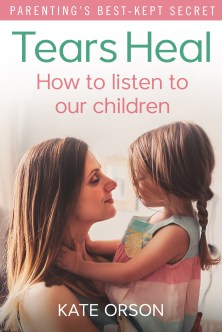
I wrote my book Tears Heal: How to listen to our children to support parents through the process of beginning to listen to their baby, or children’s tears. Because of our complicated history with crying, it can be hard to stay there in the moment, and be calm and patient but this is what our children need. There are mirror neurons in the brain, that reflect and recreate the moods of the people around us. When we are able to be a calm and patient listener, our our child can release their feelings with us, they can attune to our emotional state and will feel better.

When we stop fighting against our child’s nature to naturally heal by expressing emotions, we will see transformative results in their wellbeing, sleep patterns and behaviour. To find out more check out my blog archives, or pre-order my book Tears Heal: How To LIsten To Our Children today!


The Hidden Reason Why Toddler Tantrums Are Hard To Handle (And What We Can Do About It)

tantrum.jpg

Toddler Tantrums. It seems pretty obvious why they are hard to handle. The noise, the arms and legs being flung around everywhere. The fact that they disrupt the day, cause us embarrassment in public, and are generally one of the more unpleasant aspects of parenting.

But did you know that all these are really just the surface reasons that make tantrums hard? There’s actually something much deeper going on, and understanding this could transform your attitude to tantrums to one of zen like calm (at least most of the time!). And no it doesn’t involve abandoning life as a parent to live like a monk for a few years!

Before I explain, I’d like to share what’s actually going on when your child has a tantrum. (if you’re a regular reader of this blog or a Hand in Hand Parenting fan you can skip this paragraph!) A tantrum is like therapy for kids. When our child gets stressed, or experiences frustration and emotional upset, a tantrum is a natural and healthy stress release mechanism. This is also the case when our baby’s cry and all their needs are met and seem to have ‘no reason’ for crying. The stress hormone cortisol is released in tears, as is the hormone Manganese which is responsible for mood balancing, and other toxins. Crying also reduces blood pressure. This important healing function is why I recommend to parents that they shouldn’t stop tantrums, as long as they have the patience to be there, to listen and empathise.

We all want our children to be happy, and tantrums are actually key to our child’s happiness.

If crying is so good then why does our child’s tantrum make us feel so bad? It all started when we were children. When we were young the majority of parents didn’t know that tantrums have a therapeutic, healing purpose. Even today, most people still don’t. When we were young, how did our parents react to our tantrums? We may have been ignored or hurt, we may have been told ”don’t cry or I’ll give you something to cry about.” Even if our parents did respond to us in gentle ways, they probably thought it was kindest to cheer us up, to distract us somehow to give us a toy, or a sweet to put us in a better mood.

In Parenting From The Inside Out Dan Siegal, explains what happens to our brains when we get stressed while parenting. Our limbic system senses a kind of emotional emergency, and unconscious memories from our past get re-activated. When we hear our baby cry, or toddler tantrum, our memories of how we were treated get triggered. Unconsciously we feel the hurt, the anger, and the pain, of having our healthy, healing process interrupted by our parents. We then project all those feelings onto our toddler’s outburst. But really it’s not about them. It’s about us.

Our parents did their best. They meant well. But nobody had deeply listened to their feelings when they were young, so the cycled continued.

There is one way we can break the cycle, and that’s to learn when our child simply needs to cry, and to do our best to be there, to offer warmth and empathy and connection so they can release their feelings, attune to our calm mental state and restore their emotional equilibrium.

Mindfulness can help us in the moment. Being aware of our thoughts, and noticing when we have a strong emotional reaction to our child’s outburst. But mindfulness alone, probably won’t be enough to help us ride the storm of our child’s emotions.

We also need to go back to those early memories, to release the feelings we have been carrying. To have our own big cries with a warm and present listener. With Hand in Hand Parenting, we offer parents advice about how to begin listening partnerships, where two parents come together to take turns talking and listening about how parenting is going. A listening partnership is a safe space, where you can have a good moan about your child’s tantrums make you feel. Having the chance to offload your own feelings regularly means you can return your toddler and experience tantrums for what they really are, something healthy, and good, that will restore you toddler’s natural happiness, co-operative nature, and zest for life.

Are you ready to go on a journey to find your inner calm as a parent? You can find out more about listening partnerships in my book Tears Heal: How To Listen To Our Children 

Tears Heal2016

A Mum Track Mind
Diary of an imperfect mum

Brilliant blog posts on HonestMum.com

Is Peaceful Parenting Actually Permissive Parenting?

peacefulparenting

”So peaceful parenting, is that when parents are nice to their children all the time, even when they are acting out and misbehaving? That sounds a bit permissive to me.”

I have heard variations on this statement many times, and yes, sometimes, being ‘nice’ to our children can be permissive, and not in their best interests in the long run.

Imagine the scene. You’ve had a lovely day out with your child, doing what they love, and soaking up joy and connection. At the end of the day you want to leave the park/swimming pool/playground etc, because it’s getting late. However each time you try to leave you sense your child is on the verge of a tantrum,  so you decide to stay a little longer. And then when they are still not willing to go, you try bribing with the promise of an ice cream or a new toy, because you don’t want to ruin the lovely day, you want to keep them happy.

In this scenario, we are being ‘nice’ to our child, we’re thinking of their feelings and their needs. We know they love the park and playing with their friends. And we don’t want them to feel sad.  We’re not shouting or losing our temper.

But we are also being permissive. The confusion between peaceful parenting and permissive parenting happens because of a misunderstanding of how our children’s emotions work.

Many parents often think that when a child throws a tantrum it means they’ve failed as a parent. When we have days filled with non-stop tantrums, we can feel drained and exhausted and we can often wonder what on earth we are doing wrong. It’s no surprise, that parents often choose to parent in a way that sidesteps tantrums, keeping their children happy by being ‘nice’ to them.

But here’s the thing, when a child has a tantrum, they don’t think that the day is ruined. They’re simply feeling a strong emotion, and when that emotion passes, with lots of warmth and empathy from a parent, they’ll be back to feeling good (and also behaving well) again.

Tantrums are a natural stress release, a way the body releases the stress hormone cortisol, and other hormones that effect mood. They are often not a sign that anything is wrong in the present, but often a sign that everything is right, that your child has been soaking up your love and attention, and now senses it’s a good time to release feelings from when they didn’t feel so good.

Believe it or not our child’s natural state is one of co-operation. Beneath all the ‘no’s and the refusals, and the running away. The fast track to returning our child to their natural state is by setting limits with our children when we know our requests are reasonable, and then listening to any emotional fallout, with warmth and empathy.

It’s in our child’s best interest not to be permissive, and not to be ‘nice’ because when a child is saying no to our reasonable requests, it’s actually that they have an underlying upset, and need to release some feelings. Listening to their feelings regularly means that they don’t need to tell us about their feelings through the behaviour, and we’ll see more and more that their natural co-operative nature shining through.

Peaceful parenting, doesn’t have to be permissive parenting. We can set limits in way that is loving and full of empathy, providing we are able to listen to the emotional upsets. It’s not always easy for us, and I’ll explain more about what to do about that in my next post. Sign up to follow the blog via email to make sure you don’t miss it!

Want to know more about the Hand in Hand Parenting approach to setting limits? Check out this free Setting Limits E-book or sign up for their Setting Limits Online Self-Study Course.  

https://kateorson.com/2016/06/21/is-peaceful-parenting-actually-permissive-parenting/

A Healing Conversation With My Daughter About Birth

pregnant-214522_960_720

This post was originally published in The Green Parent Magazine 

One evening just before bedtime my three year old daughter and I did some special time together. (Special time is one of the Hand in Hand parenting tools where we spend time 1-1 time with our child doing something that they love.)

We put all her babies to bed, and then my daughter started getting ready herself. As I was helping her, she asked me, ‘’how did I fit in your tummy with all the food in there?’’

I explained to her that she hadn’t actually been in my tummy but in a kind of sack called the womb. She asked to see a picture, so I found one on the internet and showed her. She then asked how babies came out so I explained a bit about this, and she asked to see a picture. I found a diagram (instead of a photo, which I wondered if it might be a bit graphic) and showed her that.

Then she asked ‘’how do babies get in the womb?’’ I wasn’t expecting to explain the facts of laugh to my daughter age three, but I found myself explaining a bit about sex, and how a sperm from the daddy joins an egg from the mummy.

She then began asking detailed questions about her birth. I told her how I had wanted her to be born at home, but she had been late. The doctor’s thought that it would be safest to help her to come out, so we went to a hospital. She kept asking what happened next, and then what happened next. So I explained about the drug they gave me, about contractions, and how it had taken a long time.

For each answer I gave there was another question from her. I described step by step what happened during the birth, in an age-appropriate way. I wanted to be honest, but I also didn’t want to flood her system with any information that would be overwhelming. The birth had been long and difficult and at one point her heart rate had dropped really low. I left that part out. I gave a short sentence or two of information for every question she asked, so that she felt in control of the conversation.

At one point, she looked upset, and I told her, ‘’did it feel scary to you? I’m really sorry it was scary.’’ She burst into tears and I hugged her. I explained that it wasn’t meant to feel scary, it was meant to feel safe. She cried for a while, and then asked some more questions.

I explained how when she was born they put her on my chest. She cried when I told her this and then asked what happened next. I explained the doctor’s needed to check her, so her dad had carried her to the other side of the room. She cried, and told her that her dad had been with her the whole time, that he’d been holding her hand, and talking to her. This made her cry even more. I explained how after that they gave her back to me, and she slept in the bed with me the whole night. She cried with relief. What happened next she asked. I explained how the next day she had woken up and smiled at me. She cried about that too.

In the back of my mind, I knew that this conversation was helping her to heal. Through Hand in Hand Parenting I have learnt, that crying isn’t always a sign that something is wrong in the present, but can often be a sign of healing from the past. Tears contain cortisol, the stress hormone, so when children or adults cry, they are literally releasing stress and tension from their bodies. Crying, in the arms of a loving adult, or laughter and play are part of our natural healing mechanism for recovering from difficult experiences.

Every time I offered reassurance to my daughter, every time I explained the safety of the situation, how their were doctor’s to look after her, and me and her dad were taking care of her too, she would let out another wave of crying. The more safety and reassurance I provided, the more she cried.

I knew it was important not to try and distract my daughter from this important conversation about birth even if it seemed to ‘upset’ her. I knew it was important to notice her feelings, and create the safety she needed to express them. I knew it wasn’t just answers she needed, but healing too.

*

I hadn’t always felt comfortable telling my birth story, and I wouldn’t have always felt able to create a ‘child friendly’ version of it. I’d had my own strong emotions about how it turned out. I’d read so much about natural birth and how important it was for the baby’s well-being. I felt a lot of sadness that I’d ended up having an induction, and an epidural for medical reasons.

I talked a lot about the birth during ‘listening time.’ (Listening time is another one of the Hand in Hand parenting tools. It’s when two parents take turns talking and listening with each other about how parenting is going. The concept was developed by Patty Wipfler, the founder of Hand in Hand. She discovered that talking about how parenting was going with a caring listener could help her release the feelings that got in the way of her being the parent she wanted to be.)

Listening time allowed me to have a good cry to release the regret that I hadn’t had the kind of birth I wanted. It was a space to talk through my decision to go with the medical advice to have the induction, even though it hadn’t felt completely ‘right’ to me. I came to some level of acceptance that the birth couldn’t of been any other way.

After that I could focus more on the positive aspects, that I had trusted my medical team to keep us safe, that my daughter had been born healthy.

Processing the birth meant that when my daughter asked me about it, I didn’t feel too triggered and emotional myself. I had a coherent story in my head about what had happened and why. I could tell her that the doctors were nice, and had done everything they could to keep her safe. Because I was no longer overwhelmed by my own emotions I could provide the sense of safety she needed to release her feelings.

*

Healing is important, because the way we come into the world leaves a powerful imprint on us. In The Secret Life Of The Unborn Child he explains how birth is a profound experience that shapes our character. Through his research with adult patients he concluded that ‘if we are happier, or sadder, angrier, or more depressed than other people, it is at least in part, as a result of the way we were born.’’

Through work with his patients he found that although they didn’t remember their birth consciously, they could recall what happened when under hypnosis. This suggests that they did carry the unconscious memories of their pre-natal and birth life. They carried the emotional content with them and this effected their lives.

I don’t think anything about our child’s destiny is as fixed as Dr Verny’s research suggests. Bonding, and connecting with our children is the foundation for processing and overcoming challenging experiences.

When ‘The Secret Life of the Unborn Child’ was published in the 1980’s, it was not widely understood that crying is healing. Even now, although awareness is growing, it still remains parenting’s best kept ‘secret.’

When our babies cry we tend to think of it as a negative behaviour that we must stop as quickly as possible. We try to meet the needs of our babies, and when we can’t identify a particular need we tend to rock them, use a pacfiyer, ‘’shhh’’ them, or ‘’bounce them. We feel like a wonderful parents when our babies are smiley and at ease, or terrible parents when they cry for no reason and we just can’t get them to stop.

When my daughter was born I knew a bit about the healing power of tears. I was aware that she would need to cry to recover from her birth, but I didn’t understand that I would be trying to stop her from crying without even being consciously aware of it. I found myself bouncing her on the train just to keep her ‘quiet’ or feeding her when she was tired rather than hungry.

When we become parents, we come with our own history of how we were treated as children. Our parents probably didn’t know much, if anything about the healing power of tears. We may have been ‘shhhed’ or rocked when we cried. As we got older we may have been ignored, hurt, or told ‘’don’t cry or I’ll give you something to cry about.’’ We internalise these experiences and see crying as a negative behaviour that we must get to stop, even if we decide to choose more gentle ways than our parents.

Through learning more about the healing power of tears, I was able to bring my awareness to moments in which I was stopping my daughter from crying without even being consciously aware of it. I learnt that if she cried about having her nappy changed, or having a top pulled over her head, she might be using these everyday situations as a trigger to release bigger upsets.

I learnt to explain gently what I needed to do, listen to her feelings and wait till she was ready and had stopped crying. It was wonderful to discover we could do something together, when she happy and at ease with the situation, rather than rushing through and forcing her to do something she felt uncomfortable with or distracting her from her feelings with a toy. I also learnt to understand when she was hungry, or when she was asking to feed for comfort- which in actual fact was a sign she had feelings to release.

My daughter grew into a happy, well-adjusted, child – at least most of the time! I noticed she could be much more flexible than I ever expected a toddler to be. As Patty Wipfler explains our children are naturally, good, loving and co-operative. It’s upset feelings that cause them to ‘misbehave.’ When our children are free of feelings they can be their natural, good, loving, co-operative selves.

Despite all this the path of healing is ongoing and never perfect. There were opportunities that I may have missed because I didn’t fully understand how to allow her to cry, or the times when I didn’t have the energy, or patience to listen.

When she started a playgroup at age three, the separation seemed to trigger some deep feelings about her birth. She wanted to play in a physical way that related to being born. She would constantly climb over my shoulder, and tell me ‘’it’s your new baby coming through,’’ then she would land on my lap and make ‘’goo goo’’ noises. One time she made my legs into a diamond shape and told me ‘’this is the house where babies live and there are no grown-ups, and then they come out and see their mummies.’’

The play suggested that she remembered life in the womb, and her birth, perhaps not completely consciously, but in way that she could channel into play. Here was a context in which she felt safe to explore what happened.

My daughter has had a fear of doctors which seemed to be another sign that she hadn’t fully processed what happened to her. Since her birth we have only visited the doctor for minor reasons, but on one occasion, we had to visit a different doctor at the last minute. She became agitated and started crying, and refused to walk when I told her it was a man doctor. Also, she loves Peppa Pig, and whenever an episode came on that involved a doctor or a hospital she would ask me to skip to the next one.

*

A couple of days after the conversation with my daughter about birth we were watching Peppa Pig together. The episode where Pedro breaks his leg and goes to hospital came on. My daughter recognised it instantly, but instead of asking me to skip it. She said tentatively, ‘’I’m going to watch this to see what it’s like.’’ She watched it all the way through with a smile on her face. Since then she’s watched all of the Peppa Pig episodes involving the doctor or hospital. She’s also had a lot of questions about doctor’s and nurses, and she’s continued to work through her feelings through doctor play. Her inquisitive discovery of the world continues.

I knew then that our conversation about her birth had been deeply healing. It’s as if that night I gave her the language to make sense of all of those unconscious memories she had been carrying.

The conversation didn’t start with words, but with me just being there, doing special time with her, and playing with her dolls, letting her know that I was available to listen.

Healing doesn’t always happen the night we bring our babies home from the hospital. It can happen months and years later. It’s never too late. Our children might want to laugh, play, talk, or cry. We listen and let them be their own guide. With our love and attention, they can lead themselves to healing.

For more information about our children’s ability to heal and recover from the stressful events in our lives check out my blog archives, or pre-order my book Tears Heal: How to listen to our children


The Five Step Plan For Preventing Early Wakings

waking

Early waking is common in children . In the summer months we might blame it on the light outside, or noises that your child hears that disturb their sleep. It might be that your child is unwell, or teething, or any of the other myriad reasons children have for waking. Or we might just put it down to being an inevitable part of raising little ones.

However all these things are usually just the trigger for you child to wake, the root cause often goes a little deeper. If your child is regularly waking up tired without having enough sleep, then one of the most common reasons is their sense of connection.

Children often wake in the night, or wake early, when they are feeling disconnected. Sometimes children just need their connection cups to be filled a little more. At other times they may be experiencing hurt feelings or stress that get in the way of feeling our warm presence and attention. This can cause them to seek out connection with us a little earlier than usual.

This week I’ve been hearing a lot of success stories from parents who are trying out Giggle Parenting at bedtime, with amazing results. Kids are sleeping through the night. Nightmares and morning grumpiness are reduced. Laughter when kids are in the more powerful role (or playlistening as we call it at Hand in Hand) is a powerful way to strengthen our connection with our child.

But simply adding laughter to your bedtime routine may not be enough to completely cure sleep issues. The Hand in Hand parenting approach consists of 5 tools to listen to our children’s feelings and build connection with them. Whenever we are struggling with our parenting we can use all five of these tools for the most effective results.

So here are your five tools to help prevent kids from waking early.

  1. Get Some Listening Time For Yourself – First get yourself a listening partnership, and read more about them in Hand in Hand parenting’s Listening Partnerships For Parents Booklet. The Hand in Hand parenting tools are a way of listening to our children that takes a lot of patience and energy. With your listening partner you can vent about how tired you are in a safe space. Talking and being listened to by a warm listener is a powerful way to prepare yourself to do the same for your child. Read more about listening partnerships here.
  2. Do Some Special Time In The Daytime – Next schedule some time to do daily special time with your child. This may not always be possible, but while you’re dealing with sleep troubles it’s great to attempt it most days. Even five minutes can make a difference. Let your child do something they love, and shower them with attention. With special time it’s really about the quality of the time rather than the quantity. Your child can internalise a deep sense of connection with you, that can help them relax and sleep well. Read more about special time here.
  3. Staylisten To Morning Grumpiness – When our children wake early in the morning in a bad mood, we often tend to assume it’s because they haven’t had enough sleep. However it’s most likely that the grumpiness is what caused the early rising rather than the early rising causing the grumpiness. If your child gets upset about something that seems small and inconsequential, then stay and listen to the feelings until they have finished crying. Tears contain cortisol, the stress hormone, and other mood balancing hormones. When children get to cry with a loving adult they can release all the feelings that get in the way of feeling closely connected to you. Without these upset clouding their thinking their sleep will be much more peaceful. You can read more about staylistening here, and if this is challenging for you, don’t forget step 1 😉
  4. Set Limits and Listen To Feelings – When your child wakes grumpy you may find yourself walking on eggshells trying to avoid an upset. A child’s early waking can effect the mood of the whole day, but it doesn’t have to be that way. When a child behaves in ‘off-track’ ways, it’s like they are waving a red flag to saying, ‘’Help! I’m not feeling good, and so I can’t think well.’’ Setting a limit on their unworkable behaviour is actually a gift to them. As we stop them from throwing toys, or hitting a sibling, in a warm and loving but firm way we can listen to the emotional upset behind their behaviour, and also heal their sleep. You can get a free Hand in Hand parenting guide to setting limits here.
  5. Giggles At Bedtime – This tried and tested method is scientifically proven. Add giggles to your bedtime routine. Anything that gets laughter flowing with your child in the more powerful role. Chase games, roughhousing and any silliness that puts you in the less powerful role is a guaranteed sleep inducer. Read more about giggles at bedtime in my friend Tara’s fantastic article here.

Tried all this and your child is still not sleeping? For more indepth help applying these tools check out Hand in Hand parenting’s online sleep course Helping Young Children Sleep. Or for personalised advice contact me for a free 30 min initial sleep consultation.

Brilliant blog posts on HonestMum.com

The Pramshed

Roughhousing Inspiration To Help Your Child Sleep In Their Own Bed

bedroughhousing

This looks like a cosy scene! But if co-sleeping isn’t working for you, or if your child has fears or anxieties that come up in a need to be close to you at night, you might want to help them work through those feelings before deciding what sleeping arrangement works for you in the long run.

I’ve blogged about this in detail before in Why I Helped My Daughter Feel Safe To Fall Asleep Alone. Now here is a fun game that I call ‘The Bed Door’ to build closer connections even as you help your child to sleep in their own bed.

You might want to play this with comfy cushions or a mattress on the floor next to your child’s bed.

You might want to snuggle up with your child, and read a few bedtime stories with them in their bed. Start the routine earlier than normal to give you some time to play. Then when it’s time for sleep, tell them that you hope they will stay in their bed, in an inviting playful tone, that actually suggests to them the possibility of getting out of bed.

Then you become the ‘bed door.’ You try to block your chid from getting out of bed, in a playful way. Put up some resistance, but don’t use force and overpower your child. The key is to always let your child win, but feel like it was a bit of a challenge. Go for what brings the giggles. After resisting for a while let your child escape. Act all frustrated and playfully exasperated to get them laughing! And repeat!

Last night we played this and my daughter and I invented all sorts of different powers. I would have the ‘grabber power’ where I would use my hands to grab her, and then she would be so strong that she would escape. Then I would have ‘lock’ power and my arms would lock around her to try and lift her back into the bed. Then the arms would make a ‘mistake’ and accidentally unlock. I would act all annoyed with the arms and say, ”hey! Come on arms, you are meant to lock not unlock!”

My daughter would have ‘strength power’ where she would be strong enough to knock me over. I would have ‘rolling power’ When I would wrap her up in a duvet and try and roll her back in the bed. We had many variations and really got each other laughing with our new power ideas. When you try this, follow where your mind takes you and see what makes your child laugh.

The aim of the game is always to ‘try’ to get your child back into bed in a fun way, and to use resistance but not force. It should be played when you are in a good mood and aren’t feeling time pressed. If you struggle to find the patience, you might need some listening time before trying.

In the end we were too tired to continue and it felt like the right moment to stop.  My daughter ‘won’ and fell asleep in my bed. But we have played similar games before which I blogged about here, when she’s then been happy to sleep in her own bed.

I hope you enjoy this game! I’d love to hear how you get on in the comments below.

Have you added giggles to your bedtime routine yet? Here’s why they are key to a good night’s sleep. 

For more info about listening time check out How Telling Your Life Story Can Transform Your Parenting 

For in-depth help with all your sleep challenges check out Hand in Hand parenting’s self-study online course, Helping Young Children Sleep

Two Tiny Hands
Cuddle Fairy
Diary of an imperfect mum

How To Listen Your Way To A Tidy House

tidy

This story was shared with me by a friend who practises Hand in Hand parenting. It really illustrates how being there to set a limit, and listen to the emotional aftermath can be a gift to our children, that can transform their lives and ours. 

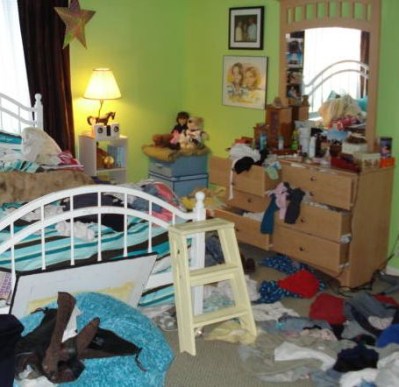
My 13 year old daughter came home from a camp and dumped all her camping stuff on the hallway floor. I’d been becoming increasingly irritated with her inability to tidy up after herself, and I told her that she couldn’t go to school until she had cleaned it up.

She became enraged and refused to do it. Even worse, she went to my bedroom and began pulling my clothes out of the wardrobe. She then stormed off to school leaving the whole place in chaos.

While she was gone I got some listening time. I got to moan and complain about how frustrated I was with my daughter’s untidiness. I got to vent all those feelings in a safe space without taking them out on my daughter.

This really freed up my mind so that I could think how to respond compassionately to my daughter. I know the Hand in Hand parenting philosophy that co-operation is our child’s natural state. I guessed my daughter must have been feeling disconnected after a week away from me, and that’s why she was struggling to co-operate with me.

I put all my clothes back in my wardrobe but left my daughter’s stuff where it was. When she came in I asked if I could hug her. I hugged her for a long time. It might have been 30 minutes or more. I said nothing, except to tell her from time to time that I loved her. She started crying, and I just stayed there with her.

After the hug she went to pick up her stuff from the hallway. Even better than that, she went and tidied her room without being asked. And it wasn’t just a regular clean. She began sorting through old stuff, and did a complete Konmari (a decluttering technique based on the book The Life-Changing Magic of Tidying Up ).By 9 o’clock she was exhausted and I had to persuade her to go to bed.

In the days that followed I set an intention to be there to give her little bits of connection whenever I can. (Hand in Hand parenting calls this unannounced special time.)

That day was a complete transformation. Ever since then my daughter has been tidy. The only downside is that now she often complains that the rest of us are messy!

And it wasn’t just her living space that got cleaned-up but her mind as well. She had been struggling at school, and after that her teacher mentioned that she began to remember everything, and was very present and alert, with her homework always completed.

The power of being there to listen, without advice or lectures, amazes me every time. Through Hand in Hand parenting I’ve learnt that we don’t need consequences or punishment, we simply need to be there, to fill our children’s connection cup when it gets a little low.

Further Reading 

For more info on listening partnerships: How Telling Your Life Story Transforms Your Parenting 

For more info on special time:  How Special Time Works With Teens 

For fun solutions for tidying up with younger kids: 25 Tips For Having Fun Tidying Up With Your Kids