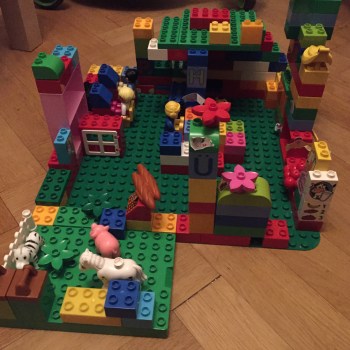
A few weeks ago, some friends came over who have a ten-year old daughter who my daughter loves playing with. Watching the two of them play together made me reflect on just how much stamina children have for playing with each other. They could carry on for hours. For me on the other hand, after a while I get drained and ‘bored’ by play. I desperately want to do something other than play, like tidy up the house, clean the kitchen, or zone out on my computer.
But I also know that deep down my feelings are not really because I find my daughter’s play ‘boring’ or because I can’t play or don’t like to play. Actually I love spending her time in her imaginary world, sharing her joy and creativity. But I do get drained after a while.
Why is play so hard for us? Is it because we know we’ve got a million and one jobs to do in our busy lives? For sure. but there’s more to it than that.We all have moments in our days when we get triggered by our children. Play can often be one of those times. We start to feel exhausted, we start to feel stressed, we find it hard to muster the enthusiasm.
Play is hard because when we were children our parents may not have spent hours playing with us. They may have been busy just getting on with things, and may not have understand how important it was simply to be there with us. There may have been times when we wished they could give us more quality attention. We may have given up even expecting it.
When we spend time with our children, it’s as if we have an invisible river of our own childhood memories running through us. We not be conscious of these memories, but they are there, beneath the surface, often getting triggered when we are stressed or overwhelmed. So when our child says ”play with me,” we can often feel reluctant to leap up and join them because we have our own hurt child inside of us who didn’t get all the play and connection we needed.
But there’s nothing innately non-playful about any of us. We can recover our natural joy and have fun playing with our kids.
Here are a few things that you can try.
- Have some grown up fun! Recovering our own sense of fun, can be really helpful. Go to a live music or comedy gig. Have drinks with friends. Dance to the songs you loved when you were younger. Life gets pretty serious sometimes for adults. But it doesn’t have to be.
- Have some listening time – Exchanging time talking and listening with another parent about how parenting is going. Tell your listening partner how much you ‘hate’ playing with your kids. Talk, moan, even scream into a pillow about how hard it is. Have a laugh or cry if you need to. After expressing your feelings with a partner you may find that these feelings are not your thoughts, and that you actually don’t hate playing. Yo may just need to release some of your own emotional baggage to find the joy in it.
- Play in short bursts. Don’t give yourself a hard time, or pretend to enjoy playing when you aren’t actually in the mood. Your child will pick up on your feelings, and it’s likely neither of you will have much fun. Instead try shorts bursts of special time, (1-1 time with a child doing something of their choice) that feel manageable to you. Even 5 minutes can deepen the connection with your child, and make you both feel better. You can gradually extend your capacity for play, as you get listened to, and work through your feelings about play.
- Let your agenda slide. If possible try to have some lazy days where you aren’t running around, and can just hang out and enjoy the company of your children. Is there anything non-essential you can leave off your to-do list? Get some ready meals in and leave the washing up till tomorrow. I always find I’m at my most playful when we’re at home with little to do. After I’ve nurtured myself with adult company, and my cup is full I’ll try to have a mellow day at home where we just chill out, connect and play.
- Have some adult-to-adult special time – The first time I tried special time with another adult I was amazed how much fun it was, and how novel it felt to have someone shine their attention on me while I got do whatever I wanted. You can try this with a friend or your partner, so that you can nourish yourself with the deep sense of connection that you want to give your children.
I hope these tips help you to enjoy playing with your kids. I love hearing from you, so please feel free to leave a comment about how you get on.
For more tips on play and connection with your kids, check out my book Tears Heal: How to listen to our children.






 Kate Orson