The Giggle Parenting Guide To ipad Wrestling

ipadwrestling

Hand in Hand Parenting is all about giving children the deep sense of connection they need to be their natural, good, co-operative selves. And screentime can sometimes get in the way of providing this connection.

If your child’s behaviour has been a bit off kilter, then it’s highly likely they need more connection with you. You might be right there, and present and available, but if hurt feelings are clogging up their system, making it hard to think, then they might be more likely to zone out on a screen than come seeking connection.

If you are experiencing, whining, moaning, outbursts of anger or aggression, or withdrawn or shy behaviour in public, or pretty much any off-track behaviour then that’s a sign your child needs more connection.

If your child’s having a lot of screentime, then try this giggle parenting game to switch off, and add in more connection.

Move in close to your child when they’re watching their screen. Make eye contact, or at least try to, and put your hands on the screen. This is what we call physically ‘bringing the limit.”Rather than calling across the room to your child, you come close and add the connection they need. Tell them that you think you should do something else together.Let them know they can go back to their episode later/another day etc. Be warm and friendly in your tone, rather than ‘serious’ to invite them to be playful with you.

Don’t grab the ipad out of their hands quickly and put it away, instead, keep hold of it but let them hold it too, this gives them the chance to object, and to express their disappointment, rather than feeling powerless.

Your child might start crying or tantrumming in which case you can staylisten to those feelings. By listening and empathising instead of distracting or fixing, you help to heal the hurt that is causing their sense of disconnection.

Or they might try wrestling the ipad out of your hands, and start laughing as they try to get away from you. This is where ipad wrestling comes in! You need to stay one step ahead of your child so that no damage comes to the ipad. Stay within arms reach, or keep your hands on the ipad. Remind them that it’s time to put it away but stay warm and friendly. As your child, laughs, and tries to wriggle the ipad out of your hands, they are soaking up that warm connection they need to think clearly enough to co-operate.

Setting limits like this does take time, but it’s in an investment in time, because all those grumpy, off-track feelings get to be released so your child’s overall behaviour improves, and life becomes a lot easier. You can try this game with any object you’d like to take out of your child’s hands, and it can be a great one to use in sharing struggles too.

We tried this yesterday and within minutes my daughter was happy to put the ipad away. I noticed how the game shifted from her not wanting to give me the ipad to her simply enjoying the fun game and power reversal play. I didn’t need to physically take it away against her will, but instead wait until she was willing to co-operate. And she was in a great mood afterwards.

It was a helpful reminder to me, that setting limits with our child doesn’t have to be about being the ‘mean parent’ who goes against our child’s wishes. It’s about looking at the deeper need beneath their behaviour, and fulfilling that instead. And that deeper human need we all crave is quite simple; it’s connection.

For more information about the Hand in Hand Parenting approach to setting limits download your free ebook here. Or check out their Setting Limits online self-study course


Taking A Blogging Break

I never quite know where I’m going with my writing, as I always just trust my unconscious has a plan and go with my intuition. After a week of not writing my blog, it seems like I’m taking a blogging break! I’m writing a new book now, and I write best when I turn off the internet and stay away from blogging and social media for a while.

So rather than completely disappear without warning I thought I’d let you know, that I’m taking a break, and will write less often, or perhaps not at all, depending on where my inspiration takes me!

And in the meantime I wanted to share about all the other wonderful Hand in Hand Parenting resources out there.

There is the main Hand in Hand website which has hundreds of articles on almost every possible parenting challenge you can imagine. Sign up to their newsletter and get a free e-book for handling tantrums. You can also sign up for the regular free teleseminars, the next ones are on Helping children after trauma and What To Do When We Mess Up As Parents.

And there’s other Hand in Hand Parenting instructors bloggers out there. Here are a few from the UK, Emilie Leeks, from Journeys in Parenting, Stephanie Parker, and Roma Norriss at Birthing A Better World, and in Germany there’s Anca Deaconu.

There is also our wonderful Hand in Hand parents support facebook group, with lots of experienced parents sharing advice for using our tools.

I’ll still be around on facebook and twitter, and offering workshops and consultations. I’ll be teaching a new online starter class beginning in the new year. So keep in touch and feel free to reach out when you need help with your parenting.

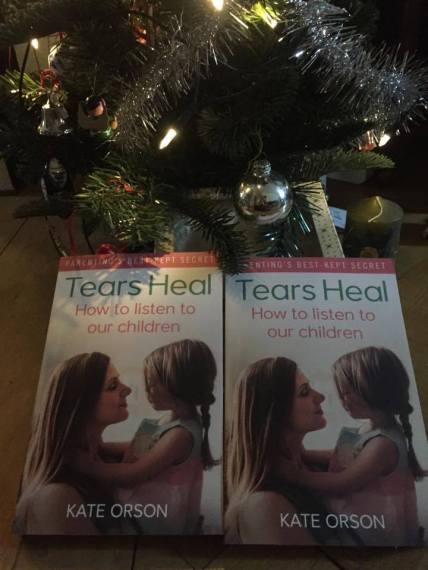
And if you’d like to read more from me, there is of course my book Tears Heal!

Tears Heal2016

Why Distracting Your Child From Having Tantrums Makes Parenting Harder

tantrum100.jpg

It seems natural to use distraction as a form of tantrum management. When parents sense a storm brewing they may quickly try to cheer their toddler up by making a funny face, or pointing out something interesting, getting them a snack, or just about anything. And then breath a sigh of relief when the storm has passed.

Distraction comes as easily as breathing. We all do it, or have done it, including me!

Tantrums are one of the most challenging behaviours we have to face, so why would I suggest that it actually makes parenting harder to distract children from them?

Here’s why: when your child is on the brink of a tantrum, She’s not feeling good. She’s feeling a storm of unhappiness and stress and tension. To feel better your child actually needs to get the tantrum out. She needs to rage and storm, and cry, and move through anger, so that she can come back to feeling good, as nature intended – by actually having the tantrum.

When we distract or try to stop a tantrum that tantrum is still there, inside of your child. It’s going to come out sooner or later. It might come out in another tantrum, five minutes or five hours later. Those upset feelings might also come out indirectly through off-track behaviour -such as aggression, whining, moaning, and just about any other form of ‘misbehaviour’ is actually due to unexpressed feelings. Distracting tantrums appears to work on the surface, but overtime those feelings will manifest in other more challenging ways.

This information won’t come as news to you if you’re a regular reader of my blog, but as I still often see parenting experts misinforming parents and telling them to distract their children I felt the need to write about it again! Distraction may be a good emergency measure for weddings or funerals, but as a regular parenting technique it’s going to make your job much harder, and it will also effect your child’s wellbeing.

I think sometimes we think that since our little toddlers are crying about such small and inconsequential things, that their emotions are inconsequential too, and so we should avoid them. However that red cup they wanted instead of the blue cup feels enormous in their world at that moment, so we can empathise with them rather than avoid, and also acknowledge that their may be a deeper upset below the surface that they can’t articulate in words.

I really like this blog post from MindfulMummyMission, in which she describes how we can learn about Mindfulness from the Disney film Inside Out. One of the big messages of the film is to stay with the sadness, to feel it and let it go rather than avoid it and try to fix things. No matter how small our little ones are, they need to have their big emotions heard.

Parenting becomes easier when we take a mindful, listening approach to our children’s tantrums. When we sense a tantrum brewing, we can slow down, and connect, set limits if necessary, giving them eye-contact, and offering hugs. When we do so we give them the message that their feelings are allowed, that we welcome them.  Our child’s tantrum may go on for longer, because they sense that we are available to listen to them. But over time they will have less tantrums  because they get their feelings out.

If you’re dealing with any kind of behaviour challenges with your child, things will improve radically if you move from distracting tantrums to listening. A lot of the behaviours that we dismiss as being unavoidable issues for toddlerhood such as sharing struggles, aggression, night-waking or power struggles can all be dissolved with a listening approach.

It doesn’t take long to turn around your parenting approach from distraction to listening. Even I am always amazed and overjoyed when I hear stories like this one from Cherry at The Newby Tribe blog who describes how she now has a deeper connection with her son, (and less tantrums!) since reading my book Tears Heal and putting the ideas into practise.

As well as the benefits for us, there are of course a myriad of benefits for our children. They get to know their emotions, and how to process them instead of bottling them up. They build their emotional intelligence and have more empathy and understanding of other children’s emotional moments because they know what it’s like themselves. They grow up having deeper relationships, because they don’t run a mile from their own emotions or other people’s.

And they will be happier. Research shows how adults in therapy make better progress in their lives when they cry during therapy. Really what our children are trying to do is have little (or big!) therapy sessions so that they don’t grow up to be one of the 1-4 people who will have mental health difficulties in the adulthood. It’s a pretty smart move really to throw a tantrum, and all we need to do is stay and listen.

Having said all that, although listening to tantrums will make your parenting life easier, it can still be challenging! We didn’t have this kind of deep listening for our own feelings as children. That’s why as parents we need to find support for our own feelings. Read my blog post here about how we can catch up on our own tears from childhood so that parenting can be a healing path for ourselves and our children.

Life with Baby Kicks

The Art Of Listening Tip 4: Say What You Think

saywhatyouthink

This is tip 4 in my series on the art of listening. If you’re new to the concept of listening time, check out my introductory post here, and find out how it can help your parenting. 

Imagine your toddler suddenly chucks their dinner on the floor. You might feel like you want to shout and scream. Perhaps you manage to hold it in and keep your rage to yourself while you clean up the mess, or perhaps you lose it and end up screaming at them.

Or a friend cancels an arrangement to meet at the last minute which makes you let down and disappointed. In this case you probably will text back a polite ”no problem’ while your thoughts may be saying something quite different.

Our culture is not very accepting of feelings. Ever since we were kids we were expected to hold our feelings in and not make a fuss. This can make the emotional baggage we carry very heavy indeed. And often it’s the smallest, most vulnerable people in our lives that end up being around when our feelings spill over.

Listening time offers a chance to have free rein to say exactly what we think, and feel. And if we have a regular listening partnership in our lives we’re far less likely to reach boiling point.

When you are listening to your partner encourage them to say exactly what they think. If you notice them holding back, then let them know their big feelings are welcome. Offer suggestions, like yelling into a pillow or punching it. Give your partner gentle reminders not to censor themselves, and that you will unconditionally support them whatever they say. Act as a contradiction to those times in the past where your partners feelings were not welcome. Let them know this is a safe space where expressing anger and rage is welcome.

Do the same in your own listening time. Say the first thoughts that jump into your head rather than the polite edited thoughts that come second. Be honest and you’ll also help your partner to feel safe to be honest in their time. The more you unconditionally support each other, the more your listening partnership will grow and develop into a safe space to lighten the load of your unexpressed thoughts.

Would you like regular tips to help you develop your listening skills? Sign up to follow my blog at the top right hand corner of this page. If you missed the previous tips click on the links below Tip 1Tip 2Tip 3

And if you’d like more in-depth help learning the skills of listening then check out Hand in Hand Parenting’s online self-study course, Building A Listening Partnership.


The Art Of Listening, Tip 3: How To Get Where You Want To Go

getwhereyouaregoing

This is a post about the Hand in Hand Parenting tool of listening time. If you’re new to the concept check out my introductory post here

Something very common I’ve used in my listening time is to voice my lack of enthusiasm for playing with my daughter. Often, all those grown-up responsibilities can make me feel the complete opposite of playful and carefree. One time my listening partner gave me the direction to say in a very excited, enthusiastic voice, ”Come on R, lets play!”

Just the thought of saying these words led to all sorts of feelings coming up, and lots of uncomfortable laughter. As I kept complaining and moaning to her about making me say those words I released lots of emotion. Immediately after the listening time, I went to play with my daughter, and as if by magic, I was that playful, joyful parent!

This is what I call the ‘get where you’re going’ direction. Perhaps you want to be full of joy as you play Lego , or you want to be calm while your kids make a mess while baking. Often just saying the words as if you really were that calm, relaxed parent in a happy, light voice, can bring up any feelings to the contrary.

It’s like when we pretend we are where we want to be in the present moment our mind quickly dredges up all the feelings that don’t correspond to our imagine state. Cue a super fast away to clear up our minds of the old feelings that stand in our way.

I have also had great success using this direction with fatigue. I’ve become aware that as well as the general parental exhaustion that is so common I also use tiredness as a coping mechanism. So if I simply state where I want to go, ”I’m so full of energy!” standing up with my arms wide, and in a loud confident voice, I get a lot of feelings about wanting to curl up and hide away.

We may have patterns of being that relate to our own childhood. Ways in which we coped with the feelings we carried when we did not have a listener. Now we are adults we don’t need those old coping mechanisms anymore. We can use listening time to shed those feelings and become the very best version of ourselves.

This direction won’t just help you in your parenting. It can also help you transform your life. Do you want to go to a party, talk to everyone, and be full of confidence? Do you want to launch your own business, or give a successful job interview? Simple stating your goal as if you’ve already arrived can help you get there.

So where do you want to go in your parenting or your life? Just imagine being there in your listening time and you will discover the feelings that stand in your way. Share this post with your listening partner, and you can help each other on your journey.

Would you like regular tips to help you develop your listening skills? Sign up to follow my blog at the top right hand corner of this page. And if you missed them here’s Tip 1 and Tip 2

The Art Of Listening Tip 2: Don’t Fix

loveheart

Imagine you are in conversation with a friend. She’s been telling you about how she’s had cold symptoms for a month, and can’t seem to shift them. Perhaps you tell her she should go to the doctor, and get some antibiotics. Or you mention a really amazing natural remedy of fresh ginger, turmeric and black pepper that will shift it within hours (I have tried it and it’s pretty good ;).

That is fixing. And we all do it. We want to help our friends and share what’s worked for us. And that’s fine. There’s a time and a place for sharing advice and good information in our regular everyday conversations.

But when we do listening time as part of our Hand in Hand Parenting practise, we refrain from trying to fix our partner’s situation. We keep our good advice to ourselves.

Here’s why. We don’t just try to fix because of good intentions. We also try to fix because of our unconscious urge to try and stop people from expressing emotions. We’ve all grown up in a culture where expression of emotion is not completely acceptable. When we were children our parents often tried to stop our tears by ‘fixing’ our problems, not understanding that listening to our tears was often part of the solution.

When we leap in with a solution to somebody’s problems it’s often because we are unconsciously repeating the way we were treated in our childhood. We want to stop the expression of feeling by offering our solutions, because we are uncomfortable with their emotions.

The trouble with fixing, is that often what makes a problem hard is a person’s emotional reaction to it. Say a parent can’t figure out how to get their son to sleep at night. It’s not just a matter of telling that parent what kind of routine worked for you. There may be deep-seated reasons why this particular parent is struggling with bedtime. Perhaps they were left frequently left alone to cry it out as a baby or toddler, and this emotional hurt is clouding their vision when it comes to helping their own child.

That parent needs much more than a practical solution. They need someone to listen to help them heal the hurt that is clouding their thinking . The science behind it is that when our own childhood feelings get triggered our limbic system  gets flooded and we experience an ’emotional emergency.’ When this happens our pre-frontal cortex can’t function well which makes logical thought, and decision making hard. If someone steps in and offers advice it can be hard to take it when we can’t think straight. And since everyone’s life is different. What works for one person may not work for another.

A far more effective approach is to simply listen to that person. To allow them to follow the natural flow of their own words and feelings, so that they can release their upset, and think clearly again. After that they’ll often be able to figure out what to do and fix the situation themselves. Or they’ll go searching for some useful information that might help. We are the best experts on our own lives.

So that’s why we don’t fix in listening time.  We can also employ the technique of simply listening in conversations too. Next time someone is chatting to you and mentions a problem, notice how quickly possible solutions jump into your head. How easy is it refrain from saying them? Like everyone else I do find myself with the strong urge to ‘fix’ my friend’s problems, but I also try to listen too. I had the idea the other day that it might be good to employ a 80/20 principle to our everyday conversations, listening for 80% of the time, and sharing good information 20% of the time. It’s not easy, but it has many benefits. Our friendships will deepen when we can stay present to people’s emotions.

Discover more about the art of listening in Hand in Hand parenting’s Building A Listening Partnership course. 


Giggle Parenting For Sharing

sharingkids

Here’s a fun game to play when a young child keeps taking toys off an older child. We played this with my daughter (5) and a friend’s daughter who is 2. The 2 year old kept taking toys off my daughter and my friend and I had to intervene constantly.

I suddenly had an idea. I whispered to my daughter to pretend to play with something, and then we would make a ‘giggle game’ where we would let her take it away, and then chase her and pretend we want it back.

As the two year old grabbed the toy, I exclaimed ”hey! I want that!” in a playfully annoyed tone. My daughter and I chased her, and she loved running away and hiding from us. I repeatedly tried to grab the toy, but always let her keep it. Through smiles and a playful tone to my voice I made  sure everyone knew it was a fun playful game, and for the purposes of the game she was ‘allowed’ to take toys. Cue lots of giggles and everyone in a much better mood.

Afterwards I noticed some sweet things; the younger girl gave my daughter dinner from her play kitchen, and started actually giving my daughter toys to play with!

It was so wonderful to see how a few giggles can dissolve the tension behind sharing struggles. And me and my friend even got to enjoy some conversation!

For more info about Giggle parenting check out Giggle Parenting: The Best Discipline Tool Out There! And if you’re interested to know more about how Hand in Hand Parenting helps with sharing struggles read It’s All Mine! Helping Your Child Learn About Sharing


Giggle Parenting Inspiration: The Lick Monster

lickmonster

Does your child suck or chew their clothes or fingers from time to time? I’ve noticed that my daughter does this when she’s stressed or agitated, and that it often happens when we’re busy travelling and life is a bit more fast paced.

When she was chewing her necklace yesterday I moved in close and told her in a warm and playful way not to chew it in case it broke. Then she reached out and started to try and chew me instead. I responded by saying, ”oh no! The lick monster’s coming to get me, I must run away!” As I started running she started chasing me while laughing. Any tension behind the chewing had soon evaporated with the giggles.

You can invite your child to play this game, by saying, ”oh no! It looks like the lick monster’s around. I hope it doesn’t try to get me!” Run and chase and all the tension behind your child’s behaviour will soon be channelled into laughter and play. Play as long as the giggles keep flowing.

If your child regularly sucks their thumb you might also want to try Giggle Parenting For Thumb Sucking or read the Hand in Hand Parenting article, No more thumb, no more pacifier

Giggle Parenting Inspiration – Unauthorised Special Time

Il_pomodoro.jpg

Yesterday I was in the kitchen with my daughter when the oven timer (which we usually use for special time) went off. ”Hey!” I said in a playful way, ”I didn’t put the timer on for special time! Who said it was special time?” My daughter laughed.

Seeing a good opportunity to keep the giggles going I said, ”I hope no-one puts the timer on again because this is NOT special time. This is serious tidying up time.” Cue lots of giggles and putting the timer on for 1 minute, and then me acting all confused when it went off, again and again.

If your child is complaining that they want special time, and you can’t give it to them or have more than one child with you, then this can be a fun way to release tension about the desperate need to have special time.

My daughter was soon offering to help me tidy up, which is a sure sign she was feeling well-connected.

If your child is too young to set the timer off themselves, you can set it for them sneakily and then act all confused when it goes off. We also love playing this with my phone timer and get lots of laughs by changing the ring tone, and then acting all surprised each time there’s a new, crazy sounding tone.

Have fun!