Giggle Parenting For When Your Child Makes A Mess

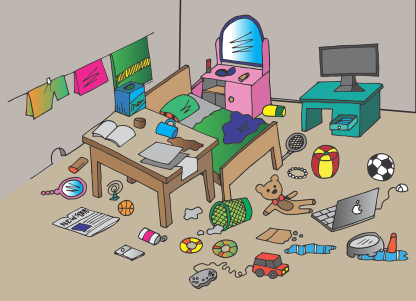
messy-1459688_960_720.png

Here’s a simple game to play after your child’s been playing/using something and leaves it abandoned on the floor, or doesn’t put it back. Put yourself in the role of the object and run after them saying something like this, ”hey, I’ve been abandoned and I’m all alone, please help me!”

You’ll probably find your child enjoys running away and giggles, and that those giggles can help them feel more like co-operating and putting the object back. You can keep role-playing as the object, chasing them and playfully pleading with them to be put back in the right place.

They might like to chase for a while before that happens, but all that play and connection is a great way to build co-operation not just in the moment, but as investment in their future co-operation. As we say with Hand in Hand Parenting ”connection builds co-operation.”

After some time playing you might find it more useful to move in and set a limit in a more ‘serious’ way, but still with lots of warmth and connection. You can read more about how we set limits with Hand in Hand Parenting in this free e-book.

If you are looking for more fun ways to get your children to tidy up check out my list here! 

3 Little Buttons

Brilliant blog posts on HonestMum.com

The Pramshed

The Reality Of Life As A Writer, And A Favour To Ask

img_2130

Hi Blog readers,

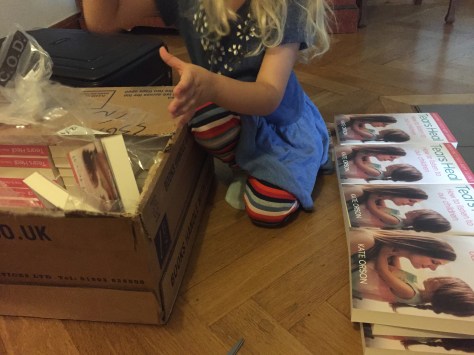
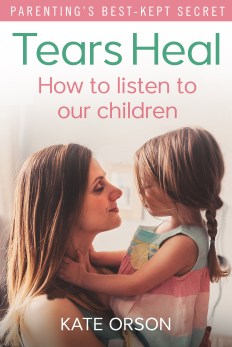
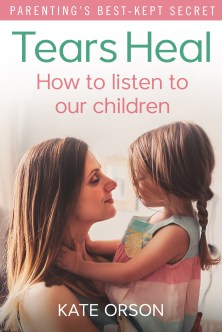
today we are excitedly unpacking boxes of my new book Tears Heal. I’ll be sending out copies to anyone who’s pre-ordered it through my website, just as soon as I can find the sellotape!

I wanted to write a little about the economics of life as a writer, and ask anyone’s who is intending to buy the book to do me a small favour.

I’ve always wanted to be a writer, and like anyone driven by a passion to do what they love I ignored any negativity standing in my way. Once a teacher at school told me that only 100 people in the UK are able to make a living solely out of writing. As I grew up and studied creative writing I met many published writers who needed to do other jobs to survive. A well-respected and famous writer in Scotland (not J.K Rowling though!) admitted she made less than £500 a year out of writing.

Writers often find themselves in the position of being expected to work for free, often while everyone else gets paid. It’s probably because we love our work so much that companies can get away with paying us nothing or very little. In the UK the average author makes less than the minimum wage.

Anyway, this isn’t meant to be a complaint as I love what I do, and would probably do it for free anyway! But this is my small request. If you are considering buying the book then I would love it if you ordered it directly from me. This doesn’t just mean that you get a signed copy 😉 It also means I can earn a little bit more. Because I can buy my books at a discount, I get a fairer share of the royalties if I sell and distribute them myself. This means that you are supporting me as a writer, so I can write and blog more, rather than supporting Amazon etc!

Anyway thanks for reading this, and here is the link if you would like to order. I hope you enjoy my first book 🙂

Is The Screentime Issue A Connection Issue?

ipad

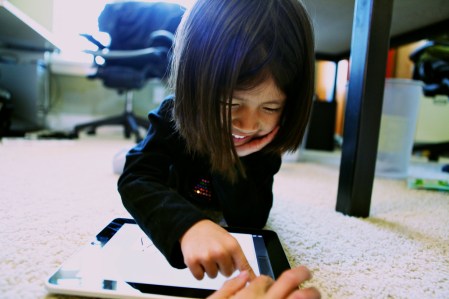
Screens are addictive, we all know that. Right? Or do we? Today my daughter came back from Kindergarten, and ate her lunch while watching her ipad. A few minutes after eating she begged me for special time. She turned her Sylvanian house into a hotel with rooms and beds for all the guests and we did an hour long special time.

Then we went to the shop to get snacks and hang the washing out. Then she told me that she’d go inside and have a rest and watch her ipad, then do a bit more special time. So she watched again for a short time and then we played a bit with her toy Octonauts. Then she made some ‘youtube’ videos to show the viewers around the hotel ( I don’t really put the videos on youtube but our family and friends are her subscribers!).

She watched TV a bit longer and then she told me she was bored of it and started to prepare a snack for Kindergarten the next day (on her own initiative). As I write she’s hanging out with her dad and choosing an outfit for tomorrow – also her idea!

I’m always going back and forth about the screentime issue, constantly readjusting my game plan, and trying to follow my instincts. When my daughter first started Kindergarten, I found myself setting a lot of limits with screens, particularly if she asked for it first thing when she walked in the door. I felt like she had a lot of feelings coming up about starting Kindergarten, and that I need to set a limit and staylisten. (You can read more about the Hand in Hand Parenting approach to setting limits here )

But then I began to feel like I was setting too many limits, and it was no longer about listening to my daughter’s feelings but about my own controlling attitude to her screentime. I felt that this was getting in the way of us having a good connection.

When I stopped hovering around her trying to think of creative suggestions to get her off screen, she would watch for a while and then stop, completely of her own accord. I began to focus on respecting my daughter’s genuine interest in screens, allow her to use them until she feels ready to stop, allowing her to soak up inspiration for her own film-making!

Screens can be addictive but not always. Today reminded me that when our children are well-connected, they can use screens in a healthy way. Focusing on our own addictive use of screens can also make it easier to help navigate the screentime dilemma. Taking a leap of trust in our children’s ability to self-regulate is also helpful, as well as stepping in and setting limits when they need them.

As I finish writing I can hear my daughter playing independently as my husband makes dinner. She just came in to drop me off a little note with her name on and some kisses.

I don’t have any foolproof answers, but I do think that when we fill up our child’s connection cup, and give them plenty of opportunity for emotional release, then it’s much less likely that they’ll use screens addictively. As addictions expert Johann Hari says, ‘the opposite of addiction is connection.’

I also think it’s important not to use the screen as a pacifier to give to our child when we are busy and unavailable. I think that can actually create an addiction because our child then learns to gravitate towards the screen rather than to us when they are feeling disconnected. In this article here Patty Wipfler explains that a bored child is actually a disconnected child. If we can give our children connection when they are bored rather than entertainment in the form of an electronic device, we reduce the chance of them becoming addicted.

How about you? How is your family handling screentime? What has worked for you and what’s not working? If you’d like some tips based on Hand in Hand Parenting then feel free to leave a comment below!

You can read more about the importance of connection in reducing addictive behaviour in my book Tears Heal: How to listen to our children

Tears Heal2016

A Mum Track Mind

Brilliant blog posts on HonestMum.com

How Tears Help My Daughter Find Her Confidence

14356089_10154439399166668_1544360305_n

Thanks to Ariadne Brill of Positive Parenting Connection for contributing this guest post about the power of listening to tears. I see this so many times fear and upsets can cloud our child’s thinking, and after having a good cry, they are filled with confidence and ready for new adventures! 

With tears streaming down her little face my daughter turned to me and said “I can’t go in, mama, I just can’t.”  We were standing just outside her new classroom on her very first day of first grade.

We had prepared for starting the first grade. In fact, the entire year before, her pre-school teacher and the elementary teachers had collaborated beautifully in preparing the children for this new adventure.

Aptly named Harmony days, the elementary school hosted several occasions in which children had a chance to visit the elementary school, try gym, art, music and other school activities.  Right before the school year started, my daughter also had an individual meeting with her new teacher. At that meeting, she appeared confident, at ease and determined to start her schooling adventure. She knew the classroom and had even decided which classmate she wanted to sit with.

But tears showed up right before the door frame anyways. It looked like there would be no way to get her inside. Her feet were planted firmly on the ground, her hands squeezing her backpack.  But knowing my daughter, I just waited, quietly. Offering reassurance, I listened but never insisted the tears go away.

Tears are just want my daughter needs before starting anything new.

Even as an infant, my daughter often cried (or laughed wholeheartedly) through transitions.  

Waking up from a nap at age one usually came with tears.

Falling asleep even now at age six happens more easily if we laugh up a storm.

Trying new foods,  traveling to a new place, a shift in our usual routine…it’s a sure thing that tears are going to show up.  And my job is clear: I get to listen. I don’t get to fix, shush or coddle. But it’s a delicate and fine balancing act. I have to trust my daughter a great deal.

“Don’t fix, don’t soothe.”  Reminds Patty Wipfler of Hand in Hand Parenting. And I often allow these words to guide my mind  when my daughter’s tears do show up.  So that I can provide the space needed for her to offload her emotions and find her own inner strength to face her challenges.

The amazing thing about these tears is that when they show up, if I listen, if I allow my daughter that time and feeling to fully pass through, she bounces back into calm so very quickly. It’s like this gentle but needed tornado of emotions must sweep through her. And then in the place of tears unwavering confidence and determination appears.

This day in front of her classroom was no different. And so I stood by her, offering a hand to hold and patiently waited for my daughter to signal she was ready to step over that threshold.  

The tears came full force for about a minute. Her little face red, her mind working fiercely. One hiccup and a long sigh later, the tears subsided.  A request for a big hug and smile showed up next.

“Ok. I can go in. I am ready. I love you mom. I ACTUALLY CAN DO THIS.”  She said, enthusiastically putting one foot in front of the other and marching towards her new classroom.

Peace & Be Well,

Ariadne

Author’s Bio

Ariadne is a happy and busy mama to three children. She practices peaceful, playful, responsive parenting and is passionate about all things parenting and chocolate. Ariadne has a B.S. in Communication, is a certified Positive Discipline Parenting Educator, and has completed several graduate courses in child development, psychology and family counselling. She lives on top of a beautiful mountain with her family, one cuddly dog and “bluey” the fish.

Positive Parenting Connection http://positiveparentingconnection.net

Positive Parenting Connection on Facebook http://facebook.com/positiveparentingconnection

14285632_10154439574821668_207363665_o


3 Little Buttons

Why Listening To Feelings Is Just As Important As A Good Night’s Sleep

feeling.jpg

The other day a friend (who also practises Hand in Hand Parenting) were chatting. I was talking about how since my daughter’s recently started Kindergarten that I’m trying to shift her bedtime routine. She used to go to sleep between 9-10 but now she has to fall asleep earlier. Ideally I’d like her to wake up naturally each morning, but I’m finding I have to wake her each day, which sometimes results in her being overtired. What could I do to shift her sleep, I wondered? Should I impose a strict routine now instead of going with the flow like I used to?

As my friend and I talked we remembered something. We’ve noticed anecdotally that children who’s feelings get listened to,  (what Hand in Hand Parenting calls staylistening) tend to need less sleep and often drop their naps earlier than other toddlers. (although this is a slight disadvantage, there are many bigger advantages to having a child who’s feelings don’t erupt through their behaviour all the time, I promise you!)  It got me thinking about how sometimes, if my daughter has a big play, or a big cry the night before she wakes up in an amazingly good mood, even if she ends up having less sleep. Now I think about it, I have also needed more sleep at times when I was full of emotion. A couple years ago when my grandmother died I could easily sleep for 12 hours if I had the chance.

When our children have to get up in the morning for an exact time it can put a lot of pressure on family life. We feel like we have to get serious, put a stop to fun and games, and live our lives by the clock. One way around this that I tried this week was to set a timer for our evening roughhousing play, so that we could still have fun, but fit it into our stricter routine.

On Friday night I was going to do the same, but then I remembered the conversation with my friend. My daughter seemed to need to play and release some feelings so we ended up playing for longer. I knew she could sleep in the next day. I didn’t want to throw off her whole routine, but since she’s started Kindergarten, she’s taking longer to fall asleep at night. She’s often singing German songs or counting in German last thing at night, and I know her brain’s processing all the learning she’s doing. I know that as much as she needs a good night’s sleep she also needs extended play to relax first. And last thing at night seems the perfect time to do it!

If your child regularly takes a long time to fall asleep at night, it can make you feel anxious. You’re worried your child is going to be exhausted the next day. You’re frustrated and want some me-time. Play offers us the chance to relax. To be a little flexible with the routine for a few nights, and give our child concentrated, intense play to work on any stress and tension that’s been gathering up. Don’t be surprised if your child also needs to cry after having lots of laughs and giggles. It’s all part of their natural healing process for releasing stress and tension. Going with it rather than against it will help your child to sleep better in the long run, even if it disrupts the routine for a few nights.

After a few nights of having their feelings listened to, you may notice that they fall asleep much easier, and it’s much easier to implement your bedtime routine.

So if you find yourself getting stressed and tense waiting for your child to fall asleep. Remember that giggles are just as important! And you can go with your child’s natural instinct to play and release tension, rather than focusing on the clock.

If you’re looking for some bedtime inspiration try these suggestions below. 

Giggle Parenting For When Your Child Just Won’t Fall Asleep 

The Benefits Of Laughter Before Bedtime 

Silly Bedtime For Kids Leads To Better Sleep 

And if you’d like to learn more about how Hand in Hand Parenting can help your child fall asleep easily and sleep through the night check out the sleep chapter of my book, Tears Heal: How To Listen To Our Children 

Tears Heal2016


Giggle Parenting Inspiration For Picky Eating

soupbowl

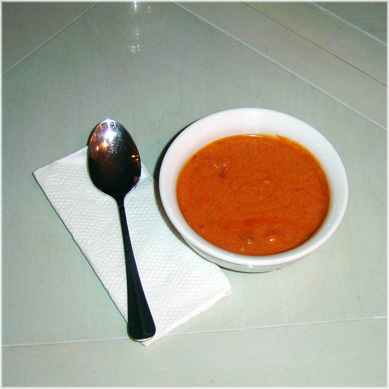
My daughter came home from Kindergarten and I was warming up some soup for lunch. Suddenly she started complaining that she didn’t want soup, even though she’d asked for it the day before and gone shopping with her dad to get the ingredients.

I had a feeling, that like many of our children’s big emotions, it wasn’t really about the soup. Although my daughter is loving her new adventure at Kindergarten, I know she’s got lots of feelings to process too. So I decided to set a limit. I told her that I wasn’t going to cook anything else. She cried, and I gave her a hug, empathised with her, and let her cry for as long as she needed without interrupting her (what Hand in Hand Parenting calls Staylistening). And I also kept holding the limit.

After a few minutes she was feeling a bit better, and started eating the soup. Although she’d finished crying, it seemed like there was still some feelings simmering beneath the surface and I sensed she needed to giggle.

So I did some silly stuff with my soup spoon. First it tried to go into her bowl to get her soup. Then it tried to feed me really quickly spoon after spoon when I wasn’t ready. Each time I would complain and talk to my spoon asking why it was being so silly. ”Hey spoon, you’re feeing me too fast!” I would exclaim exasperated. Then the spoon would respond by feeding me too slowly and I would complain about that too. My daughter laughed and laughed. After that she ate happily and even said, ”this soup is too delicious not to eat.”

Food is complicated for a lot of us. We want to honour our children’s preferences, and tastes. But we also want to notice when their feelings around food are masking deeper feelings of disconnection, and hurt. That’s the time we can set in, and use limits, and giggles to connect with our child so that they feel better.

Using a connected, listening approach to meantime helps our children to grow up with a healthy attitude to food. It helps to teach them to recognise when they have upset feelings, rather than masking them by comfort eating. I don’t always find it easy to set limits around food, but listening time, helps me to get my head clear so that I can see whether my daughter’s need for a certain food is genuine or a pretext for some hurt feelings.

Being able to listen to my daughter meant that she was able to return to Kindergarten with her emotional backpack a little lighter, ready for more adventures.

For more playful approach to picky eating check out 20 Playful Ways To Help Picky Eaters

For more information on the Hand in Hand Parenting approach to setting limits download your free Setting Limits E-Book.  

Brilliant blog posts on HonestMum.com

Order Your Copy Of Tears Heal!

Tears Heal2016.jpeg

You can order your book now using the paypal links below, and receive a signed copy.

UK orders £13.99 incl postage 

Europe orders, 20 Eur incl postage

International orders, $25 incl postage

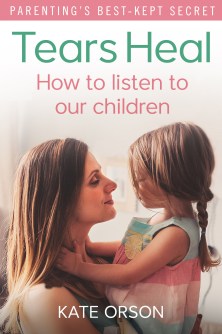
Tears Heal allows parents to discover parenting’s biggest paradigm shift, the way they respond to children’s tears.

One of the most challenging things parents of babies and young children have to deal with are tears. When babies cry, parents shhh, or rock them to try to get them to stop. When toddlers’ tantrum parents may distract them, attempt to reason with them, or ignore their crying in the hope it won’t last long. It seems natural to judge the success of parenting by how much children cry. Tears Heal will allow readers to discover parenting’s biggest paradigm shift, the way they respond to their children’s tears. Here parents will learn how to transform their parenting by moving away from stopping feelings, towards listening instead. Tears Heal – How To Listen To Our Children is warm, and full of empathy for the hard work, and struggles that parents go through. It also has a strong leaning towards helping parents with their own emotions, as they deal with their children’s challenging moments. It explains why we find children’s feelings hard to handle, because our feelings weren’t fully listened to when we were children, and shows how we can nurture and support ourselves so that we can be the parents we want to be.

A Mum Track Mind
3 Little Buttons
Diary of an imperfect mum

Giggle Parenting For When Your Child Only Wants Daddy! (or mummy)

momdad

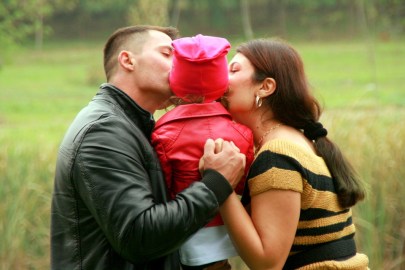
There are times when a child’s preference for one parent over the other suggests more about underlying feelings of upset they are experiencing than anything genuinely true about their relationship with that parent.

I’ve been having a few of those moments lately. My husband is a teacher, and since the long holiday has started my daughter has been spending more time with him and less with me as I embark on a new writing project. Last week I was a bit busy and preoccupied, so even when I was physically there, I wasn’t exactly present.

I could tell my daughter was feeling disconnected from me, because she kept saying that she wanted to play with daddy, or only daddy could play certain games with her. After a family day at the swimming pool we got on the train, and she said she wanted to sit with daddy. I sensed that this preference had something to do with those feelings of disconnection from me, so I decided to turn it into a fun game.

I started saying in an exaggerated dramatic voice, ”oh no! Don’t sit on the boys side, you are meant to be on the girls side.” Then I would playfully pull her onto my side. She would then escape, and laugh as I jokingly exclaimed how terrible it was that she was on the ‘boys’ side.’ I pulled her back and I also made a ‘door’ with my hands, to block her from going to the other side. I would put up a bit of resistance, and then let her win and escape. After fun and giggles together we were feeling much more connected.

If your child is experiencing strong feelings of preference for one parent over the other you might like to play a game like this. Perhaps have both parents sit on opposite sides of the living room. Then tell your child that you want them to stay on your side, and that you really hope that they don’t run over to the other side. Saying this in a playful tone will probably be just the invitation your child needs to run over to the other side, and you can then try and get them back. You can pull them gently in a playful way, so they get that it’s a game. It’s important not to physically overpower your child. The aim is for your child to ‘win,’ to be in the most powerful role, so always let them escape.

These sorts of games fill our child’s need for connection in all sorts of ways. By feeling their own strength and power, they get to release feelings of upset that get in the way of being closely connected to us. By laughing and playing, we get to deepen our bond.

It’s not always easy staying connected in our busy lives where we need to work, and spend time alone to meet our own needs as well, but the Hand in Hand Parenting tools are always there to heal those major and minor disconnections we all experience from time to time.

Need more help in dealing with disconnection with your child? Check out my article Healing Broken Connections. Sometimes separation anxiety can be behind your child’s preference for one parent over another. These playful ways to heal separation anxiety may  be helpful. Hand in Hand Parenting also has an online self study course, Helping Your Child WIth Separation Anxiety

Would you like a giggle parenting solution for your family challenge? Leave me a comment or contact me via facebook

A Mum Track Mind

The ‘Other’ Reason Babies Need To Cry (and why it’s parenting’s best kept secret)

babycry

When our babies are born most of us have in our mind that parenting will go something like this: our babies will cry, we’ll figure out what they need and then they’ll stop crying. And we’ll know we’re getting this parenting thing right when we have a smiley happy baby that hardly ever cries, right?

Many of us start off with this mindset and then we have babies that cry for hours, or cry what seems like no apparent reason. We can be left feeling worried, or as if we’ve failed at parents.

The full story of why our baby’s cry is a bit more complicated. In Aletha’ Solter’s book The Aware Baby she explains the science behind our tears, and why babies cry for two reasons, one is to get their needs met and two; to heal and recover from stress and tension.

Dr. William Frey is a biologist that investigated the chemical make-up of tears. He found that they actually contain cortisol, the stress hormone, so that when we cry we are literally releasing stress from our bodies. Tears also contain Manganese a hormone that is important for balancing mood, and other toxins.

Dr. Deanna Minich says, ‘’crying is a form of detox in which we let go of our stored emotions and inner pain. It also literally eliminates inflammatory compounds, cytokines and chemokines. People who cry easily in response to emotion might even have fewer symptoms and better health than those who restrain their tears.’’

It has been estimated that stress causes between 75%-90% of all physical illnesses, so reducing stress is absolutely key to our children’s future emotional wellbeing and physical health.

But what would our babies be stressed about we may ask ourselves? They’ve only just come into the world, and life as a baby is not exactly hard work is it?!

Well actually it is. A baby’s emotional brain is fully developed before birth so that means that their emotional lives are just as complex as our own. During pregnancy all of the mother’s emotions and  stress will effect her baby. It has been found that mothers who feel anxious or worry a lot during pregnancy have babies who cry for longer.

Birth is another life event that can trigger distress for our babies. Psychotherapist Michael Appleton says that we have a cultural blind-spot when it comes to acknowledging that birth can be painful and traumatic for babies.

Even if pregnancy and birth go smoothly babies do need to cry to process their birth, and their daily experiences  in a brand- new, stimulating world. This crying is healthy and good, and it means that even if we or our babies experience difficulties, they have a natural inborn healing mechanism to help them recover. (and it works for us too!)

Because there is not much awareness of the ‘other’ reason babies cry, we tend to go on automatic pilot, treating their healing crying as crying about a need. So when we have met all our baby’s needs and still can’t get them to stop we often resort to what Aletha Solter calls ‘control patterns.’ So we bounce a baby or shhh them, feed them when they are not hungry, or we take them for a long walk, or even resort to a car journey. We tend to jump from ‘meeting needs mode’, to simply ‘stopping the crying by whatever means possible mode.’ It is an unconscious jump that almost all parents, (including myself!) have done.

I know that when I did this, I was thinking about helping my daughter to feel happy again, but as the message of Aletha Solter’s book began to sink in, I realised that what I was actually doing was stopping my daughter from expressing her emotions. As Dr. Deborah Macnamara says, ‘crying is not the hurt, but the process of becoming unhurt.

When our baby’s needs have been met and we stop their crying, we are actually interrupting their vital healing process, and giving the the message that crying is not okay. This can have detrimental effects on their future wellbeing and their behaviour. As we understand more about how the brain works, it’s becoming clearer that children’s misbehaviour is caused by emotional upset, so we cannot fix our child’s behaviour in the long run with sticker charts or time out. We need to help them process their emotions.

The fact that we do try to stop our baby’s from crying is not our fault. It happens first because of a lack of understanding of the healing power of tears. Most of us intuitively sense the benefits of having a ‘good cry’ but there isn’t much information out there about helping our babies or older children to do the same.

There is also a much deeper reason. When we were children, our parents reacted like this to our tears. And sometimes they would have reacted in much harsher ways. Leaving a baby alone to cry it out, or ignoring or punishing a toddler for tantrumming.

We have so much unconscious hurt and pain, about how our own tears were dealt with that we automatically try to stop the tears, without giving it much conscious thought. In Parenting From The Inside Out psychiatrist and parenting expert Dr. Daniel Siegel explains how when we have not processed our own emotions, and created a ‘coherent story’ of our own childhood we tend to act in similar ways to how our parents did.

Our story about tears is far from coherent. We are born with a natural healing process that is barely acknowledged or respected in our society. The cycle continues with our response to tears being automatic. Without thinking or bringing this healing process into awareness, it has remained parenting’s best kept secret. Our instincts are tangled up with our own pain that we have yet to heal. This is the hidden reason that makes tears, and tantrums hard for parents to handle. It’s not about our children’s emotions, but about us..

Dr. William Frey found that 85% of women, and 73% of men, felt less sad after crying, and what seems to be key for crying to heal is that there is another person there to offer emotional support. Bylsma conducted research which showed that people were more likely to feel better after crying if they had a close friend with them. When babies are left alone to ‘cry-it-out’ they give up expressing their feelings, but remain in a stressed state with high cortisol levels. It’s essential that we stay with our babies or toddlers when they cry.

I wrote my book Tears Heal: How to listen to our children to support parents through the process of beginning to listen to their baby, or children’s tears. Because of our complicated history with crying, it can be hard to stay there in the moment, and be calm and patient but this is what our children need. There are mirror neurons in the brain, that reflect and recreate the moods of the people around us. When we are able to be a calm and patient listener, our our child can release their feelings with us, they can attune to our emotional state and will feel better.

When we stop fighting against our child’s nature to naturally heal by expressing emotions, we will see transformative results in their wellbeing, sleep patterns and behaviour. To find out more check out my blog archives, or pre-order my book Tears Heal: How To LIsten To Our Children today!


The Hidden Reason Why Toddler Tantrums Are Hard To Handle (And What We Can Do About It)

tantrum.jpg

Toddler Tantrums. It seems pretty obvious why they are hard to handle. The noise, the arms and legs being flung around everywhere. The fact that they disrupt the day, cause us embarrassment in public, and are generally one of the more unpleasant aspects of parenting.

But did you know that all these are really just the surface reasons that make tantrums hard? There’s actually something much deeper going on, and understanding this could transform your attitude to tantrums to one of zen like calm (at least most of the time!). And no it doesn’t involve abandoning life as a parent to live like a monk for a few years!

Before I explain, I’d like to share what’s actually going on when your child has a tantrum. (if you’re a regular reader of this blog or a Hand in Hand Parenting fan you can skip this paragraph!) A tantrum is like therapy for kids. When our child gets stressed, or experiences frustration and emotional upset, a tantrum is a natural and healthy stress release mechanism. This is also the case when our baby’s cry and all their needs are met and seem to have ‘no reason’ for crying. The stress hormone cortisol is released in tears, as is the hormone Manganese which is responsible for mood balancing, and other toxins. Crying also reduces blood pressure. This important healing function is why I recommend to parents that they shouldn’t stop tantrums, as long as they have the patience to be there, to listen and empathise.

We all want our children to be happy, and tantrums are actually key to our child’s happiness.

If crying is so good then why does our child’s tantrum make us feel so bad? It all started when we were children. When we were young the majority of parents didn’t know that tantrums have a therapeutic, healing purpose. Even today, most people still don’t. When we were young, how did our parents react to our tantrums? We may have been ignored or hurt, we may have been told ”don’t cry or I’ll give you something to cry about.” Even if our parents did respond to us in gentle ways, they probably thought it was kindest to cheer us up, to distract us somehow to give us a toy, or a sweet to put us in a better mood.

In Parenting From The Inside Out Dan Siegal, explains what happens to our brains when we get stressed while parenting. Our limbic system senses a kind of emotional emergency, and unconscious memories from our past get re-activated. When we hear our baby cry, or toddler tantrum, our memories of how we were treated get triggered. Unconsciously we feel the hurt, the anger, and the pain, of having our healthy, healing process interrupted by our parents. We then project all those feelings onto our toddler’s outburst. But really it’s not about them. It’s about us.

Our parents did their best. They meant well. But nobody had deeply listened to their feelings when they were young, so the cycled continued.

There is one way we can break the cycle, and that’s to learn when our child simply needs to cry, and to do our best to be there, to offer warmth and empathy and connection so they can release their feelings, attune to our calm mental state and restore their emotional equilibrium.

Mindfulness can help us in the moment. Being aware of our thoughts, and noticing when we have a strong emotional reaction to our child’s outburst. But mindfulness alone, probably won’t be enough to help us ride the storm of our child’s emotions.

We also need to go back to those early memories, to release the feelings we have been carrying. To have our own big cries with a warm and present listener. With Hand in Hand Parenting, we offer parents advice about how to begin listening partnerships, where two parents come together to take turns talking and listening about how parenting is going. A listening partnership is a safe space, where you can have a good moan about your child’s tantrums make you feel. Having the chance to offload your own feelings regularly means you can return your toddler and experience tantrums for what they really are, something healthy, and good, that will restore you toddler’s natural happiness, co-operative nature, and zest for life.

Are you ready to go on a journey to find your inner calm as a parent? You can find out more about listening partnerships in my book Tears Heal: How To Listen To Our Children 

Tears Heal2016

A Mum Track Mind
Diary of an imperfect mum

Brilliant blog posts on HonestMum.com