10 Tips To Get Started With Giggle Parenting

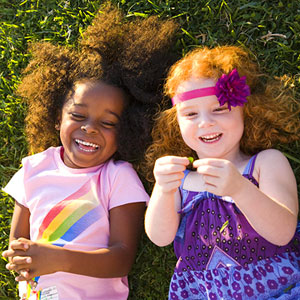
kids-laughing

If you’ve been reading all about Giggle Parenting on my blog and wondering what on earth I’m talking about you might want to read my introductory post here.

And here are 10 practical tips for how to get started, and make Giggle Parenting a regular part of your life.

  1. Shift Your Mindset and Prepare Yourself – Giggle parenting begins when we believe it will work. We need to start by letting go (as much as we can!) of the old voices and presumptions about how parenting should be. In order to fully embrace the giggles we need to release any residual thoughts about punishment, rewards, and consequences – the methods often recommended by ‘experts,’ that aren’t nearly as effective as the power of laughter.
  2. Get Some Listening Time – This helps with n.o 1. Before leaping in and solving a big challenge with giggles, it helps to get some listening time. We could talk about how parenting is going, and reflect back on our own childhood. When we do so we can de-stress so we are less likely to act on automatic pilot, parenting in the way our parents did. We can start afresh with giggle parenting instead!
  3. Start With Special Time – This can be a great way to warm-up for giggle parenting. Spend 15-20 minutes hanging out in your child’s world, doing exactly what they want. Shower your child with love and attention, and notice the kind of things that make them laugh. Read more about special time here.
  4. Put Yourself In The Less Powerful Role – Giggle parenting works because it gives children power. When your child has the power to build their confidence and thrive they’ll be less likely to get into ‘petty’ power struggles about teeth cleaning or getting dressed. So when we do giggle parenting we need to focus on giving them the power.  No tickling allowed! Focus on anything that makes your child laugh, because they are laughing at you or a soft cuddly toy. Make lots of mistakes. Do silly things. Act confused about what’s going on.  Avoid anything fear-inducing where your child is more screaming than giggling. And keep focusing on giving them the power.
  5. Repeat and Repeat – When you notice something that makes your child laugh. Repeat it, and repeat it and repeat it. Let go of those thoughts about cleaning up, at least for a while. (Although you can use giggle parenting for that too!) It can take time and real effort, but this is really investing time. When your child gets to laugh away stress and tension, they’ll be much less likely to show it in their behaviour later.
  6. Factor Extra Time Into Your Daily Routine – When you need to get stuff done, factor in extra minutes to allow giggles whenever you can. This is especially important when you first start giggle parenting. Your child will want to soak up all that laughter and play to fill their cup, and release any stress or tension they’ve been carrying. Over time you’ll see this investment ‘pay off.’ You won’t need to play 30 minutes of aeroplane tooth brush games every single time, I promise! Daily tasks will be quicker than they were before, and you’ll have effective tools for when they’re not.
  7. Get Silly During Struggles (instead of serious) – Giggle Parenting isn’t just for those fun moments when we wind down from the day, and connect and play with our kids. It’s a practical tool to use in power struggles, to get us out of the house, and to dissolve sibling/friend rivalry. This one is easy to forget (I do it too!). When we get stressed we put on a serious voice, tell our child to hurry up, or shout at them for throwing toys etc. This is actually when we need giggle parenting the most. If you can get silly during these ‘serious’ moments, (while still setting limits on what is unacceptable) you’ll begin to notice how fast they turn around.
  8. Allow All Emotions – Giggle Parenting – (also known as playlistening) is just one of the five tools we teach with Hand in Hand parenting. When we get the giggles flowing we may notice that our children start opening up their emotions, and having small upsets about little things. Giggle Parenting is also about listening to tears, about accepting whatever emotions come. While we can set strong limits on behaviour we should allow all feelings. We can allow our children to cry when they need to, and be there for them, without trying to ‘distract’ or stop them from crying (even with giggles). If your child is on the verge of a tantrum, it’s best to just let it happen rather than try and avoid it. Tantrums are all part of your child’s natural emotion-regulation system, and they’ll soon be back to giggling again!
  9. Get Some Support For Yourself – Following all the steps outlined in this post is really rewarding. However it can also trigger strong feelings in us. We probably never had this much play and connection as a child, so giving this to our own children can leave us feeling drained. After a day of giggles it really helps to have some listening time to refuel.
  10. Catch Up On Your Own Giggles – There’s a famous statistic that children laugh 300 times per day but adults only laugh 20 times a day. That’s a lot of laughs to catch up with! So be sure to make some time to catch up on your own giggles. Go to a comedy night, call a friend with a great sense of humour, or simply laugh along with your kids, even if you don’t feel like it at first. It’s been found that ‘fake’ laughing, has all the same physical and emotional effects as genuine laughter, so you can fake it until you make it!

Thanks for reading my tips. I’d love to hear how it goes in the comments below 🙂

Here’s more on how to end power struggles with children through play and laughter.

Are you wondering how fun and play can be combined with setting limits on children’s behaviour? Check out Hand in Hand’s free setting limits e-book here. 

Giggle Parenting To Reconnect With Your Child In The Morning

giggle2

As children experience sleep as a separation, having a big dose of connection before bed, or after sleep can really help them feel well-connected to us (and then less likely to tell us about disconnected feelings through challenging behaviour!).

This game is one I first wrote about in my 20 Playful ways To Heal Separation Anxiety. It’s called the checklist game, and it was thought up by Chiara Rossetti, an Aware Parenting instructor. I found out about it through Marion Rose’s attachment play course.

So when your child wakes up and comes out of their room, give them a cuddle, tell them that you need to check all their body parts are there. Check all their toes, and fingers, and eyes, ears etc. If one part is cuddled against you, then talk about how you think it might be lost and you need to look for it.

This is a great way to have some warm connection, to gaze into your child’s eyes, to have lots of smiles, and maybe a few giggles. It is the perfect way to get rid of the morning grumps and start your day off right.

Disclaimer (thanks Rachel for pointing this out!) – This game works best with children who are old enough to know that their body parts are meant to stay on, not those who might be fearful or worried by it! (my daughter is 4).

For a child that only wants mummy – Giggle Parenting Inspiration N.O 10

IMG_1704

This week my husband’s off work, as he’s a teacher and it’s school holidays. So while everyone is sleeping I’ve been getting up early to write my blog posts. My husband and daughter love lazy lie ins, but I do not! Every morning just as I’m getting to the end of my post my daughter wakes up. Every time after a few cuddles I try to get her to go back to bed with her dad while I finish my post, and she’s refusing, telling me her dad is a ‘terrible snuggler’ etc.

I know that she’s normally really happy to be with her dad, but sometimes, there’s underlying feelings and separation anxiety that can make her need to be with me for more connection.

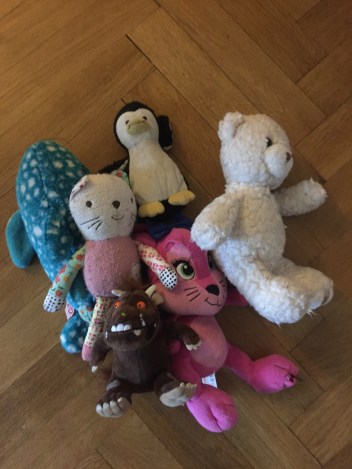
So I decided to do some giggle parenting. I picked up all her cuddly toys, and said, ”Come on R, it’s time to go back to bed.” And I took all the toys into the bedroom. Then I would suddenly realise my mistake, ”hang on. This is not R!” and I would drop all the toys in surprise.

I also like to go for a walk in the morning while everyone is sleeping, so I put a jacket on the toys, and said, ”come on R, lets go for a walk.’ Then I would get to the front door also realise my mistake and exclaim, ”oh no! This isn’t right, I don’t take R for a walk with me, and this is not even R!”

After a few giggles my daughter was completely happy to go and hang out with her dad. She just ran back to tell me happily that they’re reading books and doing stickers, and having a lovely lazy morning. And I got to finish my blog post and write this one too!

For more playful ways to help separation anxiety check out this list here. And for more in-depth help check out Hand in Hand Parenting’s online self-study course Say Goodbye To Separation Anxiety

Would you like a giggle parenting solution for your family challenge? Leave me a comment or send me a pm on facebook

3 Little Buttons

Playlistening builds Confidence

Playlistening builds Confidence

When my daughter Ruby was around 17 months old she started to act shy around strangers. We travel by public transport a lot and if people smiled at her on the train she would hide her face, and not look at them.

Of course there’s nothing wrong with being cautious around strangers, and our children should be free to connect with whoever they want to connect with. But I started to feel a bit worried. I’d been really shy as a child and life at school had been difficult. I didn’t want Ruby to have to go through bad experiences such as being bullied, or struggling to make friends.

Is it just that some children are natural introverted? There are lots of introverts in our family! Was this just something Ruby had inherited? According to Parenting by Connection this is not the case. There’s really no such thing as ‘natural introverts.’ Shyness comes when children have a backlog of emotions to work through such as fear and anxiety, which can make it hard to connect with others.

I’ve co-slept with my daughter since birth and I always stay with her while she’s falling asleep. I started to wonder if she still had some separation fears that she could release if I helped her to learn to fall asleep on her own. I began to experiment with putting her down to sleep and then leaving the room. I gradually moved away from her. She seemed perfectly content. Then I left the room, and shut the door. I was surprised she wasn’t bothered in the slightest and I opened the door. She started laughing. I shut the door again, then opened it, and again she started laughing. We repeated this a few times I would put the covers over her, go out and shut the door, then act surprised when I opened it again, and she was sitting up in bed with no covers on. This is what Parenting by Connection calls ‘Playistening’ where we notice what makes our child laughs and repeat it to get them really giggling. Often this is play where the child takes on the more powerful role. Laughing together helps us to connect with our children. Giving them the chance to be powerful helps them to build confidence.

I was playing the befuddled adult, who was always surprised that Ruby sat back up again after I had put her to sleep. We played this game for almost an hour, by which time I was exhausted!
The next day, she ‘asked’ to play it again, by pulling her cover over her near bedtime, and pointing to the door for me to go.

A few days later we were on the train and I noticed a man smiling at Ruby. To my surprise she looked him right in the eye and smiled back! Since then the shyness has disappeared, and she’s back to the confidence and openness she had as a baby. That’s not to say that she’s not cautious around strangers, it’s just that she’s not afraid to connect with people when she feels safe.

I haven’t pursued my ‘project’ of getting Ruby to sleep in her own bed. Co-sleeping works for now. I see the benefits of just adding more laughter into our lives. I try to take advantage of that ‘giggle hour’ before bed, where the laughs come more easily. I will tell Ruby it’s bedtime, then let her ‘escape’ and chase her around the house, or we’ll play lots with opening and shutting doors.

Often sleep advice centers around getting children relaxed, with a bath, books, dim lights, and soft music. It may seem counter-intuitive, but laughter is a great relaxer and helps children (and adults!) to release the stress of the day. Ruby falls asleep a lot more easily, if she gets the chance to play first. Sometimes playlistening is the last thing I want to do in the evening, but I often find if I push myself over the initial hurdle of exhaustion, then I’ll soon find myself laughing along with her and feeling better and more connected too.
Playing with our children in the evening isn’t just great fun. A regular dose of play in our child’s life helps them to stay confident and adventurous, open to trying new things, and making the most out of life.

Listening the whole way through

Have you ever had one of those days where your child just seems to be feeling grumpy and starts crying over every little thing? Small every day things that don’t seem traumatic or upsetting. Sometimes my fifteen month old will cry over things that normally don’t bother her, like having her nappy changed, teeth cleaned or clothes pulled over her head.

Here’s what I learnt from Hand in Hand Parenting. That children, often use little things to set off crying about bigger fears and upsets. So we might think our child is making a fuss about being strapped into their buggy, when in actual fact, this small event triggers upset about something else. It might remind them of a long traumatic birth, or may just trigger the release of stress from overstimulation or tiredness.

Crying is our natural healing mechanism. Crying allows us to recover from any stress and upset that we have experienced. When we experience something stressful our body gets ready for fight or flight, by producing stress hormones like cortisol and adrenalin. When we are safe again, we can release these stress hormones through tears.

As a culture the healthy expression of emotion through crying is not widely understood or accepted. Most of us were not able to freely express our feelings, and so crying triggers strong emotions in us. We often feel compelled to stop our children from crying, even when we have no idea what’s wrong!

Here’s what you can do next time your child is having a bad day. When your child starts to cry simply listen. Don’t try and fix the situation, by rushing to shove the clothes on, or change the nappy in lightning quick time. Don’t go into an all singing all dancing routine to keep the tears at bay. Simply slow down, and listen. Give your child a hug and stay close. Use gentle reassuring words to let your child know they are safe now. Move carefully toward the thing that needs to be done, the nappy that needs changing or the teeth that need cleaning, but don’t force your child to do anything, until they have finished crying.

Listen all the way through and something interesting happens. When your child finishes crying they will return to their natural good self. They won’t mind having their nappy changed or cleaning their teeth. They will be happy to co-operate with you when fear and upset aren’t clouding their mind. When we give our children the safety to cry bad days can actually just be ‘bad’ moments. When we listen all the way through, our children can release their sadness, and return to their natural joyful selves.

To find out more about how crying helps children to heal go to Hand in Hand Parenting

My Parenting Journey

In my early twenties I became interested in practicing tai chi, meditation and yoga. Later I realized that I was looking for a sense of well-being, a way of dealing with my emotions, and difficulties I had that stemmed from my childhood. I wrote stories and journals to try and process my emotions. I begun to see that I could release my emotions, through doing something physical to access them, such as yoga or massage. I realized for the first time in my life, that our emotions are not just thoughts in our head, but physical manifestations too.  For a few years I went through quite a dark period, but after lots of writing, thinking and self discovery I felt much happier, and with a stronger sense of myself. I also decided that I was ready to become a parent.

My tai chi teacher, had told me a story that made me start to think about the kind of parent I wanted to be. He was adopted and had a troubled childhood, and was quite naughty and hard to control. Somehow, and I forget why exactly, a Tibetan Monk started taking care of him. Whenever my tai chi teacher started to do crazy, out of control things, the monk would never react, or get angry. He was simply calm, loving and always positive. Soon my tai chi teacher stopped behaving badly, and the monk even managed to teach him to read. This story taught me that if we are positive and loving to our children, then they will always respond well towards us.

I thought that the path to becoming a good parent was to meditate, and become very good at meditation so that I could always stay calm and relaxed. But as every parent knows you don’t have a lot of time to sit around doing meditation!

Before my daughter was born I read an book called ‘The Aware Baby,’ By Aletha Solter. The book explains how babies and young children cry for two different reasons. One is to get their needs met, for instance they may be hungry or too hot. The second reason is to heal from stress or trauma in their lives. When we experience something stressful, the stress hormones cortisol, and adrenalin are released into our bodies, preparing us for ‘fight or flight.’ When the danger is over, humans can recover from the stressful or traumatic experience by shaking, trembling, laughing, and crying, to release the build up of stress hormones and return the body to it’s normal equilibrium.

This made sense to me, because I had gone through my own process of emotional healing as an adult. During that time of writing, and healing, I had often cried and then felt better. As I held my crying baby, I felt that I journeyed to a deep place, somewhere almost spiritual, and I felt such a deep connection with her.

As the months went by I got in the habit, that almost all of us parents do, of trying to stop the crying. I would try and feed my daughter to sleep, and then when that didn’t work, I would pace the room. But then I began to notice that these activities seemed to create more tension between us. I was edgy and impatient for her to sleep, she would complain every time I stopped moving. I reread the Aware Baby, and began researching everything I could about crying. I became convinced that crying is the bodies natural healing process, and that as parents, our job is not to always stop the crying, but to distinguish when a child is crying to get their needs met, and when they are crying to heal. I remembered that deep sense of connection I had with my daughter when she cried, and I missed it.

Through my research into crying I discovered Hand in Hand parenting. Hand in Hand teaches an approach they call ‘Parenting by Connection.’ The founder Patty Wipfler explains that when children feel closely connected to their parents, their behaviour is loving and co-operative. However their sense of connection is fragile and easily broken. Children seem to want all of our attention, but we do not always have the time and energy to give it to them. When children’s behaviour go off track, it’s usually a sign that they are feeling disconnected. Hand in Hand teaches ‘listening tools,’ that help us to maintain our connection with our children.

I already practiced one of the tools, Staylistening. When our children cry we offer our closeness and love, even if we can’t fix the problem. If all their needs are met, then we don’t try and stop the crying, but just listen.

I soon begun implementing the others.

Special time, is time spent following our child’s lead, listening to what they want to do, rather than directing play, making lots of eye contact, and generally being loving and affectionate.

Setting Limits, is done with warmth, and love. We can set limits playfully, for instance hugging our child when they try to bite us, or in a more serious but still loving tone. If a child cries about the limit, then we staylisten with them.

Playlistening, is when we try to engage our child in play where they take on a more powerful role, makes them laugh (anything other than tickling). So for instance, my daughter giggles a lot when I try to chase her but can’t catch her. These sort of games help build a child’s confidence as they feel powerful and strong.

As I practiced the Hand in Hand tools, staying close to my daughter, making lots of eye contact, and helping her regulate her emotions, I realized that this was the close sense of connection that I’d been seeking, the one I’d had with her when she cried as a newborn.

Through parenting by connection I could really learn what being close to my daughter was, it’s about being in the moment with our children, when parenting is like meditation, slowing down, and simply enjoying our children’s company. This was something I had to learn how to do, to forget about my need for ‘me’ time, and just be with her.

Parenting is never easy, and giving our children high levels of attention can be exhausting. That’s why Hand in Hand offers Listening Partnerships. These are free exchanges of listening time with another parent, so we get to release our emotions too. For me this was the final but most vital piece in the Parenting by Connection tool kit. As I started talking about my day, and going back to reflect on my own childhood, I would sometimes laugh and cry. I always felt better after listening time, and it restored my energy, and sense of being able to enjoy my daughter’s company.

The support of having a weekly listening partnership has enabled me to think differently about feelings. I no longer feel overwhelmed by anger, exhaustion, frustration or impatience. When these strong feelings crop up, I think, ‘’oh that’s something I need to release in my listening time.’’ Now I have finally reached the place I always wanted to be, watching my feelings, but not being overwhelmed by them, I have a way to let them go.

And now, when my daughter screams, bites, or acts grumpy and clingy, I don’t feel helpless anymore. I know that I can help her to change this behaviour, that it’s a sign she’s feeling isolated, and needs to feel my love and attention. Though the job of parenting seems overwhelmingly difficult at times, the solution consists of one simple word; connection.