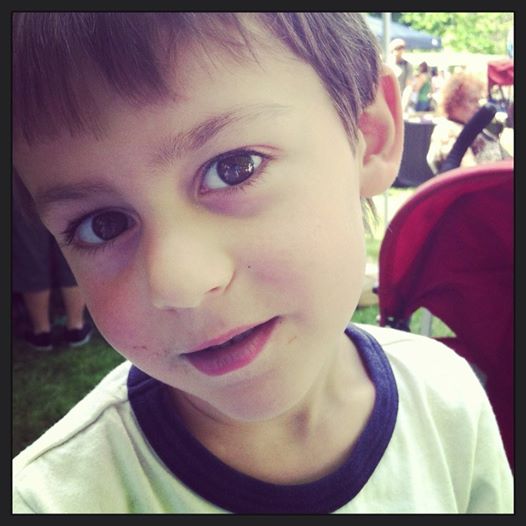
“I didn’t want THAT cookie!” –A StayListening Guest Post from Sarah MacLaughlin

sweet boy

I had picked up my three-and-a-half year-old at preschool and we headed to a nicer café, you know, the kind where adult professionals are having coffee and potentially reviewing business documents. We were there to get a snack and spend some time together before heading home. Of course, the café was busy with people.

I lifted Joshua up and held him so he could peruse the cookie case and choose a treat. It was difficult for him to decide, and by the time he did I was nudging him and had grown a bit impatient. Eventually, we sat down; me with a lemon bar and him with a cranberry white chocolate cookie.

We sat, happily munching our snacks until Joshua’s cookie was about halfway gone. At this point he inexplicably stopped eating, set down his cookie, and said, “I didn’t want this cookie.”

“Oh, I’m sorry. That’s the cookie you chose.”

“I wanted the other one. This one is too sweet.”

“Well, you already ate half of this one.”

“No!!! I didn’t want this one!! I don’t like it!!!” As he flopped in his chair and the volume of his voice rose. I understood immediately that there would be no reasoning with my boy. I talked myself through some embarrassment with some reassuring self-talk—“Children are part of this community too. My three year-old is entitled to take up space and have feelings,” I repeated in my head.

I leaned in close and kindly told him,

“I’m so sorry you didn’t get the cookie you wanted. Next time you can pick a different one and I’ll be more patient while you choose. This is the only cookie for today.”

He started wailing and I calmly picked him up and carried him outside to our car. He kicked and screamed and I had to set him down in between my car and the next one to corral him. I crouched down to block him from running into the parking lot.

“I need to keep you safe,” I said.

Interestingly, I was concerned that people might think I had taken him outside to hurt, punish, or belittle him. I reminded myself that I was doing a good job. I got him safely into the backseat and then climbed in to join him.

He continued to kick and scream and he tried desperately to hit me. He said, “I want to hurt you,” “I hate you!” and, “I didn’t want that cookie,” over and over. I stayed near and blocked the blows while telling him,

“You are safe. I’m right here with you.”

After about fifteen minutes (that felt more like an hour) we mutually decided that he was ready to go back into the café because he wanted to eat the rest of his cookie. He also requested a glass of water to drink. We headed inside for both.

I was floored by his ability to reset and regulate once given the opportunity to offload a portion of big, messy feelings and restore his dignity with new choices and decisions.

Sarah MacLaughlin, LSW, is a certified Parenting by Connection Instructor near Portland, Maine. She is also a social worker, speaker, and author of the award-winning book: What Not to Say: Tools for Talking with Young Children. With a background in early childhood education, Sarah has worked with children and families for over twenty years. She is mom to a spirited five year-old boy who gives her plenty of opportunities to take her own advice. You can learn more about her work at www.sarahmaclaughlin.com.


Telling Your Life Story

Image

How we can overcome our present parenting challenges by telling stories about our past 

In Parenting by the Inside Out, Dan Siegal explains how the single most important factor that determines how well are children are attached to us, is our ability to tell a coherent life story of our own childhood. He explains the important fact that history does not have to repeat itself. No matter what challenges we experienced as a child, if we have made sense of our past, then it no longer comes to influence and dominate our present.

A coherent life story is one that is beyond simply labelling our childhood as ‘happy’ or ‘difficult,’ it is one that includes events and emotions, with an understanding of how both the positive and negative aspects of our childhood have formed us as adults, such as in this example (from this article by Siegal and Bryson)

 “My mother was always angry.  She loved us, there was never any doubt about that.  But her parents had really done a number on her.   Her dad worked all the time, and her mother was a closet alcoholic.  Mom was the oldest of six kids, so she always felt like she had to be perfect.  So she bottled everything up, and her emotions just boiled over anytime something went wrong.  My sisters and I usually took the brunt of it, sometimes even physically.  I worry that sometimes I let my kids get away with too much, and I think part of that is because I don’t want them to feel that pressure to be perfect.”

The good news is that history isn’t destined to repeat itself. If we can take some time to build a coherent narrative of our own childhood, we won’t pass down our emotional baggage to our own children.

If we take a look at any present difficulty in our parenting, we can almost always trace it’s roots back to our past, just as Patty Wipfler did in this story of how she began to form the Parenting by Connection approach. One important aspect of Parenting by Connection is the listening partnership, where two parents take time to talk and listen about how parenting is going. Since starting my first listening partnership when my daughter was 9 months old, I’m not sure how I’d live without them now! As we all know as parents, the tank of patience and energy to give our children is not infinite, but I’m always amazed how a few minutes of listening time can refuel me again.

A good way to start a new listening partnership is to tell your life story, following your mind’s stream of consciousness to talk about whatever emotions and events seem significant, stopping whenever you feel like laughing or crying, those places where we need some emotional healing.

I’ve recently started to tell my life story again, with a new listening partner, and it got me thinking, that our work of healing from the past is never over, that we can tell and retell our stories, using our present difficulties as keys, to unlock and release our past troubles. And each time we do we become a little bit lighter, a little more patient and present with our children.

Try taking turns to tell your life story with a friend, or find a listening partner through Hand in Hand parenting. Even better, Hand in Hand, have a new listening partnerships course, which explains all the nuts and bolts of how to make the most out of your listening partnership.

Getting Ready for Company: How tears made the difference!

A guest post by Angela Jernigan

It was a Sunday afternoon, shortly after we had moved to our new house. My four-year old daughter Leah had just come home from an overnight at her father’s house and we had two hours until our House Warming Party. We had been happily anticipating this party since our move. Leah was especially excited to share her new tree house with our friends. Leah had returned from her dad’s house chock full of feelings—she seemed sullen and sad and had lost all enthusiasm about the party.

I decided to help my daughter get in better emotional shape so that she would be able to enjoy our party. I asked her if she wanted some Special Time in order to help her really know that she had me. We did 10 minutes of Special Time, in which she wanted to hang out on my big bed and snuggle and wrestle. I offered lots of warmth and body contact. We did “flying airplane” and “trot-trot to Boston” and other physical games, with snuggles in between.

When the timer went off, I told Leah that Special Time was over and that it was time to start getting ready for our guests to arrive (I was already ready for the party, but wanted her to begin anticipating the arrival of our friends). She said that she only wanted to be with me and that she changed her mind about the party. I said, “You have a little bit longer to be alone with me, and the our friends will come over.” She insisted that she didn’t want to see anyone else. I repeated again (in a light, warm tone, while giving lots of eye contact) that soon lots of our favorite people would be coming to our house.

She became more adamant. “No! I only want to be with you! I don’t want anyone else!” She began to cry. I kept my words simple, saying that I was sorry it didn’t feel like what she wanted, but that our friends would be arriving soon. Soon she was crying mightily, telling me that she never gets enough time with me and that she misses me when she’s with her dad.” I stayed in close and told her, “You’ve really got me. And you get to be close to other people, too.”

Her cries were deep and hearty, with big tears streaming down her face, which was getting red. She cried like this for about twenty minutes, continuing to repeat that she didn’t want to see anyone else, that I was the only person she wanted. I reassured her again and again that she really has me, and that she has other people who love her, too.

After about twenty minutes her crying slowed down. I continued giving her eye contact, and staying in close. Suddenly her eyes brightened and she said, “Do you think Hazel will be coming to the party?” I said, “Yes!” She perked up and said, “Yay! Because I haven’t seen her all weekend!!”

Soon our friends did start to arrive, and Leah enthusiastically welcomed each person—squealing and hopping up and down as each new friend arrived. She played hard all afternoon—bringing her friends into her tree house, showing them her new bedroom, and the back yard. She thoroughly enjoyed herself, playing and laughing with friends for over three hours. That night she went to bed happily and easily, and slept deeply.

Angela Jernigan is `a Parenting by Connection Instructor based in the East Bay, find out more at her website here

What’s behind the ‘I wants’


photo-5

Yesterday we went on a beautiful overnight trip to a lake here in Switzerland. As soon as we got there my two year old daughter was saying, ”I want be carried,” ”I want food,” ”I want a drink.” There seemed to be no end to her ‘wants,’, and they all seemed to come in a rush. How could she be hungry, I thought, we’d just had a big lunch. And as soon as she’d claimed she was hungry, she was onto the next want, her need for food seemingly forgotten. ”I want to go home” she demanded, which was impossible, as home was three train rides away, and it seemed a shame not to enjoy the beautiful sunny day.

Recently when we’ve been out and about she’s been asking to go home a lot. It started when we tried out a new playgroup, and although the experience was exciting for her. it seemed to leave her feeling overstimulated, and needing down time. I wondered if it was a feeling of disconnection that was causing this barrage of ‘wants,’ and that what she really needed was to process some of her emotions.

”I want to ride” my daughter said pointing at a carousel we passed by the lake side. I thought about it for a moment, remembering how much she loved the carousel at the autumn fair in Basel, and how she’d spent weeks in imaginative play afterwards at home, making rides for her dolls and teddys. I also knew that sometimes when we want to help our children with their feelings, especially at times of disconnection, that it’s good to say yes for a while. So I bought some tokens for the ride, and we had a great time together. After the first go she didn’t want to come off, and I knew that a tantrum was coming. But the ride was quite short, and I didn’t want to interrupt her fun so quickly so I let her stay on for another two rides. Then I realised that it was actually quite expensive, and it was really time to stop!

As I told her it was time to go, she was clinging tightly to the car she was sitting in. She started crying. I didn’t want to seem like I was angry, and dragging her away, and usually I would wait till she felt better before we moved, but I did need to prise her hands away in a hurry, as we had to jump off before the carousel started going again. She was crying, as I went to sit on a wall by the lake. She kept crying, as I gently explained why we had left. I gave her time to finish crying, to get all of her upset out. I knew that although she loved the ride and wanted to stay on, it was about more than that. She’s often very flexible, and can understand and accept when we need to go, or when we can’t do something. But this time it was also about the upset feelings she’d been carrying with her all week, that were making her feel like she desperately ‘wanted,’ and ‘needed’ something, when in actual fact what she really needed was some warmth and connection to release her feelings. After crying, her kind of desperate ‘I want’ attitude had completely disappeared. We spent a lovely time, paddling in a pool by the lakeside.

So if you find your patience being tried by constant demands, perhaps see if your child actually needs a bit of extra connection. Special time, or doing something our child loves together is a great way to rebuild our connection with our children when they’re upset, or have experienced a separation from us. And what often happens is that afterwards our children may start to cry. Patty Wipfler refers to this as the ‘spoiled outing’ phenomenon, that amidst all the love and connection, and togetherness our children might have a meltdown. It may seem like our children are ungrateful or greedy or just spoiling everything by letting their feelings spill out over a day that was meant to be fun. But we can look at in a different way, that they’re soaking up our love and attention, and they feel safe to tell us how they’re feeling. They may not tell us in words. They may tell us by crying when we say no to an ice cream or tell them it’s time to go home. But I hope you’ll remember the message of this blog, that crying is a healing process, that our children shed upsets, and stress from the not so special times through tears. If we can wait till the end of the tears, without distracting or interrupting our children, but instead giving them lots of closeness, and connection, then we may find that the day, far from being spoiled, is even brighter than before.

Staylistening With An Infant – A guest post by Brooke March

Image

My sweet amazing baby had a scary thing happen 2 days ago and she is still processing it. It can feel so odd and confusing with a small baby but now I know this work and understand how healing it is for our babes to cry hard while we listen to them. I know this is what they NEED to do in order for the healing to happen. It is so clear this time around, her diaper is dry, she has a full belly, I hear the difference in her cry between being tired and needing to get some things out. I saw her get scared today a couple of times, things startle her, how can they not? She is so new and working hard to figure out this new world.

What is fascinating to me is most times she looks me right in the eye as she cries and then….after some time…she is done. She looks at me, she smiles, her way of thanking me for giving her the gift of full expression, and she often drifts off. More times then not, it is at the end of the day, like right now that she needs a big cry before bed. She has been a pretty great sleeper since the beginning and on the day she fell, she woke up over and over and over all night needing to cry hard. I would listen for a few minutes and then nurse her and help her get back to sleep. I knew she was not “done” that the feelings were still in there, but I also knew we needed to get some sleep. Her feelings would continue to wake her up until they were all gone, I knew this too, but it is hard to do this work in the middle of the night and I didn’t want our son to be woken up. So I just followed her lead, she would wake, I would listen for a little while, then we would go back to sleep, over and over and over. Every time helping her to chip away a little bit more of the fear.

With our son, we did everything we could to STOP the crying- we were “the happiest baby on the block” parents- opps!! The crying will stop once the hurt is healed and it gets healed through crying, crying releases a stress hormone in the body and helps it return to it’s natural healthy state. No baby cries for no reason, there is much to cry about for some. It is a delicate dance for infants and we always want to lean on the side of nurturance, but we also need to listen and tune in rather then offering the breast right away. Our loving arms, ears and presence is often what they are really needing and with our help, everything can heal. I am so happy to have these tools from day one this time around, the difference is profound and it has only been 3.5 months.

Further Resources

Sleeping Through The NIght  – Blog post on babies, sleep and emotional healing.

Helping Your Child Sleep – online self study course from Hand in Hand parenting

* Staylistening is the process of listening to our child’s emotional upsets, allowing them to cry freely until they feel better. You can read more stories about the healing power of staylistening here

Brooke March is a Parenting by Connection instructor based in Santa Cruz. Follow her on Facebook here where she shares wonderful anecdotes about life as a mother of two, all about staylistening with an infant, and how she helped her son adapt to having a sibling. 


One Single Step To Transforming Parenting

Image

There’s a lot of information out there about parenting. Thousands of books, TV programs, and now with the internet, there are websites, forums, blogs with new posts, and new information flooding our lives everyday. It’s easy to get overwhelmed, it’s easy to get confused, and it’s easy to miss a pearl of wisdom that could completely transform the lives of our children, ourselves, and the communities that we are part of.

When I became a mother, I was sure I wanted to be an attachment parent. Breastfeeding, co-sleeping and carrying my daughter in a sling, seemed like the obvious way I could ensure that we would have a strong connection, not just through her childhood, but to teenage years and to adulthood beyond. I naturally fell into feeding my daughter to sleep, feeding her all the time. Breastfeeding seemed to be like a miracle cure for everything so some attachment parents would tell me, if they fall down and hurt themselves just breastfeed them, if they wake in the night just breastfeed them.

But the thing was, my daughter didn’t actually want to breastfeed when she fell over, much as I tried, or on the plane when we landing and the air pressure was bothering her. At these times. She just wanted to cry. Loudly and freely, she wanted me to hold her as she expressed her feelings. And the other thing was that I felt a strange tension between us, sometimes when I was breastfeeding her, if this was helping her get to sleep, then why was I just counting the minutes, and why was she wriggling her body around as if filled with tension? It didn’t seem very relaxing at all for either of us.

Then there was a fact that the books I’d read about attachment parenting, all emphasised attachment as a sense of physical proximity, using a criteria that it wasn’t always possible to match. Breastfeeding, babywearing, and co-sleeping just don’t work out for everyone, including me. There had to be a something else, a deeper understanding or our emotional connection to our children.

After about nine months, I did began to emerge from the fog of becoming a new mother, and to figure out how my own parenting instincts aligned with a book I’d read before my daughter was born that explained about the healing power of tears. Could it be true? Could it be that our role as parents wasn’t always just to stop our children from crying, to fix, or talk a lot to reason the out of our feelings? Could it be that if breastfeeding had become a habit that was stopping her from expressing herself?

I knew from my own experience just how good crying could be. There had been a long period of my life when I had felt really, really angry, and it was only when I started to access the softer feelings beneath the anger, that I was able to finally to be sad, to cry, and finally heal and move on. If this was the path to emotional well-being, that I didn’t want to stop my daughter from crying, I wanted to figure out how to listen.

When I saw the benefits of listening to my daughter’s feelings, as a baby, and then beyond into toddler tantrums, when I started getting listened to as a parent, I realised just how big this pearl of wisdom can be. When my daughter was stressed, and tense her sleep was bad, her behaviour challenging. When I began to address the times she had feelings to release instead of an actual need, things became a lot better. There were less tense and edgy moments between us, less power struggles. I realised that she wasn’t hungry just before bed, and when she woke up crying, even at a year old, it wasn’t because she was starving, it was because while sleeping, feelings had risen to the surface, that she wanted to tell me about, without words.

This single step simply means to listen and offer warmth and connection even in our child’s most challenging moments, isn’t about permitting all behaviour, it’s about allowing all feelings. And when children are fully listened to, a lot of their challenging behaviour melts away.

It’s also about being listened to ourselves, to make up the shortfall between the childhood that we had, and the one we want to give our children. Our parents did the very best they could, but we don’t live in a culture that fully supports the expression of feelings. Things are changing though.

I’m glad that this pearl of wisdom is being discovered, that more and more families, are recovering this lost art of listening to feelings. It’s part of our instinct as humans, to fully feel, and to fully move through our feelings, to come out the other side into a brighter world.

Stop I need connection!

Image

My daughter has discovered the power of yelling ”stop!” whenever the grown-ups are talking. It started a few days ago, before we travelled back to the UK to spend time with family. Now there is a lot of grown-up conversation and sometimes it doesn’t involve her as much as she’d like.

This kind of behaviour can be really triggering for us, particularly when we’re in company. Our lovely, charming children, are suddenly being irritating, and we can begin to wonder what people will think of us, our children and our parenting!! It doesn’t help to use rational or reasoning, saying ”mummy will finish talking in a minute,” or ”I just need to finish explaining to Daddy this important thing blah blah blah”. When a child starts behaving in an off-track way, they are really signalling that they can’t think. That their pre-frontal cortex has gone off line, and they need us to engage with their ‘feeling’ limbic brain. They need to feel our love, and our warmth again.

We could try just telling them to stop themselves, that their behaviour is ”not acceptable” but this doesn’t work to deal with the feelings that cause the behaviour in the first place. Over time if we do this our children wind up feeling more disconnected, and behaving in a variety of more off-track ways, or their behaviour goes underground, they stop showing us or telling us how they feel, and they grow up distanced from us. If we can offer connection even when our child’s behaviour is challenging, then we maintain closeness with them.

Because of the way we were parented, we get irritated when our children ask for connection in these kinds of ways. After all, what would our parents have done if we started yelling ”stop!” in a public place like a restaurant? It takes a big leap to be able to give our children connection at all times, even when their behaviour really pushes our buttons.

Listening partnerships really help the most, or having a trusted friend that we can chat to about how embarrassed we were when our child started acting out in public. Having someone who can help us release tension so we don’t feel so irritated. It can also help to say some of the things we feel like saying at the moment to our child, but try not to! And to reflect back and tell the story of our childhood. What would have had happened to us, when we acted out in public? Telling our story to someone we trust allows us no longer be ‘living’ our story in the present, reducing our compulsion to act it out and repeat what happened to us with our own children.

Anyway, back to the dinner table. As my daughter was yelling stop. I had the idea to get under the table, and then to pop up either side of her and surprise her by making her laugh. It worked, she started giggling, and we got to have our conversation again. But I was a little more mindful now to include her, reminding myself that when our children behave in off-track ways, they’re not being ‘bad’ or ‘unreasonable.’ They are only asking for the connection they need to grow and thrive. And if we offer that connection as much as we can, even when it feels challenging, if we can let go of the voices in our head that might be telling us that our child just shouldn’t be behaving in this way, then they don’t need to challenge us with their behaviour.

Since this ”stop!!’ game has been happening a lot these past few days. I know I need to take make some effort, have a mini holiday ”connection plan”. As we visit relatives who give her attention, I’m also using the time to go and catch up on some work. But it’s a reminder that my daughter still needs connection with me. So starting today, I’ve decided to start the day with 5 minutes of special time. This is a great thing to do when we are travelling, because it can happen before we get busy doing activities and outings with the family. I love this anecdote written by a working mum about how just a short dose of special time can make a big difference. I’ll also try to do a longer special time later in the day, and have lots of playlistening as well. And most importantly I’ll make some time for some listening for myself! When I can clear our my old feelings of tiredness and irritation, I discover the spark of creativity that I need to enjoy play.

Listening to Our Children’s Pretexts

IMG_2104

Having an intellectual understanding of the healing power of tears, didn’t help me that much when it came to listening to a real live baby! Well it did, but it took me a long time to untangle my natural instincts as a parent, from my drive to stop my daughter from crying, even when she had no particular need.

As a new mum it was such a steep learning curve to figure out what my daughter wanted, that for most of the time, I seemed to forget what I had read about how some times babies cry for what seems like no apparent reason, simply to heal.

I think this is such an important distinction to make. Our strong urge to stop our children from crying when they don’t have a need, isn’t actually our natural instinct, even though it sometimes feels that way. It’s the history of our own childhood talking, when our parents couldn’t always tolerate our tears. We might have been told, ‘there’s no use crying over spilt milk’ or ‘don’t cry or I’ll give you something to cry about,’ and so this compulsion to stop our children from crying happens automatically, unless we have paid some attention to it, and become aware of what we were doing.

I’m not sure I could have managed that big job of untangling my childhood history, and discovered the inner awareness I needed to really listen to my daughter, if it wasn’t for Hand in Hand parenting. The articles I read, and the support I got from my Building Emotional Understanding Course, helped me dissolve the confusion in my head, about what she was trying to say without words. I finally had the confidence to trust my intuition. And I also got some really useful information, that helped me see things in a completely different light.

One sentence from an article by Patty Wipfler jumped out on me, ‘Children pick lots of pretexts to help them release pent-up feelings. They will cry about a shirt being pulled over their heads, about having a shampoo, about you moving six steps away to do the dishes….”

My daughter always hated me putting a top over her head. I would rush through the process to get it over as quickly as possible, and then get in a panic when it got stuck and the ordeal would last longer. I always felt guilty that it was as if I was doing something without her permission, something I had to do, but that she hated. I started to dread the moment when I’d have to get her dressed, and these moments became full of feeling for both of us.

The sentence about pretexts drew my attention to something I’d never considered before. That this was a small moment that had a lot of feelings for her, and if I could help her release her feelings, she wouldn’t be so bothered about it anymore. So next time, I decided to listen. I didn’t rush to put the top on, I showed her the top and told her what we were going to do. She cried for a while, much longer than that split second cry, before I yanked the top over her head and interrupted her feelings. This time, when she stopped crying, I would gently show her the top again, and tell her I needed to put it on. She’d start crying again.  Now I was fully giving her the chance to express whatever fear or upset was being triggered by the top, and when she’d completely finished crying, I put the top over her head, slowly and she was completely relaxed and at ease.

After that she never felt upset when I dressed her, and most importantly getting dressed was no longer something I forced her to do, but something we could do together. It was amazing to see, that suddenly beneath all these feelings, she was completely happy to co-operate with me when upset wasn’t clouding her view.

t never found out what was it that bothered her about having something pulled over her head, though I suspected it had something to do with trauma from her birth. When she’d first been born her head was incredibly sensitive after being born by vacuum extraction.  She hated wearing hats, or having her head touched. I’d felt guilty that I hadn’t had a natural birth, but I learnt an important lesson in acceptance, that there may be many aspects of our children’s lives that we can’t control but we can always help them to heal.

After this incident, I realised that there were all sorts of little pretexts, moments when my daughter got upset, that I could help her heal from. I didn’t have to force her to clean her teeth, or change her nappy. That these moments didn’t have to be unpleasant experiences. That if I listened long enough, she could tell me about whatever big feelings got stuck onto these small everyday events. She could get comfortable in her own skin, experience the sensations of being in the world, and we could take our time together. Investing this time is absolutely priceless, because then feelings don’t come every single time, over lots of little pretexts. There are less little edgy moments in the day for both you and your child. There isn’t so much to be fearful of in the world when feelings have been released. Are there areas of your child’s life where they have big feelings about a small pretext? They can be good places to start listening.

Sleeping Through the Night

Image

When my 6 month old daughter didn’t sleep through the night, I wasn’t really looking for a solution, I didn’t like the concept of sleep training. We co-slept so when she woke it was easy simply to just feed her and then fall back to sleep. I was still getting my full eight hours with a few short interruptions. I assumed that she would sleep through the night eventually.

But after eight months, nothing was changing. I started to wonder why she was waking more than she did as a newborn. When I fed her she didn’t seem that hungry, and just sucked for a minute or two before falling asleep again. I read about sleep cycles, and how a baby needed a way to soothe herself back to sleep. It made sense that other babies were self-soothing back to sleep with their thumbs or a dummy, whereas I was my daughter’s comfort mechanism. But I thought that this couldn’t be the full story. My daughter had on occasion slept in four hour stretches. She also always woke half an hour after falling asleep; I knew that had nothing to do with being hungry, or transitioning through sleep cycles.

Before my daughter was born, I’d read a book called The Aware Baby. The author Aletha Solter explains that in the first three months of life, all babies spend some time each day crying ‘for no apparent reason.’ She explains that this kind of crying has a healing function. In a study conducted by Dr. William Frey, he compared real ‘emotional’ tears with those caused by chopping onions. He found that emotional tears contained stress hormones such as cortisol and other toxins. Crying is a way that we can literally release stress and tension out of the body.

All babies inevitably experience stressful events, such as a difficult birth, medical interventions, or just the daily stress of getting to know their new stimulating world. The understanding that crying was healing made sense to me. I’d gone through a difficult period in my life in my mid-twenties, when I’d felt depressed and physically exhausted. I’d written for therapy, done yoga, meditation, and also deep tissue massage. I often found that these modalities took me deeper into my sadness, and I would release my feelings through crying. I always felt much better afterwards, and eventually my depression lifted, and I felt a renewed sense of self and happiness.

Knowing about the healing function of crying helped me through the early colicy days of my daughter’s life. There were times when I didn’t bounce my daughter, pace the room or feed her. There were times, when nothing much worked but to listen. And what I found were those were the times when I’d had the deepest connection with her. By witnessing this pain that she felt, I felt connected to her deepest self. It was heartbreaking that she needed to cry so much, that she had so much suffering inside of her. But it also felt wonderful that she had this way to heal. Her birth had been difficult, but now I was able to cuddle her close to me, and tell her she was safe now as she expressed these strong feelings.

During the first few months of my daughter’s life, I fed her whenever she cried. As I didn’t use a dummy or, put her to sleep by herself, it seemed natural that eating and sleeping became intertwined. I fed her to sleep, but after a couple of months, that stopped working easily, so I would pace the room until she was more sleepy, and then try to feed her to sleep again. It took me a while to realise that these were what Aletha Solter, calls ‘control patterns;’ things to stop the crying that become habits that the baby comes to rely upon. I had thought I was helping her to sleep, but then I began to think, maybe what I was actually doing was repressing the feelings that she wanted to let out before she slept.

So next time my daughter needed to take a nap, I sat on the bed, and held her. She made some slow tired cries, and I watched her face look visibly more and more relaxed.

She looked so peaceful, as if she had been doing some baby yoga or meditation! She fell asleep much more easily than if I was pacing the room. I did this a few times, but I still felt some confusion about whether it was really okay just to let her cry. Sometimes she would ask to breastfeed, and then I would feed her. It wasn’t long before the habit of feeding to sleep had crept back. Yet occasionally I thought to myself, that she probably wasn’t hungry, and was just asking out of habit, because if we were out, then she would just fall asleep in her buggy without needing milk.

When my daughter was eight months old, I realised she was hardly crying at all. I still believed in the idea that crying was healing. And I missed that deep connection that I had with her when she cried. I noticed that when I fed her to sleep at night, she seemed to wriggle around a lot and have a lot of tension in her body. Feeding her to sleep wasn’t helping her relax. I reread The Aware Baby and realised that I’d forgotten most of its contents since my daughter had been born! My daughter was feeding every two hours, which I had always been puzzled by. All of the other babies I knew went 3 or 4 hours between feeds. Aletha Solter, explains that breastfeeding every two hours can be a sign that it has become a ‘control pattern.’ Other babies might have been using pacifiers or movement as their control patterns, but for us it was breastfeeding. I also realised that because breastfeeding was a control pattern, then she would ask for the breast out of habit even when she wasn’t hungry.

Aletha Solter also says that all healthy babies over six months of age are able to sleep through the night. She explains that babies above this age wake because of emotional tension. Just like adults, babies who have stress and tension, have trouble with sleep. I decided to try again, and let my daughter fall asleep without breastfeeding. This time the cries were powerful. I sometimes doubted whether I was doing the right thing, but then I’d look at her face, when she’d just fallen asleep after a big cry. She would smile and even giggle sometimes as she fell into dreams. It was clear that she’d cried away her upset and felt peaceful again.

I felt more certain that listening to her cry was the most loving thing I could do, and started looking for more resources to support me. The idea seemed so different to what I read and heard everywhere that I needed to know there were other parent educators and thinkers out there who understood the healing nature of crying. I returned to a website I’d looked at before called Hand in Hand parenting. I read some articles, and was relieved to hear Patty Wipfler’s compassionate advice, that it’s natural that in the close breastfeeding relationship children often come to depend on the breast for comfort. I downloaded a podcast from Hand in Hand, called ‘Helping your child sleep.’ These ideas, along with Aletha Solter’s, helped me to figure out what I needed to do to help my daughter sleep.

I started with the first time she woke up, at 9pm. Instead of feeding her I held her instead. She cried for just a few minutes and then fell back to sleep. I fed her as normal for the rest of the night. The next night, she slept right through the time of her first waking the night before, and didn’t wake up till 11pm. When she woke I repeated the process of holding her instead of feeding her. The next night she slept right the way through till 1am!

Sometimes when she woke, I could just hug her, and that would be enough for her to fall asleep. Other times she would have a big cry. Within a couple weeks she was sleeping through the night, and she now sleeps through the night, all of the time, apart from the occasional illness or emotional upset. She has become more relaxed and confident, as a result of being able to release her feelings through crying. And I feel so much closer to her, now that I’ve learnt how to listen to her more closely, rather than simply trying to stop her from crying.

In all the debate about baby’s sleep the experts divide into two factions. On the one side, there are those that think we should leave a baby to cry it out, so that they learn to sleep on their own. On the other side are the ones that think we should do whatever we need to do to stop our children from crying. But there is a third way that involves a deeper understanding about the nature of crying. That we don’t have to leave our children alone when they cry, that we can hold them and support them, and help them heal, so that they naturally sleep better.

We as parents often seem compelled to stop our children from crying. We think of this as parental instinct. But what feels like an instinct is actually a learnt behaviour that comes from our own childhoods. As psychiatrist Dan Siegal says, ‘we learn to parent, when we ourselves are being parented.’ Very few of us were listened to fully when we had upsets. Our parents might have thought it kindest to just stop the crying as quickly as possible. They may have told us to stop crying, ignored us, or said things such as ‘don’t cry, or I’ll give you something to cry about.’

When we take the time to listen to our own children it can trigger the strong feelings of not being listened to as children. This and the common cultural idea that crying is a negative behaviour we must stop as quickly as possible makes it hard for us to listen to our children cry.

Now when my daughter cries, I don’t actually think of it as a ‘bad’ thing. Of course I’d rather she was happy and smiling, but when she cries, I know she’s doing the most intelligent thing she can, healing from her hurts and upsets. When we listen to our children when they have upset feelings, they can heal from the stress and tension that cause off-track behaviour such as aggression. Our children use ‘misbehaviour’ as a red flag to tell us they’re not feeling good. Listening allows our children to express their feelings through crying so they don’t have to resort to more indirect ways to tell us how they’re feeling.

Listening to our children cry is not easy, particularly if we weren’t listened to as children. In order to listen to our children well, we need to be listened to ourselves. Hand in Hand parenting has a wonderful (and completely free!) listening partnership scheme where parents can get together and exchange listening time with each other. This helps us to work through some of our difficulties, and to find our sense of well-being again. I’m always amazed at how spending ten minutes talking about my feelings after an exhausting day with my daughter, gives me such a sense of renewed energy that I can delight in being with her again.

Adults do not cry as easily as children, and this is partly because our feelings were suppressed when we were young. Through my listening partnerships I’m rediscovering my ability to cry easily, and learning first hand about just how healing crying can be. What I’ve learnt is that it’s never too late to find ways to heal, and change and develop as a person. Throughout my life I’ve met many people like me, looking for ways to shed that baggage they have carried throughout their lives. What a wonderful gift it is to give our children, to help them heal while they are still young, before the baggage gets too heavy. They can grow up retaining the lightness they have as children.

Are sleep struggles with your child leaving you exhausted? Hand in Hand Parenting offers an online self study course. Click here for more details. 

This article was previously published in Juno Magazine, issue 34.

Image

A Little Special Time in the Morning

Image

“She’s so clingy,” I found myself complaining about my one-year-old daughter. “I can’t get anything done!”

Almost all the mothers with babies of a similar age agree with me. We spend our days socializing in baby groups, or at other people’s houses, trying to avoid going back to our own homes. My baby seems fine when we are out and about, but turns into a koala whenever it’s just the two of us.

When I talk to parents of toddlers, and older children, I get worried that it’s not going to get any easier. Children of all ages need attention, and lots of it. It seems that no matter how much we give our children, they always want more. Their need for attention seems infinite!

From my Building Emotional Understanding Course, I learned that the clingy,
attention-seeking nature of our children is actually hard-wired into their brains. It makes biological sense that children evolved to make sure they were under an adults’ radar at all times, to protect them from wolves and other dangers in the wild. There may not be any wolves in our houses these days, but children’s brains are still the same.

According to Patty Wipfler, when children feel connected to their parents, they can be their naturally good selves, happy, relaxed, and eager to co-operate with us. However, their sense of connection is fragile, and is easily broken by something as simple as a parent giving attention to another sibling or getting distracted by a phone call. When children behave in “off track” ways, it’s a signal to us that they need some connection.

But giving children constant attention is impossible. Many of us work all day, and it’s not much easier for stay-at-home parents, who struggle to balance doing the cooking and housework with giving their children one-on-one attention.

Mornings were the worst time for me. I’d be struggling to get breakfast sorted, clean up the kitchen and get out of the house. As I rushed about, my daughter would start screaming for my attention, which stressed me out. As the screams escalated, I would feel more and more stressed, and she would get more and more frustrated. We were reacting to each other, so that by the time we left the house our sense of connection had been lost, and everything I tried to do just seemed to make her whine and complain.

After reading Julianne Idleman’s article ”Start School Days With Special Time” I decided to implement ten minutes of Special Time with my daughter every morning. I loved Julianne’s advice to, “Make sure everyone in the house knows they are loved and cared for, and welcomed into this new day, before any of the many mundane chores gobble up your attention.”

During Special Time I would get down the floor, and follow my daughter as she crawled about exploring. It seemed almost silly to be doing this, to just follow her, doing nothing but simply watching what she was doing. She barely looked at me, as if I wasn’t even there! But then I reminded myself that if I wasn’t with her, she’d be wanting to be picked up. She did feel my presence even if she wasn’t directly interacting with me. She enjoyed this time of exploration, safe in the knowledge that I was close by and giving her my complete attention.

What I noticed is that when Special Time was finished, she was often happy to continue playing even after I stopped to get on with other things. Because I’d invested time with her, she continued to feel a sense of connection, even when that time ended.

Now, whenever my daughter is in a particularly clingy mood, I give her some Special Time, and it often helps her to enjoy playing independently. Daniel Siegel, the co- author of Parenting From The Inside Out says that humans have oscillating needs for connection and solitude. When I have met my daughters need for connection she can confidently go off to explore her world, learning, in self-directed play. The practice of Special Time, together with the other Parenting by Connection listening tools, have helped me to help my daughter discover her independence. It is a joy to watch, and it’s great to get some time to clear up the house too!

Daniel Siegel says that our brains develop during interactions with others. We feel connected, and internalize a sense of the loved ones in our lives so that they are with us even when we separate from them. When we devote time to our children, it helps them to internalize a sense of having a loving safe base that makes them feel confident and secure even in our absence. This could be when we just need five minutes to go to the toilet, or so that children can cope with separations such as daycare or school. Ultimately, our children internalize the sense of feeling safe and connected to us, which means that when our children are grown and fly the nest, they will still feel us with them. I love this idea that when we connect and interact with our children, we are interweaving ourselves together so that we will never really be apart.

You can read more about how we can build secure attachments with our children in Parenting From The Inside Out