Giggle Parenting To Help Your Child Fall Asleep In Their Own Bed

Hello.png

I think that as parents we should find the sleeping arrangement that works best for our family. There’s no right or wrong, and whether you co-sleep or have your child in their own room, (or make any other parenting choice for that matter!) you can do Hand in Hand parenting in the way that works for your family.

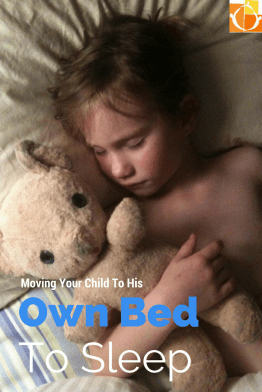
We have been a co-sleeping family and also had phases when my daughter slept in her own room because she chose to. Now she sleeps in a bed next to ours in our room. It just seemed to work out that way. She’s been sleeping in her own bed since she was 18 months old. She actually embraced having her own bed and was happy falling asleep in there until February this year.

One night before she had to go to the doctor for a blood test she got really clingy and wanted to fall asleep in my bed. Ever since then she’s fallen asleep in my bed. I’d be totally happy with her falling asleep cuddled up next to me, except for the fact that I know it’s because she’s still got some feelings (perhaps about the blood test, perhaps about earlier hurts from being a baby that got triggered when she went to the doctor etc.)

So a few weeks ago I wrote this blog post about how I staylistened to my daughter’s feelings to help her through the fears, and get comfortable falling asleep alone. But, she was still falling asleep in my bed! I still hadn’t got her comfortable to fall asleep in her own bed.

The funny thing is my daughter will fall asleep in her own bed, but only if my husband puts her to bed. This kind of inconsistency, is a sure sign that she is trying to ‘tell’ me about these feelings, because I am the parent that uses the Hand in Hand parenting tools the most to build emotional safety (as I talked about in this post here.)

One of my issues is that my daughter is a night owl, and likes to go to bed around 9.30 ish. This has been her natural rhythm for her entire life so far, and my attempts to shift her sleep pattern never worked. I also like to go to bed at this time, and I’m often pretty exhausted by then, so it’s been a struggle to work on this emotional project consistently.

A few nights ago I got some listening time, and I ended up actually asking my listening partner for advice! This is not really what we usually do in listening time, but as my listening partner is also a Hand in Hand parenting instructor I was looking for a fresh perspective. Even though I’m a Hand in Hand instructor, it’s often my own parenting issues that are the most challenging, because my own emotions exhaustion, tiredness etc, often get in the way.

My listening partner suggested that I get into bed with my daughter, and then slowly leave her there, or that I could set a limit, and gentle move her into her own bed while staylistening if necessary. Well it kind of turned out that way!

When I finished my listening time my daughter was in her own bed, just about to fall asleep, but when she was me she immediately wanted to come into her own bed. I was feeling energised from my listening time, and it had also helped to talk with my partner and get new ideas.

So I immediately moved towards the gap between our beds and said, ‘’I’m the door of the bed, and I’m staying shut!’’ Then she started trying to get by either side of me, and wrestled to climb over me.

I let her jump into my bed, and then acted all playfully exasperated that she had climbed over. Then I told her ‘’I’m the door, and I’m coming to put you back.’’ Being playful meant it didn’t seem so ‘forceful’ to physically move her into her own bed. I playfully picked her up and put her in her bed, and then I ‘shut’ the door again. We repeated this a few times as she wrestled and laughed. At one point she ran around the beds instead to avoid the door, which really made her laugh.

Then she said she was tired, and I asked if she could get into her own bed, and I’d cuddle her for a bit. She agreed straight away and fell asleep quickly and easily. The next day she woke up in a great mood even though she’d fallen asleep later than usual.

Now, for some parents, myself included, we can often feel a little strange, about enforcing a separation from our child. We can worry that this may give our child the wrong message, that we are not available for closeness.

But it’s actually the opposite. By noticing those moments when our child is clingy, we can actually become closer together by playing with the idea of distance. I felt a lot more closely connected to my daughter, when we wrestling and laughing together, than I do when she’s clinging to me, taking ages to fall asleep because she’s still tense because there are feelings she hasn’t released that get in the way of her being able to let go and fall asleep.

So if your child is taking a long time to fall asleep at night, or is showing signs of being tense or disconnected, then try having some fun getting them to sleep in their own bed.

 Are you struggling with parenting and looking for a fresh perspective? I have a Parenting By Connection Starter Class beginning next Wednesday at 8pm Central European TIme, (7pm UK Time, 11am Pacific time).

The Invisible Hurts We Carry

cryingwoman

Sometimes tears don’t surprise me. Perhaps I’ve been feeling sad for a while, or I can feel a need to cry behind my eyes. At other times they do catch me by surprise. Often when I’m doing listening time I’ll be talking and then suddenly I’ll start crying about something I didn’t even know I was sad about. Something I wouldn’t even have thought would register as a hurt.

This happened yesterday when I was talking to my listening partner about getting in contact with two possible schools for my daughter to attend in August. When we visited one school they didn’t make much effort at connecting with me, or making me or my daughter feel welcome. Another school were much more welcoming, and made small gestures that showed natural human kindness. I felt much safer about sending my daughter there, because they were warm, and friendly.

As I told my listening partner how grateful I was about the small ways that school had made us feel welcome I started crying. Later I realised how terrifying the possibility had been to send my daughter somewhere where I wasn’t sure her emotional needs were taken care of. I was so grateful to have found another possibility that I cried with relief.

There are literally hundreds and thousands of little hurts like this that we carry inside our minds. They raise our stress levels, and effect our health, both emotionally and physically. They get in the way of our thinking, and our ability to be calm, loving parents. We may not be even consciously aware of these hurts.

When we begin listening time, we may just start talking about small minor everyday niggles, but as we follow our train of thought with a partner we trust, we will naturally be led to our tears.

Often when we have a present hurt there’s a thread of hurts that can be traced all the way back to early childhood. For instance, as I work through feelings about my daughter starting school I know it’s not just her separation anxiety that I have to contend with. It’s also my own past experiences with being bullied at school that are making me feel nervous and anxious about our choices.

My daughter’s limbic system (the emotional part of the brain) will be picking up on my anxious feelings, and her transition to school won’t go smoothly unless I can heal my own past.

Despite our nervous feelings, I think we are both looking forward to this new adventure. We can walk this healing path together.

For more info check out How Telling Your Life Story Transforms Your Parenting. And if you’d like to try listening partnerships with me, I have an online Parenting by Connection starter class beginning next weds May, 18, 8:00pm central european time, (7pm UK time, 11am pacific time)

cryingisokayhere

Photo Credit Miss O’Crazy 

Giggle Parenting For No Reason

shutterstock_343677584

A lot of my giggle parenting posts have focused on using laughter to deal with specific family challenges. Although this is a great way to apply the giggles, it’s also worth bearing in mind that of course we can laugh and have fun with our children for completely ‘no reason.’

Today I went down to the cellar with my daughter to hang up some wet washing. There were some dry towels and other clothes hanging up. As I hung up the wet stuff, I told my daughter in a playfully serious voice, ”okay, I really don’t want you to pull down that towel.”

She immediately yanked down the towel, then went to pull down a pair of trousers. I chased her around putting things back up, and acting playfully exasperated. It became a race for her to pull things down, and for me to put them back up. We had lots of fun and laughter. (by the way, the cellar floor is immaculate so I wasn’t worried about the clean washing getting dirty! And there were only a few things she was able to reach, most were too high up)

Now you might be thinking, why on earth would I encourage my child to pull down clean washing and dump it on the floor? What sort of parenting lesson does that send?

Well time and time again I’ve seen that if we let our children be ‘naughty’ in a controlled way, it massively reduces the chance that they will misbehave in real ways. We had both been ill this week and had been missing out on playfulness, so I spotted my chance to leap in and have a few giggles. I know that every time I invest time in connection, I’m increasing the chance my daughter will be co-operative when I really need her to be.

So if you have a few moments to spare, and get some inspiration for what might make your child laugh (while they are in the more powerful role) then try out some giggle parenting.

You might also like

Why You Should Let Your Children Be ‘Naughty’

What To Do When Your Child ‘Just’ Wants Your Attention

Giggle Parenting – The Best Discipline Tool Out There 

Giggle Parenting – Playing Shops

IMG_1856

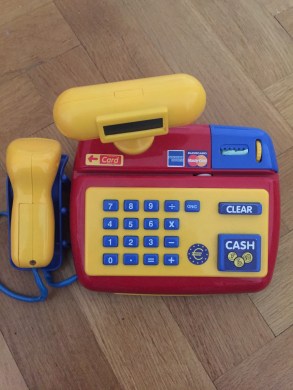
Today we were playing shops for special time. We took turns being the shopkeeper and shopper. We had some barcodes and prices on pieces of paper. When it was my turn to be the shopkeeper I started making lots of mistakes. I scanned the toy bananas instead of the barcode. Then I typed in the barcode number instead of the price. When my daughter gave me some coins I tried to swipe them through the card machine.

Each time I made a mistake my daughter would correct me. I would say sorry that it was my first day being a shopkeeper and I didn’t really know what I was doing. She laughed and laughed. She found it hilarious when I pretended to be the automated voice of the till saying ”beep, beep, beep, this is the wrong price for bananas,” over and over again.

I could see that this play was building her confidence, she got to correct me, explaining the right numbers to type in or the right thing to scan. As children who are relatively new to the world and learning how it works all the time, this kind of play is a welcome relief from all the times when they feel confused and wondering what is going on.

Giggle parenting can sometimes be a handy tool to use when we need to get our children to do something, and it can also be simply for pure fun and laughter. As we laughed together, I actually started enjoying playing shops!

Giggle parenting is about making an investment in connecting with our children. So when we need to leave the house to get out to the real shops our children are more likely to co-operate with us. As we say with Hand in Hand parenting, connection breeds co-operation.

So try some special time with your child, and let them pick what they want to do. See if you can bring some laughter into the play, with yourself in the less powerful role.

You might also like, 5 Tips For Having Fun Playing With Your Kids, And 5 Ways To Start Laughter Play With Your Kids

Why You Shouldn’t ‘Calm Down’ A Tantrumming Child

tantrumming.jpg

When my daughter was 6 weeks old, I was going out into town to a friends house for dinner. I had just fed her and put her into her pram (I wanted to carry her in a sling but I hadn’t managed to learn how to tie it yet. Then she started crying. I started feeling edgy and nervous about going out into the world with a crying baby.

Then there were voices in the hallway, and suddenly my daughter immediately stopped crying. It amazed me, that already at this age she could have an awareness of when it felt safe to cry.

Of course it wasn’t always like this. Sometimes she’d be so full of emotions that she’d cry and tantrum wherever and whenever, regardless of who was around.

It sometimes seems that it’s the job of parents to teach our children to ‘calm down,’ to self-regulate and to learn to control their emotions. But that observation of my six week old daughter made me realise that no child actually wants to have fits and tantrums in public. Just like adults they’d much rather keep their emotions for private moments.

If you’re a regular reader of my blog you’ll be familiar with the concept of staylistening, of how crying is a healing process which allows children to release stress and tension, providing there is an adult that stays close to listen to them. (If you’re new to the concept, I have some links to learn more at the end of the article)

If our toddler throws a tantrum we may have a strong urge to make it stop, to distract our child. We may be tempted to offer our child a toy to shift their attention, to turn on the TV or to ignore their tantrum so it stops as quickly as possible.

There’s lots of advice out there about how to get children to ‘calm down’ during tantrums. A lot of this advice is gentle but it actually sends the wrong message. It gives our child the message that expressing emotions is unacceptable.

It also interrupts their natural healing process so that they don’t get to release the stress and tension that has built-up. These unreleased feelings are one of the main reasons children ‘misbehave.‘ Tantrums are challenging, and can try our patience, but when we interrupt them, we are actually making parenting much harder than it needs to be.

With staylistening, we stay and listen to the upsets, without trying to stop them or distract our child from our feelings. Instead we stay present, riding out the storm together.

If we can create a safe space for our children to have their feelings at home they’ll be less likely to have their feelings spilling out in random moments like the supermarket queue or on the bus. And as they are less full of feelings, their behaviour will be easy to manage too!

You might also like this free e-book The Secret To Transforming Tantrums, and  5 Ways To Prevent Public Meltdowns

15 Playful Ways To Get Children To Walk

walking.jpg

When our kids first learn to walk, they may be so determined it’s hard to stop them. However once the novelty wears off there may be moments when we’re on our way somewhere and they get grumpy, whiney and don’t want to walk.

Sometimes it could be that they’re just genuinely tired. At other times they may simply get bored. Walking in a straight line can be pretty boring for a child! It could also be that they are feeling disconnected,  or are experiencing upset feelings. They may start telling us about their feelings through being grumpy and whiney, and wanting to be carried.

Ariadne Brill of Positive Parenting Connection shared with me that we can become aware of when children are using the movement from the walk as a means of letting us know they need to be listened to. Sometimes we can use staylistening, to help them through these difficult moments. At other times laughter and playlistening will seem more appropriate.

If we need to get somewhere, and our child just doesn’t want to walk, or we are physically exhausted and just can’t carry them anymore, a little bit of play can help give children the burst of energy they need to keep going. Some of these tips can be used for when you just want to get home from the supermarket. Others can help everyone enjoy family hikes in the countryside. Repeat each one as long as the giggles are flowing, and you are going in roughly the right direction!

  1. Mummy limpet and baby limpet – In this game. We pretend we are the mummy or daddy limpet, and our child is the baby limpet. We tell our child in a playful tone that they must stay stuck to us the whole time and we really hope that they don’t get unstuck and run away. This is the ideal invitation for them to do just that. We can chase after them saying, ”oh no! My limpet’s running away, I need to catch her and get stuck again.” We can also play when we get unstuck from our child, and go forward a metre or two. We can then call out to our child, ”Oh no, I got unstuck! Quick catch up with me!”
  2. Runaway Buggy – Exercise keeps me sane and as we live in the countryside, I like to go on a walk most days. I have encouraged my daughter out of the house by taking a buggy where she can sit and eat snacks. Eventually she gets bored and actually wants to walk. Sometimes she needs a bit of persuasion, so we play runaway buggy, and I ask for her help to chase it.
  3. Buggy Races – I sometimes pretend to speak in the voice of the buggy, and ask my daughter to race her. Then the buggy makes the mistake of starting to race even though she’s still sitting in there. This makes her laugh. Eventually she’ll get out and want to do a real race.
  4. Make it Fun Melinda Taylor Shoutens of the website More 2 Explore says ‘ We bring loads of snacks. The children collect sticks. We bring bubbles and stop for breaks. We also search for treasures along the trail and seek out wild life. ”
  5. Go Somewhere Fun And Child Friendly – Choose somewhere with interesting things to look at along the way, for example this Adventure Dwarf trail in Muggenstutz, Switzerland was recommended to me by Melinda Taylor Shoutens. It has been designed with little hikers in mind.
  6. Try A Treasure Hunt – Ariadne Brill  says, ”For a simple scavenger hunt, for example, we have drawn pictures of things we think we might be able to find along our walk. Sometimes we even draw super silly things like a purple elephant, and then of course I get to pretend to just have seen it and spark up more curiosity and the need to keep walking.”
  7. Bring Binoculars and Magnifying Glasses My friend Karin recommends bringing along these gadgets to make exploring a bit more interesting. You might also want to try books in the I-Spy Series where you go into nature and tick off the thig
  8. Try Geocaching – Geocaching is a real life treasure hunt, with lots of tiny boxes hidden in millions of places all over the world. Walking to get from A-B may not be fun, but hunting for treasure is! For more info see the Geocaching website.
  9. Runaway ball- This one is good for the countryside, but not so good on a busy street! Have a ball in your bag, and when your child starts complaining about being bored or tired get the ball out and throw it down the path. Then you and your child can chase after it. Repeat!
  10. Silly Legs – Have your legs suddenly walk backwards, or sideways, or in zig-zags and then tell your child, ”oh dear! My legs have started going all wrong. Can you help me please?” They will enjoy being in the more powerful role as they sort your silly legs out. If you try the sideways walk you might want to tell your child that you have turned into a crab. Say, ”come on baby crab.” If they’re still going forwards you could say, ”hmm. This must be a human child, she doesn’t seem to be walking right for a crab.”
  11. Crazy Wind That Blows You Along The Road – Ask your child if they can feel the wind blowing. Tug at your child’s hand and tell them that there’s a wind blowing your down the road. You’ll get where you need to go much fast with a crazy wind blowing you.
  12. Silly Scooter – If your child has a scooter with them that they no longer want to ride you could turn it into a silly scooter. Have it jump down the road, or land in funny places, or go backwards or sideways, and ask your child to help catch the silly scooter.
  13. Pull Along Stick – If you’re in the countryside, find a stick and pretend it is a train, or bus, that will pull your child along. Have the stick go really fast to add excitement. Or have it go really slow, and start complaining to the train saying, ”Excuse me train. I need you to go a bit faster than this!” This put you in the less powerful role, so is likely to get your child giggling.
  14. Fast Bit – When you are walking along the street, and your child is complaining about being tired tell them that you think you are coming up to a fast bit. Then pull your child’s hand and start running. Build your child’s sense of anticipation, and put yourself in the less powerful role by saying, ”I hope that’s the end of the fast bits for now. Oh no! There’s another fast bit.”
  15. Jungle Walk – From Hand in Hand instructor Skye Marilyn Munroe of Nurturing Connections.We live at the top of a hill ( the things you do for ocean glimpses !)
    At the bottom of the hill is a playground. Mr 4 is super keen to walk TO the playground, and does it without a worry.The walk home is not always as pleasant. Mr 4 has been VERY interested in jungles of late…”Oh no!” I exclaim “We are stuck in the middle of the jungle, how will we ever get out of here & home?! Please help me Mr Explorer!” “FOLLOW ME!” He cried, immediately buying into it.We trekked through the arduous jungle, fighting through tangly vines, dodging coconuts thrown by the cheeky monkeys and freezing like statues anytime a dangerous jungle animal ( aka car) approached. We even had to do a tricky river crossing (zebra crossing) We ran, we stalked, we crawled our way to safety (home).It was super fun and we made it home in record time!

I hope these ideas making walking with kids more fun and playful. To read more of Ariadne brills wonderful tips check out Fun Ways To Motivate Children To Take Long Walks. You might also like, Sensory Walk: A Sense Of Touch Walk

Diary of an imperfect mum

A Mum Track Mind

5 Ways To Encourage Independent Play

independent

Independence is something we want to encourage in our children. We want them to grow and venture out into the world to make the most of their lives. And in the short term we would simply like 15 minutes (or even 5!) to finish our household tasks without interruption.

I recently read a post by someone who said that children don’t need to play with adults. Now Hand in Hand parenting is an approach that really values the connection between parent and child. It’s not just about cooking, and cleaning up after them, and reading bedtime stories at night. It’s also about getting down on the floor with them, having a glimpse into their world, and an understanding that the power of our attention can be deeply healing.

An adult can’t replace a child’s need to have friends, and playmates. But an adult can connect in a way that meets a child’s need to process, and recover from any stress and upset in their lives.

Using the Hand in Hand parenting listening tools, naturally fosters independence in our children. With a big dose of connection they can internalise us as a safe base to go off and explore the world, whether it’s across the room, or away on a play date or sleepover.

Here are 5 tips for using Hand in Hand parenting to encourage our children’s independence.

  1. Get Some Listening Time For Yourself – How do you feel about your child’s ability to play independently? Do you feel frustrated by their clingyness and constant demands to ‘play with me!’? The emotional part of our children’s brain contains mirror neurons that reflect and pick up on the moods of the people around them. If we’re getting frustrated at their clingyness or constant need for attention, they’ll sense something is wrong and might respond by becoming even more clingy! When we get listened to we can clear out our minds, of all the feelings that get in the way of thinking clearly about what to do. Then we’ll be in good emotional shape for the next steps.
  2. Give Your Child Some Attention – Larry Cohen the author of Playful Parenting
    says, I’m always amazed when adults say that children “just did that to get attention”. Naturally children who need attention will do all kinds of things to get it. Why not just give it to them? When we try to get our child to play independently by saying ‘go play,’ or telling them we’re busy this can be counterproductive. If their requests for play are constantly rebuffed they may start asking for attention in more challenging ways. They might then go and hit a sibling, or pull the cat’s tail. If we can respond by saying yes, when children ask to play their connection cup gets full so they’ll be more chance of them playing independently in the future. I found this Ted talk by Shonda Rimes incredibly moving. She talks about how for one year she said yes every time her children asked her to play. I actually don’t think we should say yes every single time (see my further tips!) but saying yes as much as we can is a good aim to have.
  3. Do Some Special Time – Make special time a regular part of your life. It could be that a fixed time each week works for you. It could be that you notice the moments when your child feels disconnected, and use special time to build a sense of connection again. Sometimes when special time is over they will continue to play contentedly as happened in my story here. Special time helps our children internalise our presence so they feel safe to explore by themselves.
  4. Listen To Big Upsets – So you just did special time and found that your child did not happily continue playing with their Lego as per step 3!  Instead they started lying on the floor and tantrumming because you told them you had to go and tidy up the kitchen. Contrary to popular belief, crying is not necessarily a sign that your parenting methods aren’t working. Sometimes it’s actually a sign that they are working. As you’ll know if you’re a regular reader of my blog, crying is a healing process. If you have played and given your child attention then they sense that you are available to listen to their bigger feelings. They use your limit as a trigger to release these feelings. Holding the limit while listening and staying close lets your child release feelings that get in the way of them feeling safe enough to play independently. Whenever upsets come up, it’s always good to stay in the moment and listen, rather than trying to distract or fix. Releasing big feelings in your presence allows children to connect deeply to you, and with that connection internalised they feel safer to play independently.
  5. Use Giggle Parenting You might find that you finish special time and your child doesn’t happily continue playing by themselves, nor do they throw a big tantrum. Instead they whine and moan, and follow you around. In this case, they may need to build their sense of connection with giggle parenting. If you’re going to tidy up, you might like to invite them to be ‘untidy’ to get the laughter flowing, as I did in this blog post here. Or you might want to put items away in the wrong places and then start exclaiming, ”oh no! That’s not right! Where does that go again?” get confused at your mistakes. Soon enough they’ll either be happily helping or you, or decide they’d rather play by themselves.

I hope these tips help your process the feelings that can get in the way of them playing independently. Do let me know how you get on in the comments below!

Further Resources 

A Little Special Time In The Morning – How Starting the day off right encourages independent play.

Giggle Parenting Inspiration for a clingy, ‘shy’ Toddler  – How a little laughter can encourage independent play.

10 Ways To Use Special Time To Transform Your Day – Adding little moments of special time throughout your day can encourage independent play.

The Time To Listen To Tears

crying-572342_960_720

A few days ago my daughter fell down hard on her knees outside our apartment. Afterwards she walked a few steps, and then was crying so much that I picked her up and carried her home. She kept crying for a long time, and then after that she didn’t want to walk. I wanted to take her leggings off to spray some antiseptic on them and it took a long, long time and lots of staylistening for her to feel comfortable for me to even do this.

It didn’t occur to me that anything was broken. Although the crying was initially about the pain, it also seemed to be emotional, about the shock of what happened and the fear of seeing blood.

When the next day she still didn’t want to walk I put her in her buggy and took her to the doctor. When the doctor started touching her legs,  she screamed and started crying and crying. I listened to her, and tried to explain that the doctor needed to look at her legs. She kept crying and crying, holding out her arms to me.

I tried to explain to the doctor, that she ‘just need some time.’ I knew that if she had time to express her fear, she would then feel okay about being examined. The doctor immediately snapped back, ”I don’t have time, I’ve got patients to see.”

This was why I hadn’t immediately rushed out to the doctor’s the day before. Doctor’s don’t have time. They are busy, hardworking people, and the average GP (general doctor in British English) doesn’t have the time to consider feelings as part of their patient care.

However, I think this is a mistake. Crying is an important part of our physical health. Dr. Deanna Minich says, ‘crying is a form of detox in which we let go of our stored emotions and inner pain. It also literally eliminates inflammatory compounds, cytokines and chemokines. People who cry easily in response to emotion might even have fewer symptoms and better health than those who restrain their tears.’

The doctor was thinking about the physical well-being of my daughter but what he didn’t understand was that her crying was part of her body’s natural healing ability. If we interrupted her crying we were actually interrupting  the healing work she needed as part of her recovery process.

I wanted to be my daughter’s advocate, I wanted to be able to let her cry for as long as she needed without anyone distracting her or trying to fix, and without anyone forcibly removing her leggings and examining her before she was ready. However I also knew that unfortunately most people don’t have time to listen to children.

Luckily the doctor decided that since she was crying so much we were better off going to the children’s hospital. On the way my daughter was able to cry some more, while I reassured her. By the time we got there she was calm. We had a wonderful doctor who used humour and connection with my daughter. He talked to her and asked her questions rather than me and my husband. The respect he gave her helped her to feel safe. She didn’t cry at all as he pressed the different parts of her legs to check them.

There were no broken bones, and she simply needed to rest until the swelling went down.

The next day she had much more movement in her legs. At one point we had to go out, and she got very agitated about her blanket not being in the right position on her buggy. I sensed she had some more feelings under the surface, so I set a limit with her and I told her I would help to fix it. She cried, and as she cried, and kicked and moved her legs much more than she had the day before. She told me, ”I’m never going to get back to normal.”

I was glad I noticed this ‘broken cookie’ moment and realised that the upset went much deeper than the position of her blanket. I was able to reassure her that she was healing, and already doing much better. At one point she ran across the room in anger,  cried some more and then asked me to come and hug her. It was amazing to watch this natural healing process in action, and how expressing her feelings, helped her feel more confident and find the movement again in her legs.

This is why the greatest gift we can give our children is to find the time to listen to their tears. Doctor’s don’t have the time, with packed schedules and many patients to see. Teachers rarely have the time, with the needs of 20 or 30 children to consider. Everyone does their best, but we are living in a world where the majority of people just don’t understand the importance of listening to tears. I hope one day they do. What a happier and healthier world that would be.

Would you like help to prepare your child for doctor visits? Check out Hand in Hand parenting’s free podcast here

Learn more about how setting limits helps children heal with Hand in Hand parenting’s free setting limits e-book or the online self-study course, Setting Limits And Building Co-operation

Life with Baby Kicks

Getting Dressed – Giggle Parenting Inspiration

IMG_1792

With giggle parenting the jokes wear off. After a while they lose their giggle potential. And when difficult situations come up over and over again, we’re constantly being challenged to think of new and creative ways to get the laughter flowing.

A lot of this creativity happens in the moment, and the play we come up with there and then. Every child is different and you are the best expert on what makes your child laugh.

Still we all need some inspiration sometimes.

I’ve already covered getting dressed in this post, and this one. But I thought up this game the other day, and my daughter found it hilarious.

Having a cuddly toy to get your child dressed can be really helpful. Often when a child won’t co-operate when we ask them to do something they’ll be much more likely if it’s their favourite cuddly toy doing the persuasion.

To add laughter. Have the toy get out your child’s outfit. Then the toy tells your child that they need to get on their ‘getting dressed outfit.’ Then the toy puts on your child’s outfit.

We can act all surprised and confused saying to the toy, ‘your getting dressed outfit? what are you talking about? That’s not your outfit, that’s (insert child’s name)’s outfit! You are meant to get them dressed, not put on the clothes yourself.”

Adding giggles to the morning routine, is a wonderful way to deepen the connection with your child, and makes the rest of the day go much more smoothly.

Would you like a giggle parenting solution to your family challenge? Leave me a comment or send me a message

Giggle Parenting Inspiration: For Parents That Talk Too Much!

5010305055907_Z

My daughter was playing with a piece of sellotape the other day. She was trying to stick it to my nose, and then my mouth. I was acting all playfully ‘frustrated,’ complaining in a light-hearted way that really got her giggling.

We were meant to be going to clean her teeth, but I decided to stay with the play when I realised that this ‘silly’ moment, actually had a lot of potential to help release feelings of powerlessness through laughter.

I kept playfully telling my daughter that I had important things to say, and taking the sellotape off, while she kept sticking the sellotape back on my mouth.

My previous posts about giggle parenting have focused on behaviour that we want to ‘fix’ in our child. But really it’s not the behaviour that is the problem. Our children’s off-track behaviour is really just a symptom of disconnection.When we connect with our children we can heal this disconnection. The behaviour gets ‘fixed’ as a side effect of this connection.

So this post comes from a different angle. A way in which we can ‘fix’ and change our own behaviour.

Ever since reading this inspiring post , How I learned to shut my mouth and why you should too from by Hand in Hand parenting instructor Julie Johnson I’ve been thinking about the importance of silence, and how we can deepen our connection with our child by giving them silence and space.

If you have a piece of sellotape to hand (that is slightly sticky rather than the kind that would be painful to take off your mouth!) then you could invite your child to play by saying in a light-hearted tone, ”I’ve got something very important to say, so I really hope you don’t use this sellotape to tape up my mouth.”

If you catch yourself nagging or talking too much and your child is rolling their eyes or sulking, you can play this. You can also invite your child to ‘zip’ up your mouth using their fingers. Then you can’t talk and just make lots of ”mmmm” sounds.

This is the perfect way to restore the power balance between you and your child!

Would you like a giggle parenting solution for your family challenge? Leave me a comment or send me a message