When Your Child Pushes You – Giggle Parenting Inspiration

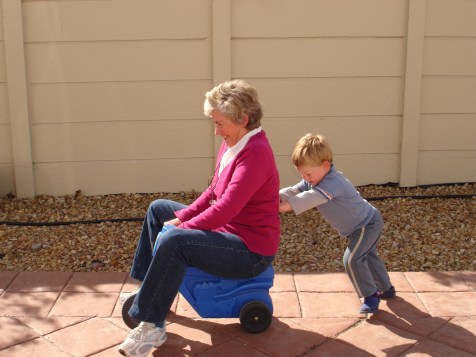
Child_pushing_grandmother_on_plastic_tricycle.jpg

Has this ever happened to you? Your child walks up to you, looks you right in the eye, and then completely out of the blue, pushes you?

Sometimes children ask for connection in the most challenging of ways. And it’s not their fault. In this article here, Patty Wipfler explains why children act aggressive when they are feeling disconnected, and how this can trigger fear and upset that causes them to lash out. Sometimes this disconnection can happen because of difficult experiences where they felt scared.

We probably don’t even need to tell our children that pushing or hitting is wrong (no child really wants to hurt others). What they do need us to is help them to process whatever stress or upset is behind their behaviour. Listening to tears can help. Laughter also plays a part.

It can take a lot of patience and understanding to save the lectures and act in a connecting way when your child lashes out. If you can manage the following game, it’s a great way to prevent aggressive behaviour from recurring. So when your child pushes you you might want to say in a playful way, ”hey!” and then actually encourage the behaviour. Tell your child that you hope they don’t push you into the living room/bathroom etc. And then stand waiting for them to push you. I’m sure they’ll take you up on your offer to play!l When you get there act all surprised about what you’re doing there. Repeat as long as they are laughing. Try pushing back (as long as it’s not to hard!) and walk backwards if that gets your child giggling.

Read here why getting giggles out in the moment actually reduces off-track behaviour.

For further reading Larry Cohen’s Playful Parenting is packed full of Giggle Parenting ideas.

Are you looking for some giggle parenting inspiration? Sign up to follow my blog for weekly ‘giggle games’ for all your family challenges. You’ll find a button to sign up in the top right hand corner of this page. Click here for the giggle parenting archives

Do you have a family challenge you’d like a laughter cure for? Just leave me a comment or connect with me via facebook and I can find a giggle answer for you!

The One Thing You Should Tell Yourself If You Shout At Your Kids

shouting

It’s not your fault. That voice didn’t come from nowhere. It’s not a reflection of your worth as a person or how good you are at this parenting thing.

That’s what we are led to believe because of the way we were parented. We were held responsible for all of our behaviour. So if we hit our sibling or stole some money from our parents wallet our parents would have most likely shouted at us/blamed us/punished us etc. We internalise this punitive, blame culture and feel terrible about ourselves.

Actually the brain science of children’s behaviour shows that when our children act in off-track ways, it’s because they got upset, scared, worried, or sad. When that happens, the part of the brain responsible for rational, reasonable behaviour isn’t functioning as well. All kids are born with a strong innate sense of right and wrong that sometimes gets forgotten in the heat of the moment. The same happens with us sometimes.

It’s not our fault, and it was never your fault. Our brains are more developed than our children’s, so we do have more self-control, but the brain science remains the same. When we get upset, stressed, worried. etc, the rational, reasoning part of our brain doesn’t function so well.

When this happens, the reason why we shout is related to our own childhood. When we can’t think through our actions well, we tend to react based on how our parents responded to us in similar situations. So if we got shouted out, hit, etc. we tend to react in similiar (albeit often less harsh ways) to our children. Sometimes, we start speaking in the exact sentences our parents used.

It’s not your fault, this is happening. It’s a reflection of the ways you were hurt as a child. But you can do something about it.

In Parenting From The Inside Out Dr. Dan Siegal explains how telling stories helps us to heal from the past, so we no longer need to ‘retell’ our history through our reactions. Making sense of the hurts and challenges we experienced means we don’t have to reinact them with our children.

The challenges you face as a parent are often a reflection of the difficulties you had when you were a child.

Creative writing and journalling is one way we can make sense of our past. With Hand in Hand parenting, we also do listening partnerships, where two parents exchange time talking and listening with each other, venting about what’s hard in parenting, and tracing these difficulties back to the past.

Forgive yourself, and nurture yourself, and it will then become easier to ‘forgive’ your child’s challenging behaviour too!

You might like to try answering this question, in a notebook, or with a listening partner. What are your current parenting challenges? How would your parents have reacted to you in a similar situation?

So print out this blog post, and keep it somewhere safe, so in those moments that you feel like you’re about to lose it you can remember, it’s not your fault. 

There is support out there waiting for you! You can join the Hand in Hand parenting group on facebook or the yahoo discussion group to find out more, or find a listening partner.

You can also sign up to my blog (on the top right hand corner of this page) so you can get regular supportive blog posts to your inbox. 

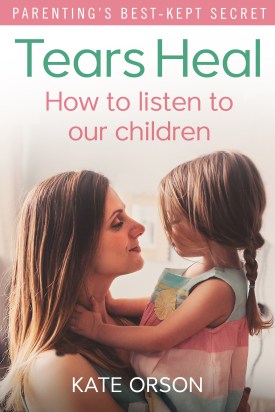
To learn more about the coping mechanisms we can use to stay calm with our kids check out my book Tears Heal: How to listen to our children

Tears Heal2016

Giggle Parenting Inspiration – For Kicking Feet

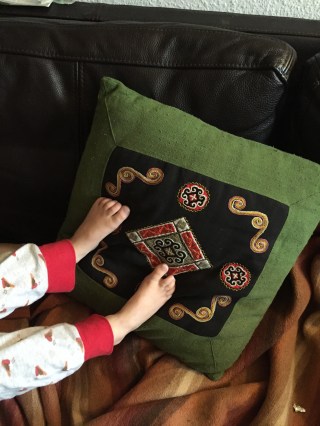
IMG_1711.JPG

If your toddler’s feet are getting a bit ‘kicky’ try this. Get a cushion, and have it say hello to your child’s feet. Say something like, ”I’m such a lovely gentle cushion, I hope you’ll be gentle with me too, I hope you won’t kick me, etc.”

This will probably be just the invitation your child needs to start kicking the cushion. Have it fly across the room, and land somewhere far away. Then the cushion can say in a playfully shocked tone, ”well, hello, to you too!” and then ”Hmmm, let me try again, maybe the feet will be more friendly next time.”

Repeat as long as the giggles flow, and you’re channeling your child’s aggression with fun and laughter. As that cushion flies across the room, they’ll be releasing fear, and powerlessness, and growing in confidence.

Looking for more tips for aggression? Check out my 20 playful ways to heal aggression

Do you want to learn more about how Giggle Parenting can transform your family life? Read Giggle Parenting – The Best Discipline Tool Out There! 

”But I haven’t got time for a listening partnership!”

otilia

I thought I would write this post for anyone who’s thought of trying a listening partnership, but feels like time is a factor that holds them back. And if you have no idea what a listening partnership is check out this great article here from Hand in Hand parenting instructor Roma Norriss.

Starting a listening partnership can feel like another item on the to-do list, but they actually ‘make’ time. When we clear our head of all our stresses and anxiety, the rest of our lives actually go more smoothly, so that time is a great investment.

For example, my house is often a mess (I spend a lot of time writing!) and I’m often too tired to tidy up. But after a listening partnership, I feel energised to tackle the mess. After clearing out my head, I’m all ready to clear out my living space as well.

When I started listening partnerships, I also realised tiredness can be emotional. Emotions are embodied things, so when we clear out those negative emotions, we have energy to tackle the physical work of being a parent. And when my house is tidy, I know where things are, which saves me the time of looking for things.

When our head is clear, we’re more likely to think of fun, creative ways to connect with our children. When our children are better connected they’re more likely to allow us time to cook dinner without being desperate for attention, or even enjoy the process of tidying up!  When we need to get out the door in a hurry they will be more likely to co-operate. We save time, because our relationships are going more smoothly.

When I first started listening partnerships I was feeling much more energised, and was able to give up caffeine. Although I’ve lapsed (several 100 times!) I find when I get a lot of listening time, and don’t need caffeine, I sleep much better. I don’t wake in the night so much, and I jump out of bed much more easily. I probably gain an hour or two simply by being more energised, and sleeping better.

Recently I was reflecting on a trainee Hand in Hand parenting instructor who asked me how come I blog so often. And though there’s a number of reasons I think it may be mainly down to listening partnerships. Listening partnerships helped me work on issues around confidence and self-belief. Listening partnerships helped me to get my priorities straight and think about what I did and didn’t want to dedicate my time to.

Time is rare and precious in this busy life, but when we have this amazing tool to release negative emotions, and think clearly, we can make the most of every moment we have, and build the life of our dreams.

To find a listening partner you can join the Hand in Hand parenting discussion group on Facebook.or the Yahoo discussion group

To learn more about the skills of listening that we use in listening partnerships, Hand in Hand parenting have alistening partnerships booklet, and a  self-guided study course, with videos, reading materials and everything you need to know to be a good listener. 

The Parenting by Connection starter class, allows you to experience listening time with a qualified instructor and get the chance to make connections with other parents too. 

10 Tips For Being A Good Listener

otilia

Being a peaceful parent, and trying to listen to our children’s feelings isn’t easy, particularly because many of us are trying to parent in a way that is radically different from our own childhood. When we were young there was little understanding of the importance of listening to children with warmth and patience, so our parents couldn’t give us a model of how to do this. Our unheard feelings from our own childhood get triggered in challenging moments with our children.

Another reason parenting is so challenging is that our busy, modern, society is not built around listening to each other. We often don’t have the time and support we need and so our feelings get in the way of us being the parents we want to be.

Once upon a time we did know how to listen. In many indigenous cultures there is a tradition of listening deeply to each other, and the healing power of doing so. These traditions suggest that the ability to listen, is something deeply instinctual to us, and that we can recover and relearn the skills.

Hand in Hand parenting is not just about listening to our children’s feelings, but about listening to our own, and those of the other adults’ around us. Listening partnerships are the powerful tool where two parents listen to each other, so that we can de-stress from the challenging work of parenting. We can build community where parents support each other, and want the best for each other. This gives us the chance to do the deep healing work we need to have the patience to accept our children’s emotions.

Here are my top ten tips for being a good listener. Whether you are listening to a partner, or a friend or family member is feeling upset, these should come in handy. If you’re new to the idea of listening partnerships, you might want to read this intro to listening partnerships before reading these tips.

  1. Keep everything you hear confidential. When we do listening partnerships it’s always important not to refer to what’s been said outside of the session. These principles are also good to follow when a friend or family member confides in us. We gain their trust when we keep their words to ourselves, and don’t gossip with others.
  2. Don’t interrupt – We have a natural healing process for releasing feelings through talking, laughing and sometimes crying. When we have the chance to follow our own train of thought, with a warm listener we will be naturally led to our own healing.  When your listening partner is talking don’t interrupt them. There are some things you can say in a listening partnership, that can help your partner when they get stuck and can’t release their feelings. Patty Wipfler talks about these in depth in her listening partnership booklet.
  3. Trust that your partner/friend etc. is the best expert on their life –  If your friend or listening partner is having a lot of arguments with their husband, or struggles with their son’s aggression, you may think that you have the perfect solution. However everyone’s life is different, and our solutions may work fine in our own life, but may not be so appropriate for another. When people are upset, they find it hard to think clearly and listen to advice, however well-intentioned. When we listen and allow our partner to release their feelings, they’ll be able to think more clearly and can often come up with their own solution.
  4. Don’t Tell Your Own Stories – In everyday conversation with friends and family it’s common practise to compare struggles, and the solutions we found that worked for us. This kind of back and forth doesn’t give either person enough time to do the deep healing work they need to release feelings. So when your partner is in the midst of an emotional upset don’t draw their attention towards your stories, and your life. Keep listening, and focused on them.
  5. Don’t Judge – Your listening partner, or friend may be behaving in ways that may you think. ”Oh I’m such a better parent than that I would never do that!” But the thing is, the things that they find difficult in their present life are often a reflection of the ways they were hurt when they were young. Understanding this is how we remove judgement towards other parents. We can then move towards listening to them with compassion and unconditional acceptance. That gives them the safe space they need to begin to heal.
  6. Let your partner lead the way – We do this in normal conversation, often changing the subject completely or digressing far from the original topic. However when we want to listen and help the other person heal, it’s good to let them steer the conversation rather than us. That way they can direct it towards their own healing.
  7. Don’t try to cheer them up- If your partner is upset, because she’s desperate for a break from parenting, you might try ‘cheering’ them up by saying something like, ”it’s Wednesday, only two days till the weekend,” or ”well your mum’s coming next week, then she’ll be able to help out.” This is something we do quite naturally in conversation, probably because we grow up with an unconscious pattern of trying to avoid our own emotions and other peoples. So instead of trying to direct our partner away from their emotions we need to help direct them towards their emotions. We might want to say, ”tell me more about that,” or ”how is that for you?” So they can expand upon how they are feeling.
  8. Offer a contradiction – If your partner is saying they feel like a terrible parent or a failure at work, and you know it’s not true, it’s good to tell them so. You may not want to do it when they’re in the midst of tears, as when they need is a shoulder to cry on. But if they’re finding it hard to get to their feelings, they may need a glimmer or hope, to know things aren’t so bad, so they can kick start their healing process. So tell them that they’re a fantastic mum, or great at their job. etc. And say it genuinely, when the timing’s right, rather than as a reflex reply.
  9. Help Your Partner Laugh- Once you tap into your natural ability to listen you may notice moments when you say something that makes your partner laugh. Laugh along with them, and perhaps say more on similar lines to keep the giggles flowing. This is really just like playlistening for adults, and is all part of the healing process.
  10. Listen if they cry. When our partner cries, we just need to be there and listen. We can offer real (or virtual!) hugs. We can offer a few empathetic words, but we don’t need to say much. Just our presence and our listening lets our partner know that they have a safe place for their feelings, and then they can begin to heal.

To find a listening partner you can join the Hand in Hand parenting discussion group on Facebook.or the Yahoo discussion group

To learn more about the skills of listening that we use in listening partnerships, Hand in Hand parenting have a listening partnerships booklet, and a  self-guided study course, with videos, reading materials and everything you need to know to be a good listener. 

The Parenting by Connection starter class, allows you to experience listening time with a qualified instructor and get the chance to make connections with other parents too. 

How Listening Transforms Family Life: An Introduction To Hand in Hand Parenting


handinhand10

Hand in Hand parenting is based on listening. It starts with being listened to as parents, which gives us the patience and energy to listen to our own children’s emotional moments.

When we do so, we discover that our children are naturally, good, loving, and co-operative, and it’s emotional upsets that cause them to behave in off-track ways. We can help them with their emotions through connection and listening, which keeps their behaviour on-track. Family life becomes much more fun and enjoyable for everyone.

It started one day over thirty years ago, when Patty Wipfler was a young mother, and was asked by a younger woman what parenting was like. When she burst into tears, and was listened to with warmth and empathy she discovered that crying (and laughter to!) is a healing process, a way we can recover from our stress and upset. She realised just how important is that parents get a chance to de-stress so they can be the parents they want to be.

Hand in Hand parenting is an approach made up of 5 Listening Tools. The foundation of Hand in Hand parenting is called a listening partnership, where two or more parents, share time talking and listening about how parenting is going. It’s based on the idea that our past experiences cause our present day difficulties.

When we talk about the challenges in our lives, with someone who listens to us with warmth and empathy, we slowly build the safety to show our feelings. We might laugh, we might cry, we might reflect on our own childhood, and as we do so we shed the baggage that gets in the way of being the parents we want to be.

With support from other Hand in Hand parents in classes or regular listening partnerships, we can begin to integrate the other Hand in Hand parenting tools into our lives.

Staylistening – Crying is a healing process, and scientific research has found that tears contain the stress hormone cortisol. When children cry they are literally releasing stress from their bodies that may have built up from upsetting experiences. Staylistening means staying close when our children cry or tantrum, and allowing them to fully express their emotions. We give our children affection and warmth, without trying to distract, stop or ‘fix’ things too soon. Our children can fully release the upset feelings that cause their off-track behaviour, and return to their natural, loving, co-operative selves.

Special TimeSet a timer for a period of time, perhaps 10-15 mins. Tell your child, they can do exactly what they want (as long as it’s safe!), and follow their lead. Let them fully direct the play, while you shower your love and attention on them. Special time is great before periods of separation, and really helps to build a strong sense of connection with our child. It also is a great way to reconnect after a separation.

 PlaylisteningWe pick up on what makes our child laugh, while they are in the more powerful role, and repeat it to get the giggles going, (except tickling). This helps our child to release tension, and it builds co-operation. It also builds children’s confidence to feel powerful and strong. Playlistening can involve roughhousing, which studies have shown reduces aggression in children, and helps healthy brain development.

Setting Limits With Parenting by Connection we teach how to set limits in a gentle, connected way that builds closeness with our child. When we need to set a limit, we listen to our child’s feelings, with warmth and empathy, understanding that once they are free of upset feelings, they are usually happy to co-operate with us (if our request is reasonable!)

Want to get started with Hand in Hand? Here’s info about the Parenting By Connection Starter Class.

How Listening To Feelings Improves Sleep

Closeup of a baby girl sleeping in her mother's arms
Closeup of a baby girl sleeping in her mother’s arms

Yesterday I took part in my first ever twitter chat, talking about one of my favourite subjects; the emotional reasons for sleep challenges. I got interviewed for @SnoozeShade weekly #SnoozeChat.

It was really fun, and I loved the thoughtful questions that my interviewer, @JennyHicken asked me, as they were really a wonderful opportunity to share everything I learnt through Hand in Hand parenting.

And as Tweets are so brief, I decided I’d write a blog post here to expand on what we chatted about. You can check out the full twitter chat here.

So, one of the reasons I love chatting about sleep, is that the Hand in Hand parenting philosophy takes a really different approach – one that actually works! It’s because with Hand in Hand we look a bit deeper into what might be causing your child’s sleep problems.

So rather than focus solely on having a regular routine, we focus on the major reason babies and children have trouble falling asleep, wake early, or wake in the night – stress and emotional causes.

When I talk about stress, and children, parents often laugh at me. What could possible be making their child stressed? They don’t have jobs, they might not even go to preschool!

Well, stress can actually start in pregnancy. In the beginning our baby’s emotional life is intertwined with ours. If we experience stress, or emotional turmoil during pregnancy, that effects our baby too. Birth can also be a cause of stress for our baby, especially if it was a long or difficult process.

Our culture has a long history of not thinking too much about the emotional lives of babies. Because babies cry to communicate needs, we often think of our baby only in terms of needs, rather than emotions. For instance, they must be hungry, tired, cold etc. Especially as new parents, we’re so busy figuring out how to do our job, and meet our baby’s needs that it often doesn’t cross our minds that they can also cry for emotional reasons.

There will be times when our baby’s cry and they don’t have a need, and we can help them by simply holding them in our arms and being there. Hand in Hand parenting calls this Staylistening, it’s based on the research that crying is a healing process, and that when we cry, we actually release the stress hormone, cortisol from our body.  Allowing babies and children to process their emotions, and not trying to stop this healing process, is part of how they can naturally regulate their sleep.

With older toddlers, the emotional causes of their sleep issues may become much more obvious. Perhaps they get a new sibling and start school and then suddenly their sleep gets disrupted.

During the snoozechat I talked about the some of the things that can help. I explained the importance of listening to feelings, rather than trying to distract our child. I explained that if our child has a meltdown at bedtime, it’s always good to listen rather than try to distract and get on with the routine. I always notice with my daughter, that if she gets a chance to release her emotions, she’s in a much better mood the next day – even if it means a few minutes less sleep than normal.

And children who get their feelings listened to on a regular basis may not even wake up so early! As waking early can be a sign of emotional tension -listening helps with that too.

So that’s a brief summary of our chat. You can read it in full on twitter here.

And next week I’ll be co-hosting again, when we’ll be talking about sleeping through the night without using cry it out. Wednesday 30th March 11am GMT (12pm Central European time). Join us if you’d like to your questions answered.

Are you looking for more help for sleep? Read Sleeping Through The Night  and Five Sleep Secrets For Peaceful Nights. Hand in Hand Parenting also offers an online self study course. You can sign up to the mailing list here for more information. 

Nail Clipping Struggles – Giggle Parenting Reader Question N.O 10

IMG_1702

‘S’ got in touch because she wanted some playful solutions for a toddler that doesn’t want his nails clipped.

So first schedule a time when you are at home, and have lots of time to play without your to-do list getting in the way. Get out the nail clippers, and tell your child you need to clip their nails, but with no expectation of getting it done quickly. Instead go for the giggles.

Ask your child if you can clip their nails, and then the ‘runaway clippers’ start clipping your nails instead. Tell the clippers, ”hey, what are you doing? I need you to cut (insert child’s name)’s nails not mine! Repeat as long as the giggles are flowing.

Have the clippers, ‘clip’ your ears, hair, toes, any body part if it gets your child laughing. If he finds the play really fun you can extend it into more and more outlandish ways, by having the clippers ‘clip’ door handles, items of clothing, or anything really. Keep acting more and more playfully frustrated that you just can’t seem to get the clippers to behave right.

Then you might want to ask your toddler, if they’d like a favourite toy to do the clipping. After lots of giggles they may have released any tension and be more likely to co-operate.

You can play similar games like this for toothbrushing, hairbrushing or face cleaning.

Sometimes it’s possible that children project bigger fears on something small and everyday like nail clipping or tooth brushing. If laughter isn’t enough and there is a deeper, underlying fear there that’s stopping your child from feeling safe in the situation, you may also need to staylisten to some of the feelings.

I know when I first introduced my daughter to teeth-cleaning, she would start crying when she saw the toothbrush. I didn’t rush in and clean her teeth against her will, and also I didn’t distract her, and try to make light of her feelings.

Instead I gave her the space, to express her feelings. I would show her the toothbrush. I would tell her I needed to clean her teeth and gradually move it closer to her mouth, but I wouldn’t actually clean them. I would listen to whatever feelings she had, gradually helping her feel safer, until she had finished crying. Then when she was ready, she was totally happy and at ease with me cleaning her teeth. After that teeth-cleaning was much easier, as she didn’t have any underlying feelings behind it now. Sometimes if she needs a bit of extra connection we’ll have a few giggles, and now that’s enough.

I hope this is helpful, and let me know how it goes!

Would you like a giggle parenting solution for your family challenge? Leave me a comment or sendme a pm via facebook


If you’d like an in-depth look at how laughter can solve behavioural challenges, then check out Playful Parenting by Dr. Lawrence J. Cohen. 

The Healing Path That We Walk With Our Children

healingpath

Before becoming a mother I questioned whether I really was the sort of person who could dedicate their life completely to another human being. After the difficult phase in my life that I blogged about in this post I wasn’t sure I could bring a child into the world when I wasn’t happy myself.

I needed so much of my time for my own healing, that I didn’t see how it would be possible to have the time or energy to be a parent. I did yoga every day, I meditated, and journaled for a least an hour a day, which was all a necessary part of lifting myself out of depression, and healing.

As time went on I did find happiness, and my life became more about living rather than simply healing. I became pregnant and luckily when my daughter was born I adjusted relatively easily. I’m pretty sure, all that time spent being introspective and working through feelings about my own childhood helped a lot.

When my daughter was first born, I was happy to dedicate myself completely to her, I actually enjoyed it. It was like a holiday from myself for a while and I embraced caring for another human being.

But, I also sensed that healing was an ongoing process, that I hadn’t finished healing myself, and probably never would.

When I stumbled upon Hand in Hand parenting, I realised that healing wasn’t something that I need to find masses, and masses of time for like before I had been a mother. It was something I could do in the midst of parenting.

When your child is ‘acting out’, being aggressive, whining or crying, or you are caught up in anxiety that they are going to turn out just like you, or experience all of the struggles that you did, or when you are stressed or exhausted, it’s hard to imagine that this is actually, in some ways, a gift, a possibility for healing and transformation.

In Parenting From The Inside Out  Dr. Dan Siegel, explains the brain science behind what happens when we get stressed, and how implicit memories from our own childhood get triggered. When this happens, the rational, reasoning part of our brain – the pre-frontal cortex can’t function as well. When this happens we have the tendency to act on the basis of our memories – we might start behaving in similar ways to our parents and feel that we can’t control our behaviour well.

And how is this all healing? Well, you need a place to go to tell your stories, to reflect on your daily niggles and stress, to rant about your aggressive son, or your crying baby, in a safe space with a listener. (we call this listening partnerships). You can trace your feelings back to your own childhood, and how your parents treated you. You can find the safety and space to laugh about what’s hard, and cry.

This allows you to move beyond your own past, to become less reactive, and more patient with your children. Each challenging moment is the opportunity to grow, when you dedicate time to processing your own feelings, as well as helping your child. This allows you to be the parent you want to be. Parenting can be a healing path that you walk together with your children, so that life can be much brighter.

It’s hard to think of those challenging moments as a gift, but if you can remember that, and find a safe space for your own feelings, you can transform your parenting, and you life.

Listening partnerships are free exchanges you can do with other ‘Hand in Hand parenting parents. It can help to take an online course with Hand in Hand parenting to learn the basics like the Parenting by Connection Starter class or the Listening Partnerships Self-Study course

For more information read: The Secret Weapon Every Parent Needs To Know About and How Telling Your Life Story Can Transform Your Parenting

Would you like to start a listening partnership? Join the Hand in Hand parenting facebook support group, and connect up with other Hand in Hand parents now. 

Brilliant blog posts on HonestMum.com

This Is How We Rebuild Our Village

We all know the saying ‘it takes a village to raise a child,’ but who these days actually has a village? Author C.J Schneider didn’t when she suffered from post-natal depression after the birth of her third child. She felt isolated and alone, after moving back to live in Canada, and when the sleep-deprivation kicked in, she didn’t have a support network to help her through it.

I was so excited to hear about Mothers of the Village: Why All Moms Need the Support of a Motherhood Community and How to Find It for Yourself And it’s everything I’d hoped for. It echoes all those feelings I’ve had since I became a mother 4 years ago.

Like C.J Schneider I never thought too consciously about building a community for myself until my daughter was born. I’ve always been writing, and by necessity that means spending lots of time alone. However being alone by myself writing and drinking tea is a lot different to being alone all day with a child.

As soon as my daughter was born I craved time with other mothers.  I’d moved to Switzerland from Vietnam just before I got pregnant, so all my community building had to start from scratch. Luckily I met lots of friendly, open mums who were in a similar position. i also trained to be a Hand in Hand parenting instructor and started listening partnerships, which helped me so much with the emotional side of parenting.

However it never felt like enough, and C.J Schneider explains why. The human species isn’t actually designed to live in little boxes all separated from each other. In less affluent societies, and in the past, we lived much more closely with other people. When we became mothers we would have the support of grandmothers and aunties close by. We would be able to divide up the childcare, and the cooking, and the cleaning between us rather than thinking we had to do it all, which is actually impossible.

This is a validating book for anyone who ever struggles with guilt about not being able to do it all. As C.J says, ‘One woman was never meant to replace a whole village.’ Through my work as a Hand in Hand parenting instructor, I’ve listened to many mothers and their struggles. Not a single one of us has it all together, and it’s not our fault.

This beautifully written book has some really good advice on how to build your own village. Some of it is common sense, like arranging babysitting swaps, and asking for help when you need it. But it goes a little deeper than that, giving helpful advice on how to help others but retain your own boundaries, and how to be close to extended family despite the challenges. My favourite chapter was the one titled ‘Develop Your Inner Mystic,’ which is about rising above our imperfect lives, and discovering our true path.

The book is vitally important and a must-read because it helps us out of our isolation. When you read it you realise that it isn’t just you that craves more human connection, and a more supportive society. We all do.

One thing that struck me while reading this is that although it is often mothers who take on this community-building role this isn’t always the case. For example we are friends with a family with two dads. One of the dads travels for work a lot, so the other dad was the stay at home parent when their children were young. He is actually one of the most kind and community-minded parents I know. We don’t have a car, and taxis are very expensive in Switzerland, so he told us that if there was ever a reason we needed a lift somewhere we could call him at any time of day or night.

This is the kind of book that you’ll not only want to read but buy copies for all your mum (or dad!) friends. Then together we can set about rebuilding the village.

You can buy the book here – Mothers of the Village

And if you’d like to know how Hand in Hand parenting helps parents build their village check out The secret weapon every parent needs to know about

This is the first of a new series of book reviews on my blog. I’ll be reviewing books that help make our lives better as parents. If you’ve read anything good recently that’s helped you feel less stressed, and more fulfilled as parent then do get in touch as I love to hear good recommendations!