The Parenting Revolution You Might Not Have Heard About

patty1

I started this blog and wrote my book Tears Heal: How to listen to our children because I wanted to share the amazing life-changing information that crying is a healing process, that it is part of the natural  way we recover from stress and upset. And that when we can listen to our children’s tears, without trying to distract or stop them from expressing emotions, we can help them to heal the hurts that cause their ‘misbehaviour.’

I wanted to share that aggression, or whining, or sleep struggles, or having trouble sharing, are not an inevitable part of parenting young children, and that listening, play and connection, can allow them to be their natural, co-operative selves.

I wanted to share this message with as many parents as possible that because of our own childhood we have this unconscious urge to try and stop our children from crying, to distract or fix, because deep down, we aren’t comfortable with our children’s tears.

I wanted to share the amazing resources available from Hand in Hand parenting, for giving us the strength and patience to deal with our children’s emotional moments, and to grow and heal along with them too.

If you’ve been reading my blog for a while, then you probably do know about this parenting revolution.

A while back I read this fantastic article by Heidi Stevens, To Stop A Tantrum You Just Have To Go With It And then this week I read Dr. Shefali’s 3 Mistakes Every Parent Makes During A Meltdown, with wonderful advice, (even if it’s a slightly inaccurate title!) about how to stay present and calm in our child’s stormy moments.

These were both great articles, but they both came from the assumption that they were the first person to discover these ‘tantrum managing’ tricks. This vital parenting information is still relatively unknown. For example I noticed a blog about how to stop tantrums had been shared 75,000 times on Facebook.

We are in the minority of parents, but we are a strong minority  who are passionate about sharing what we’ve learnt, and changing the lives of not just our own children, but other children as well.

So I wanted to open up my blog to anyone else who would like to write about their journey to discover the healing power of tears.

I’m looking for stories from parents about how they first discovered that crying was a healing process. I’d love to hear about the thought process you went through, and how your parenting, your child’s behaviour, and your family life was transformed. I’d love to hear about the doubts and confusion you might have felt at first, about learning something that is completely different to the way our culture deals with children’s upsets. And I’d love to hear about how you build support for yourself to deal with your child’s challenging emotions, and behaviour.

I’m looking for anything between 400-1500 words. Here’s my story here .

Lets share our parenting revolution with the world!

And if you’d like to discover more about listening to tears and Hand in Hand parenting, here are few useful posts to get started.

Why this isn’t another article about how to stop tantrums

The secret to transforming tantrums

The secret weapon every parent needs to know about

Why This Isn’t Another Article About How To Stop Tantrums

hearts_wallpaper_stop-in-the-name-of-love_1920x12001

It is such a dangerous part of our culture, the fear of letting liquid loose from our eyes – Hollie McNish, Performance Poet

Recently I’ve been coming across a lot of articles online about how to stop tantrums. These articles are well-meaning but the information they are sharing is misguided in the least, and potentially harmful to your child. The ideas they share are simply a reflection of the ‘cultural blind spot’ we have around the real purpose of crying.

To explain why I need to tell you a story about when I was 25 years old. My parents separated after 30 years of marriage, and although you might think this wouldn’t effect an adult as much as a child, I felt like the very foundation my life was built upon had been shattered.

I felt angry, so angry that in a two-week stretch I wrote 90,000 words of anger onto my computer ( I looked back later with a clearer head, and none of those words could be rewritten into anything worthwhile). I was stuck in my feelings, and I was also exhausted. I became incredibly fatigued and spent 90% of my weekends in bed watching DVD’s

Then I started doing yoga. I got a trial 7 day pass to a yoga studio and one day I tried out yin yoga. This is a slow gentle form of yoga where you spend a long time in each post, getting into the fascia of the body, where all our emotions are stored. Shortly after trying yin yoga my anger transformed into sadness. I started to cry. My entire writing style changed into something much more gentle. I stopped circling around in the same angry thoughts and began to get some clarity about my life. That’s when I started healing. I started to get more energy again, and my life changed. As I incorporated a new awareness of who I was things were much brighter than before my parents had separated.

It took me till the age of 25 to relearn this natural healing process that we are all born with; the ability to simply be with our emotions, to cry, and let them go. Crying is good for us. Through crying our body releases stress hormones, and makes antibodies, and endorphins. Crying actually plays a vital role in boosting the immune system, as well as our general physical health and emotional wellbeing.

Yesterday my daughter and I were leaving the house, and I asked her what she wanted and she said, ‘’anything.’’ So I packed an apple in my bag, and as we walked out the door, I told her I brought her an apple. She immediately started crying. One minute she was crying because the snack was meant to be a surprise, the next she was crying because an apple wasn’t enough.

I could of immediately ‘fixed’ things and rushed back up the stairs to get her another snack, but I sensed that her upset wasn’t really about the apple. She had been grumpy for the previous thirty minutes and I had sensed a storm brewing.

Instead I listened to her emphasising, and cuddling, and saying that we couldn’t go back and get anything else. After a few minutes those grumpy, underlying feelings were gone, and she was in a fantastic mood.

If I had avoided the meltdown, I might have been side-stepping her anger all day. Instead a bad mood was over in a matter of minutes.

Almost all of us start off thinking that stopping crying and tantrums (even when our child has no particular need) is for the best. It seems like the most natural thing in the world to do.

But what appears like nature is as actually a result of our own past experience. When we were children few of us had parents who could deal with our deep feelings, and when we cried they may have distracted us, or stopped us somehow, using gentle or not-so-gentle means.

When we grow up, until we examine our own response to crying we tend to react in a similar way to our own parents. So even if we choose to parent in a more peaceful way, we assume that crying is something we need to stop as quickly as possible.

Our thinking gets confused and we think that stopping meltdowns is ‘cheering’ our children up when in actual fact we’re encouraging them to bury their emotions. Stopping meltdowns can mean our children start to ‘tell’ us about their feelings through challenging behaviour, and parenting becomes much harder than it needs to be.

Funnily enough, our children never asked us to stop their tantrums. They are actually perfectly ‘happy’ to have them because it’s a healthy emotional release, and they are simply following their natural instinct to cry and get it out so they will feel better (and behave better) after having got to the end of a tantrum.

Stopping tantrums is all about us. It’s about the struggle we have with dealing with strong emotions, because our own strong emotions were never heard. When our children cry it triggers all our unconscious memories of how our parents reacted to meltdowns.

Instead of focusing on avoiding or stopping tantrums, we actually need to focus on how we can get ourselves into shape for the challenging emotional work of listening. Rather than trying to make our children cry less, we actually need to cry more. That’s at the heart of bringing up children who don’t need to recover from their childhoods.

My daughter’s life is pretty much therapy on tap. Play therapy, laughter therapy, and crying therapy. Although I’m not a therapist, so I don’t call it therapy, but it serves the exact same purpose and it is completely free.

This is emotional work, but it’s what I’m willing to do, because it means that at least most of the time, my daughter is absolutely a complete delight to be around. Also, because I don’t try to stop my daughter from crying, she tends to have most of her meltdowns at home, when she senses I’m most available to listen.

Hand in Hand parenting is all about supporting parents to do this challenging emotional work, and one of the most powerful ways we can do this, is by listening to each other, by creating the safety and space we need for our own emotions. Then we discover our true nature, and our ability to listen to our children’s tears.

Try This: Find a friend who’s a good listener and agree to exchange 10 minutes each talking and listening about how you feel when your toddler throws a tantrum. Vent and have a good moan. Reflect on what happened to you when you were a child and got upset.
Notice: Does this listening process effect how you react to your child’s next meltdown?

Further reading on handling tantrums and how to start a listening partnership with another parent.  Free ‘Secret To Transforming Tantrums’ E-Book
Listening Partnerships: The Secret Weapon Every Parent Needs To Know About 

Would you like to get started with Hand in Hand parenting? Here’s more info about the Parenting by Connection Starter Class

The Pramshed

15 Tips To Stop Shouting at Your Children

crywoman

We’ve all been through it. That moment where you catch yourself saying things that you regret later. We all say things that don’t exactly sound like the loving, peaceful parent that we intend to be. It can feel like we are channelling an adult from our distant past, and we wonder why we have lost control.

First of all – shouting is not your fault. It’s not a sign that you are a terrible parent. And the fact that you’ve made it to the second paragraph of this article is a sign that you are a wonderful parent, that you have taken time out of your busy life to read and think about how to do the very best for your children.

Shouting may actually be a sign that you are working ‘too hard,’ and that you need to take a step back to love and nurture yourself, to refill your cup so that you are feeling less stressed and triggered.

The brain science behind why we lose it is discussed in detail in Parenting From The Inside Out  By Dan Siegal. He explains why when we feel stressed, and overwhelmed, our pre-frontal cortex – the rational, reasoning part of our brain that is responsibly for impulse control can’t function as well. When this happens, unconscious memories from our own childhood get triggered, and we may start acting in ways that are similar to the ways we were treated when we were young.

Although it’s not our fault that we shout  we can do something about it. We can get the nurturing and support we need to keep our brain in thinking mode. And every time we resist shouting neurologists say we are actually rewiring our brain to make anger less likely in the future too.

So here’s a list of 15 top tips for staying cool in the moment. You can print it out and pin it to your fridge to remind yourself in times of need. Thanks to all the Hand in Hand parenting instructors who helped me with their tried and tested ideas!

  1. Get listening time – This is the best preventative tool there is. Getting some listening time when your children are in bed means that you can vent about the day’s struggles, and start the next day afresh. When we have a chance to talk to a listener about our own childhood it means we can let our past go, so it has less and less impact on our present. Getting regular listening time helps our thinking stay intact, so can stop ourselves saying our angry thoughts. Even five minutes can make a difference, and once you’ve learnt the skills, listening partnerships are completely free!
  2. Have some downtime – We often get angry when our lives are over-scheduled and we have too much to do. We may find that the more we try to do, the more stressed, and the angry we get. So drop anything non-essential off your to-do list, cuddle up with your child, and focus on ‘being’ instead of ‘doing.’
  3. Meet A Friend – Having another adult around helps us to stay in ‘thinking’ mode. Being at home with children can feel isolating, and humans are social creatures. Our brains function best when we are with others. If you regularly find yourself getting stressed and angry try to see if you can factor in more adult connection into your days.
  4. Start the music and dance – Isabela Budusan recommends completely changing the atmosphere by putting on some music and having a dance. You could also try a game of chase. We can shake out our tension, and reconnect with our children at the same time.
  5. Lie down on the floor – Patty Wipfler recommends this in her article here along with with a few other great suggestions. Lying down allows us to reset the situation, let the angry feelings float away and start afresh.
  6. Silly Noises – Julianne Idleman says, ”Make a crazy noise instead of yelling. You get some of your frustration out and the kids are more amused than scared.” You could also try ‘saying’ your angry words in a nonsense language that sounds funny.
  7. When your child’s behaviour drives you crazy From Julianne Idleman.  Dramatically–very dramatically–pretend that whatever they are doing is definitely going to kill you. Moan, cry out, clutch at them as you fall to the floor. I used to do this when I could not hear the word “Stupid” one more time.
  8. Angry Stuffed Toy – From Julianne Idleman. Pretend a stuffed animal is going crazy over whatever you want to yell about and you have to be the one to hold him back before he “gets” the child.
  9. Deep Breaths – Julie Johnson recommends taking three slow deep breaths, or slowly drinking a glass of water. She also has a few more wonderful tips in her article here. This can be tough to remember in the moment, which is why it might be good to have some calm reminders around, like a favourite glass or this article.
  10. Emergency Listening Time – Make an arrangement with a listening partner that you will call each other when you are about to lose it. Sometimes just hearing your partner’s calming voice can be enough to shift your mood.
  11. Imaginary Listening PartnerRoma Norris says, When I’ve reached my limit and my kid is still off track, I have said “Wait there, Mummy just needs to calm down, I’ll be back.” I then go a short distance away and just imagine I am calling my listening partner and ranting at her. That was enough to take the urgency out of it and remember that the situation wasn’t as grave as I was projecting. (Roma also has a really helpful video, What to do when you’re about to lose it with your kid.)
  12. Owning And Accepting our EmotionsMichelle Welch has some really useful advice in this article here about owning and accepting our emotions. We can watch our emotions, riding them like a wave, knowing that we didn’t choose to have them, and that they will pass in time.
  13. Journalling – Stephanie Parker says, I sometimes get my notebook and write down how mad I am, what I’d like to do to my daughter, what I’d like to say. It often makes me cry, and in just a few mins  it’s like I’ve given myself an listening time. I also sometimes tell the mirror how angry I am. 
  14. Video for self-compassion – From Stephanie Parker. I grab my iphone and take a very short video of myself asking the question – what would my inner loving mother say to me now? This exercise also makes me cry and if I haven’t cried enough I’ll watch it back. It’s such a great tool for self compassion!
  15. Playful Anger -From Hanna Gauri Ma of Loving Earth Mama. I have a Larry Cohen inspired one. When I am getting worked up, I often exaggerate it and go playful. I’ll say something like ‘my head is going to explode’ and mime it out (all silly like) or ‘I wish I were a dragon, then I could breathe fire, right now’. It is like lightly laughing at how wound up this (probably) relatively minor thing is making me. It still transmits that this is serious and big for me while also keeping us connected through laughter.

Hand in Hand parenting is here to help! If you need some more support or ideas then leave a comment or connect with the Hand in Hand parenting support group on facebook.

You can also join me in my upcoming online Parenting By Connection Starter Class.

Giggle Parenting Inspiration N.O 9 – For a clingy, ‘shy’ toddler

IMG_1656

Here’s one to try if you’re at a parent-toddler group, birthday party, or other social engagement when your child is clingy and ‘shy’ and doesn’t want to leave your lap. Hug your child, and tell them, ”oh this is a very strong hug. I’m sure you’re not strong enough to escape this hug!”

This is bound to inspire them to try wriggling away. After a bit of wrestling, you can let your child escape. You can then chase them and say, ”hey! How did you get out of my arms! I am going to come and get another hug, I’m sure you can’t escape.”

I’ve tried this when my daughter was feeling shy in a social group when she only wanted to play with me. Of course as a Hand in Hand parenting instructor, I think it’s great to honour our children’s needs, and play and connect with them! But I could sense my daughter’s underlying desire was to connect with the other children and play with them. She just wasn’t sure at first how to join in.

After a few giggles she was able to run off and play happily, coming back for hugs, to repeat whenever she need some extra connection.

Related post – Giggle Parenting The Best Discipline Tool Out There!

Have you got a problem you’d like a Giggle Parenting solution for? Leave me a comment or pm me via facebook and your challenge could be the subject of my next post! 

If you’d like an in-depth look at how laughter can solve behavioural challenges, then check out Playful Parenting by Dr. Lawrence J. Cohen. 

Giggle Parenting For The Morning Rush – Reader Question N.O8

IMG_1689

Hi Kate, I would love some advice on how to being more playful and laugh and relax with my kids. I am often way too serious and feel because of it my kids think I’m always mean and fussing at them. End result I have two kids 3 and 5 who don’t listen well, are actually very good kids but I feel so disconnected with.

One of our biggest struggles are getting out the door in the morning. I don’t like rushing them and saying hurry up 100 times. HELP!?!

From ‘A’

Hi ‘A’

thanks for your message. It’s not easy getting two young children out of the door in the morning and with all our responsibilities as parents it can be hard to figure out a way to bring connection into our daily routine.

I have a daughter who is not a morning person, at least that’s what I thought. Winter has been the worst, and my tactic to get her up for her one morning of playgroup a week was to wake her up at the last minute so she got enough sleep. Yet whatever I did she ended up grumpy.

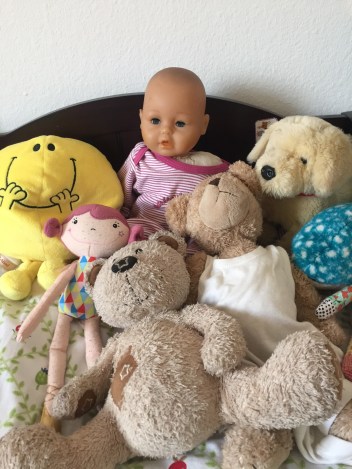
Then one morning I suddenly had an idea. I decided to wake her up 15 minutes earlier than normal. Before waking her, I got every single soft toy she owned and put them around the edges of her bed. Then I found a balloon. The toys started ‘singing,’ ‘’welcome to the bed party, it’s a bed party,’’ and dancing as my daughter slowly woke up. Then they started bouncing the balloon round, and they bumped the balloon on my head, and I would start complaining, ‘’hey toys! Why are you having a party, and stop bouncing that balloon on my head!’’ My daughter laughed at this, and that’s when I noticed her mood shifting from sleepy grumpiness into fun and joy.

Then toys started bouncing the balloon too high and I would complain about that. My daughter laughed some more.

Then I started introducing the idea of my daughter getting dressed, by her toy banana asking if she could get dressed now. There was still a bit of grumpy reluctance on her face so instead I lined up the toys, to get dressed by banana, then banana would throw them to to the other end of the bed, saying ‘’hey, you’re not the one I need to get dressed for playgroup! Let me try again.’’

After we went through the whole line of toys my daughter happily let the banana get her dressed. We ended up with lots of extra time, and my daughter was co-operative through the rest of our routine.

I suddenly had the revelation, that my daughter can be a morning person! She just wants a morning full of play and fun, not chores and drudgery. And we can get things done in playful way! I also realised that my daughter’s complaints about being ‘tired’ were more about disconnection, and her mood, than about lack of sleep. A few minutes less sleep, meant a more connected child. Everyone was happier, and she could catch up on her sleep later.

You could try a ‘bed party’ one morning with your children. It doesn’t mean you have to do so much fun and laughter every day, but it’s great to try if things have been getting serious. Then you could just add in a few giggles wherever and whenever you can. Perhaps have a soft toy get your child dressed, or a toothbrush the flies out of the bathroom instead of into your child’s mouth. Maybe when you serve breakfast the plates and cups start ‘jumping’ off the table saying that they don’t want to be eaten. You could set up some giggles before your children wake by having toys ‘wearing’ your children’s clothes when they wake up. Then you can act all confused, because they aren’t the ones needing to go out.

You might want to set a timer for ‘playing-getting-ready-time’ when you can add lots of laughter, without focusing on clock watching. Then after the timer gets off, you can switch into more productive mode.

These games can take a bit of extra time, but in the long run, they actually save time because when children are more connected they are more co-operative.

Let me know how these work for you!

Would you like to get regular Giggle Parenting inspiration in your inbox? Sign up to get my blog via email. The sign up box is in the top right hand corner of this page.

Have you got a problem you’d like a Giggle Parenting solution for? Leave me a comment or pm me via facebookand your challenge could be the subject of my next post! 

If you’d like an in-depth look at how laughter can solve behavioural challenges, then check out Playful Parenting by Dr. Lawrence J. Cohen. 

ohsoamelia

Giggle Parenting for Night Waking – Reader Question N.O 4

sleeping-child.jpg

Hi Kate, I loved your blog post on giggle discipline!

We were wondering if you had any tips for 2 years olds who wake in the night and only want to be comforted by one parent and not the other?

My daughter has a really close relationship with her Dad who does most of the daycare while I work four days a week. But if she wakes at night she cries out for me and screams if her Dad goes to comfort her. My husband used to be able to comfort her wonderfully at night – we think the switch might have happened shortly after she moved from a cot to a bed but we can’t really piece it together.

She also now strongly (and quite vocally!) prefers me to put her to bed at night. Interestingly if I’m away she won’t wake up or will settle very quickly with her Dad – it’s only a problem when I’m here! Thanks! ‘V’

Dear ‘V’,

Thanks for your message. Giggle Parenting is a great resource for helping children to fall asleep easily, and sleep through the night well. Scientific research has shown that laughter actually releases melatonin – the sleep hormone, so adding some giggles to your bedtime routine can be really effective.

Children view sleep as a separation, so laughter play can help give an increased sense of connection so children sleep through the night. Pillow fights, rough-and-tumble, or any ways you can bring laughter into the bedtime routine can be helpful. I wrote a post about sleep and laughter here which has some more suggestions. It might be something that  you or your husband could try so she gradually becomes comfortable with either one of you putting her to bed.

You can also try giggle parenting around the theme of separation at other times of day.  I have a list here of 20 playful solutions for separation anxiety. Some are great if you’ve got a few extra minutes before leaving the house for work, to have a bit of a giggle first. Every little bit helps.

This may help your daughter sleep better, but Giggle Parenting is probably only part of what’s needed. Sometimes upset feelings can bubble up about separation anxiety, which your daughter then attaches to a strong preference to having one parent with her. Sometimes it might actually be helpful to set a limit, and slowly work towards daddy putting her to bed or resettling her in bed.

One thing you could do is to tell your daughter earlier in the evening that daddy will put her to bed that night. Then perhaps you could have a fun, connected, pillow fight where the whole family gets involved.

Then you could gently set a limit with your daughter, and start to leave but listening to any upsets that arise. Crying is actually a healing process for children when there is an adult close by to give them cuddles and empathy. Through crying children can release stress and upset about underlying feelings. If your daughter gets to cry, and express how she feels about separation, while you are close to her, then this can help her to release the feelings that cause her strong preference to be with you in the night. Then she can feel safe and happy to be put to bed by either parent, and she will probably sleep much better too.

I have written a couple of articles for dad’s websites about how this kind of listening approach works. How Staylistening Builds Family Connections, and I only want mummy!

If you’d like to learn more about how listening to feelings helps with sleep you might want to check out my article 5 Sleep Secrets For Peaceful Nights.

I hope these resources help! Let me know how it goes 🙂

Kate

Would you like to get regular Giggle Parenting inspiration in your inbox? Sign up to get my blog via email. The sign up box is in the top right hand corner of this page.

Have you got a problem you’d like a Giggle Parenting solution for? Leave me a comment or pm me via facebookand your challenge could be the subject of my next post! 

If you’d like an in-depth look at how laughter can solve behavioural challenges, then check out Playful Parenting by Dr. Lawrence J. Cohen. 

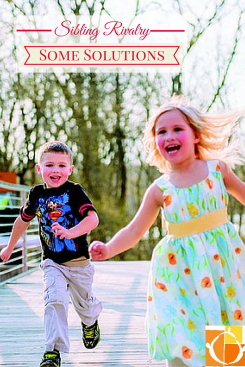
Giggle parenting With Squabbling Siblings – Reader Question N.O 3

Sibling-Rivalry

‘E’ and ‘C’ wrote to me to ask for some Giggle Parenting solutions for squabbling siblings. Here’s a few suggestions and links for further reading.

I’m actually the parent of an only child but what I realised very quickly was that my daughter would have her sibling rivalry moments with her best friend. I used to look after both girls, and I found laughter was my number one tool for dissolving tension between them.

One of the ways that was really effective was to diffuse the situation by having the two girls conspire against me instead of each other. So if they were fighting over a toy for example I would take another toy and hold it tight, declare it was mine, and say, ”I hope neither of you try and pull this off me. And they would have lots of fun wrestling it off me, letting go of all that tension between them by laughing.

Each time I babysat for my daughter’s best friend I’d cook them dinner, and one of their all-time favourite games was to get musical instruments from a drawer, and come into the kitchen and play them really loudly. I’d cower in the corner, exclaiming, ”oh no! Not those noisy instruments again!”

These scenarios really tick all the boxes for Giggle Parenting, the children are in the more powerful role, and they are united against the adult. Any situation you can orchestrate like this is bound to get your kids giggling.

Although I’m including a few ideas here, a lot of Giggle parenting will be spontaneous and in the moment. For example when my daughter didn’t want to hold hands but her friend did. I could see them both getting grumpy. I suddenly started waving my hand around and declaring, ”please no-one hold my hand!” and trying to run away. Immediately both girls were laughing and trying to grab hold of my hand, and very soon they were best friends again.

When things are all too much you might want to set up a pillow or water fight to release tension, but instead of having the siblings go against each other – have them fight against you. Declare how strong you are, and that no-one can knock you down with a pillow, or tell them you really don’t want to get wet.

For E who has a 4 year old and 16month old, one thing I found that worked really well with a younger toddler is to build a tower out of blocks, and then say to the toddler, ”I hope you don’t knock it down.” Then turn away for a few minutes and look back, and perhaps your toddler will knock it down and run away giggling. Who knows maybe the 4-year old will even join in too.

When children are squabbling, they’re getting into ‘non-thinking’ mode where they can’t always control their behaviour, they need us as the adult to step in, and give them the connection they need to get their thinking back on track. Giggle parenting is a great way to intervene before things escalate. I love this story from Hand in Hand instructor  Kristen Volk, about how she literally gets in between her two children and completely diffuses the situation.

There’s one time when Giggle Parenting isn’t a good idea, and that’s when children are crying, or really upset, and need someone to listen to them. Although Giggle parenting is great for releasing tension, we also need to be where our children are at in this moment. If they need to talk and vent and cry, then sometimes giggling can be a distraction that can make them feel as if they’re not being heard. So we can try to figure out in the moment if giggling is appropriate or not. Crying is also a natural way to release tension that can get in between sibling relationships, so if we can empathise and hear each child’s concerns then this can really help too.

I hope these suggestions help. Have fun giggling!

If you’re looking for more help, check out this fabulous collection of Sibling Rivalry links from Hand in Hand parenting. You can also try their online self-study course Taming Sibling Rivalry, which is full of great solutions.

For further reading Larry Cohen’s Playful Parenting is packed full of Giggle Parenting ideas. 

Do you have a family challenge you’d like to find a Giggle Parenting solution for? Leave me a comment here or PM me via facebook

Giggle parenting with an aggressive toddler? – Reader Question N.O2

scare

Dear Kate,

I liked your giggle parenting article and it said at the bottom to contact you with any issues needing a resolution.

My 22 month old boy has suddenly become aggressive and violent especially towards me. If he falls he turns and hits me. If he wants to feed he hits and headbutt. Anything not to his liking he lashes out repeatedly. I’ve tried ‘sportscasting’ I’ve tried telling him it hurts and makes mummy sad. I’ve tried restraining him gently b I’ve tried removing myself and walking away from him for a few minutes. All just makes him hit worse.

He wasn’t like it before last week. He’s always been affectionate and sweet. Now he can be sat quietly then out of nowhere explodes with frustration and fury. It’s really distressing me. Is there a gentle way out of iy? Giggling wouldn’t make light of a serious issue? Please help, From ‘E’

Dear ‘E,’

thanks for your message. I had a similar experience when my daughter was 1 year old, she suddenly started biting me out of nowhere, and it became a daily occurrence.

I’m glad you’re reaching out for help as it can be really great to help our children’s aggression problems when they’re still young, and this reduces the likelihood that they will lash out at others as they get older. It’s great that you are thinking about gentle ways to deal with it, and explaining why you don’t want to be hit.

The Hand in Hand parenting approach that I teach is based on the observation that our children are all naturally, good, loving and co-operative, and they really don’t want to hit us, their siblings or their friends.

Aggression usually happens when a child feels scared. It could be a relatively harmless situation, — like a small fall at home that triggers your son to hit you, or with a child at pre-school who has a toy snatched from him. These small everyday moments can trigger bigger fears, often from times in our child’s early life, where they felt scared of overwhelmed. It could be that our child had a difficult birth, or some medical treatment. Or it could be just the accumulation of stresses from living in a busy, fast-paced world that causes children to get full up of feelings that sometimes come out through aggression.

Giggling can help, and rough and tumble play is particularly helpful when it comes to aggression, because it gives them an outlet for the aggression. In this article here I’ve got 25 ways to heal aggressive behaviour through play and laughter. It also has some tips for what to say in the moment, and how to set a limit when our child is aggressive. I explain that children can differentiate quite well between what is play and what is real, so we can play around the topic of aggression while still setting limits on ‘real’ aggression.

As well as laughter and play, listening to children’s emotional upsets is also a really important factor. When children get to cry freely with a loving adult to listen and offer cuddles, rather than distracting them and trying to stop the tears, then this can really help them to release any stress or tension that comes out through their behaviour. You might find that after lots of laughs and giggles, you son might fall over, and have a big cry about a small hurt. This can be a sign that he’s healing from a backlog of feelings not related to the present moment, and that listening to him can help him to release the feelings so they don’t come out in aggression.

Sometimes this kind of play and deep listening can be really challenging for us. It can sometimes trigger memories of times when people were aggressive to us as a child, and it can take a large amount of patience to keep playing as long as our children want to, and listening when they get upset. Listening partnerships, can be really helpful in giving us lots more stamina for playing and listening.

For more information about this listening approach works you might want to check out Hand in Hand Parenting’s self-study course Helping Children With Aggression.

I hope this helps! Kate

Have you got a parenting challenge you’d like a laughter-solution for? Leave a comment below, or pm me via facebook

Reader Question: When Attachment Parenting isn’t enough

HeavenlyBundlePouch

Dear Kate, the article you shared recently When Attachment Parenting Isn’t Enough was perfect for me and just what I needed.

My little girl is 21 months. I have tried to follow AP/gentle parenting methods since birth. I still breastfeed and baby wear and sleep in same room as my daughter. However she is at an age where recently it feels like this alone is not enough. I recognise that I have that panic feeling when she is upset or having ‘tantrums’ of needing to stop her crying or feeling like a failure if I can’t.

I read about connecting parenting and feel like it can complement an work alongside ap/gentle parenting and also take things to the next level as my daughter grows. It all makes sense about needing to release emotions and fears, as I as an adult need to do this too. However what I am confused with is How to do it? How can I do this without seeming like I’m ignoring her or without seeming like I marrying to stop her? Also how do I communicate this to close people alongside who are also a part of our lives? I was so excited to see the title of your new book, but then saw its not coming out until October! I will definitely be getting it, but do you have any tips in the mean time? Thank you in anticipation. From F

Hi ‘F’, thanks for your message. I’m really please the article resonated with you. I really want parents to know that crying is so often not a reflection on your parenting. Sorry the book’s not out till October!

The approach I write about is called Hand in Hand parenting, and if you go to their website you will find lots of resources about listening to feelings, and how that can be helpful.

To answer your questions, the approach we have to listen to crying is called staylistening, so that means you always stay with your child, holding them if they want to be held, giving them lots of eye contact, and connection so they don’t feel ignored. If children cry on their own, it’s not a healing kind of crying, because they need the presence of a calm, loving adult, to help them get out of a distress state, and to release their feelings.

Here are a couple resources that might help. There’s a free tantrums booklet from Hand in Hand parenting Secret To Transforming Tantrums, one on Setting Limits,
and here’s an article which explains a bit about Parenting From Different Pages — there’s a few good tips in there for explaining the approach to others.
Hope they are helpful 🙂 Kate

Would you like a Hand in Hand parenting solution to your parenting challenges? You can pm message me via facebook or leave a comment on the blog. 

Giggle Parenting Archives

giggle2.jpg

Here are my Giggle parenting (playlistening) inspiration posts for many of your family challenges. Follow my blog by email (using the button on the top right hand side of the page) so that you can collect all the laughter inspiration you need to make family life go smoothly!   

Laughter solutions when you’re having a challenging day

Laughter solution for screentime

Getting your toddler dressed 

For when it’s challenging to leave the house

Tidying up with a clingy child around

Have fun tidying up with your kids

15 playful ways to help shy children shine

Game for a clingy child who doesn’t want to walk

Laughter is the best medicine

Fear of doctors

Aggression

Picky Eaters 

Separation Anxiety

How laughter helps with sleep 

Travelling with young children

Hairbrushing

 Are you struggling with a parenting challenge that isn’t on this list? Contact me here, and your challenge could be the subject of my next blog post!