Giggle Parenting: The Best ‘Discipline’ Tool Out There!

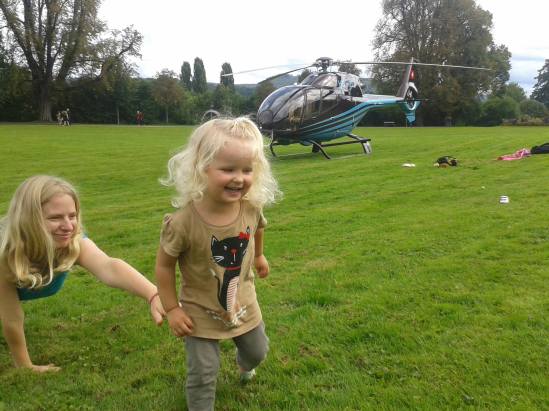
chase

Laughter is the shortest distance between two people– Victor Borge

Ever since she was old enough to leave me my daughter has gone shopping with her dad on Saturday mornings. She loves it. But one morning when she was two years old she absolutely refused to get dressed. It was clear she really did want to go out, but as soon as I tried to put her clothes on, she would wriggle and run away. I tried reasoning with her, talking in a serious voice, and explaining that if she didn’t get dressed it would be too late to go, but it didn’t work.

I’m sure most parents of toddlers are familiar with a scenario like this. Our child behaves in a way that seems completely irrational. But what can we do about it? The shouting, grumpy approach may work, but we may also get a sinking feeling that it isn’t the best way to go about parenting.

Suddenly I remembered my training as a Hand in Hand parenting instructor!

In that heat of the moment, like any stressed out parent, I sometimes ‘forget’ there is a more effective method. All that rationalising and reasoning with our kids is not the language of children. The language that gets through to children is one of play and laughter.

I began putting my daughter’s socks on her hands and her trousers on her head. She laughed a lot, and I kept repeating this game as she continued to laugh. Then I got her teddy dressed in her clothes, picked him up and said, ‘’Come on R it’s time to go!’’ Then when I got to the front door I would look at the teddy and say, ‘’Oh no! That’s not R that’s Teddy!’’ She would laugh and laugh at my ‘mistake.’

After a few minutes of playing like this she was trying to dress herself. A short while later she left with her dad and I was enjoying a nice, quiet morning to myself.

Believe it or not, toddlers are not completely irrational beings. When children feel closely connected to the adults around them they are naturally, good, loving and co-operative. They don’t actually want to make our lives difficult. They want to get on well with us, and co-operate with daily tasks.

However sometimes their feelings get in the way. When children experience stress or upset, they can no longer feel that sense of close connection. The limbic – the socio-emotional part of the brain senses a kind of ‘emotional emergency’ and the pre-frontal cortex- the part of the brain responsible for rational, reasonable behaviour, can’t function well.

So when a child feels upset they literally can’t think clearly. They can’t listen well to our reasoning. Their behaviour may go off-track because they can’t think through what is appropriate in the moment. In a sense it’s like they’re misbehaviour is like a red flag that they’re sending out saying, ‘’help! I can’t think, I need some connection.’’

When our child is behaving in off-track ways, we literally can’t get through to them by trying to speak to the rational, reasoning side of our child’s brain. We need to speak the language of emotion. With this understanding of emotions we have to have compassion for our children. We have to say goodbye to the old behavioural model of punishment and reward. A lot of the parenting methods out there are about manipulating our child and getting a quick ‘fix’ in the moment. But in the long run these parenting methods actually make things harder because they don’t address the underlying emotional cause of the behaviour.

Luckily, giggle parenting does! It’s fun and simple, way to connect with our children when they are acting off track. And it works. Laughter is a way to release stress and emotions, it lowers blood pressure, releases feel-good endorphins and builds connection between parent and child. When children get well-connected again, they can think and co-operate with us again.

Giggle parenting can be applied to many of the power struggles we face as the parent of a toddler. I remember when my daughter went through a phase where whenever she was her pyjamas come out a bedtime she would make a dash for it, crawling across the floor away from me.

This was a sure sign she still had some energy ready from the rest of the day, need for fun play and connection go with the play, let her laugh and play (and factor in time for that in the bedtime routine, was a sure fire way to help her sleep more deeply (laughter releases melatonin the hormone responsible for sleep), and children sleep better when they feel closely connected to us.

A toothbrush that keeps getting ears, or noses instead of a mouth, or flys out of the bathroom and into random places.

Giggle parenting takes time, but it’s an investment of time. It’s investing in fun and laughter as the currency of parenting. When we sprinkle play and laughter amidst our daily tasks, life goes much more smoothly.

Bribes, rewards, and manipulation creates a more transactional relationship, where both parent and child are thinking about what they want to ‘get’ out of a situation. These short-term fixes also don’t address the underlying feelings that caused the behaviour.

Giggle parenting strengthens the connection between you and your child. laughter and play, is about building the relationship, and releasing the feelings that get in the way of your child feeling closely connected to you.

It means that you save time in the long run, because children won’t need to giggle to get everything done. so when you ask them to get dressed they co-operate without a fuss, at least- most of the time!

They internalise the deep sense of fun and love and connection they have with you. And a laugh and a fun today, can cement the close connections, to stay close to your kids beyond toddlerhood, into the teenage years and beyond. Laughter is how we build relationships.

Disclaimer! Sometimes parents warn children away from laughter play. We all know the saying, “It’ll all end in tears.’’ It’s worth bearing in mind that if our child gets upset shortly after laughing a lot (or the next day), it’s not necessarily a sign that there’s anything wrong in the present moment.

Play and connection give children the sense that we are available to listen to them, and they may bring up feelings that have been simmering under the surface. Tears have been found to contain the stress hormone cortisol, so  children, and even adults! cry for what seems like no apparent reason (or for a small and petty reason!), because they are releasing stress. It could be from an over-stimulating day or from any big or small upsets that they have experienced in the past.

Being there to listen and give your child warmth and empathy helps them tune in to your calm, loving state. They can release their feelings and regulate their emotions, as long as you stay with them offering cuddles when needed. It won’t be long until they’re giggling again!

For further reading Larry Cohen’s Playful Parenting is packed full of Giggle Parenting ideas.

Are you looking for some giggle parenting inspiration? Sign up to follow my blog for weekly ‘giggle games’ for all your family challenges. You’ll find a button to sign up in the top right hand corner of this page. Click here for the giggle parenting archives

Do you have a family challenge you’d like a laughter cure for? Just leave me a comment or connect with me via facebook and I can find a giggle answer for you!

Diary of an imperfect mum
Cuddle Fairy

thumbnailsize

Playlistening Inspiration N.O 9 – Screentime Giggles

IMG_1677 (2).JPG

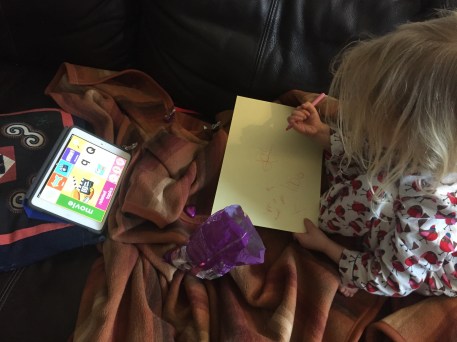
Screentime can be educational! My daughter is doing sums inspired by watching an educational app called Brain Pop. She’s not in school yet, so this is all her natural motivation to learn 🙂 

Screentime is probably one of the biggest concerns for modern parents. How many of us spend our days worrying about our children spending too much time watching screens, or get into power struggles trying to keep our children away from screens?

I think at heart our concern about screens is about connection. We want our children to feel well-connected to others and with life, so they don’t have to zone out in front of a screen the whole time. We also feel guilty about the times when we aren’t available for play and connection.

Recently my daughter and both had colds and were both tired, and all she wanted to do was a ‘TV special time.’ Special time is one way that we can make screentime a more connected activity, instead of using it as an ‘electronic babysitter.’ We snuggled up together, and watched a few epsiodes of Octonauts.

Then she wanted to watch Numberjacks, so I typed it into youtube. Except I decided to pretend I misttyped it, so I would read aloud what I typed – ”Numberbums! Hmm that doesn’t sound right. Let me try again.” She giggled. I then mistyped it again, ”Number pee pee” and ”Number poo poo,” She laughed again, as I kept getting it wrong. I repeated it with other mistakes again and again, until she said, ”Lets just type it right now.”

It’s a simple way to elicit some laughter, and is perfect if you have a child who likes saying rude words at inappropriate moments! They can release some of the tension around that ”attention-seeking” behaviour by laughing as you say the rude words.

Screentime can be a disconnecting activity for kids that can cause off-track behaviour, but when we sprinkle laughter here and there, we can help bring our kids back to connection. After we played this game my daughter watched one episode of ‘Numberjacks’ and then she asked for a ‘playing special time.’ Sometimes a little laughter is enough to let our children know we are there.

Playlistening is one of the Hand in Hand parenting tools for building deeper connections with our children. You can read more here.


When Attachment Parenting Isn’t Enough

HeavenlyBundlePouch

I first learnt about the concept of attachment parenting when I  was pregnant with my daughter. I decided that of course I would do all of the 7’s b’s of attachment parenting, including, breastfeeding her, carrying her in a sling everywhere, and bedsharing. It seemed like attachment parenting was the perfect antidote to all my fears about bringing up a happy child who would grow into a well-adjusted adult. 

As my daughter got older, it was no longer easy to carry her in a sling due to health issues, and I remember the pain and upset that I could no longer do attachment parenting ‘right.’ I worried that somehow my daughter and I were less-attached. I was a new mum who’d never done this before, figuring out the best way to parent in an information over-loaded world.

Attachment parenting was great, but I soon began to realise that beyond the baby stage, I’d need to do much more than simply hold my child close. What did attachment parents do as their children got older?

When I discovered Hand in Hand parenting I started considering the missing piece of this attachment puzzle – emotional connection. I began to read articles like this one about how children’s hurt feelings can get in the way of them feeling connected to us, even when we’re right there next to them. I began to understand that sometimes physical closeness can even be a way that children can stuff down their feelings, clinging to us, rather than working through their feelings, so that they can feel that it’s safe to explore their world.

Attachment parenting can make us feel like it is our responsibility to make sure our babies never cry because there are stories about other cultures where babies are happy and contented all of the time. We start to feel like it’s our job, to ‘cheer our babies up’ and bounce and ‘shhhh’ them because we want to be the best parents we can possibly be. Every time our babies cry, we can go into a wild panic that they are not attached enough and it’s our fault.

It was such a relief to me when I got a different perspective, when I learnt about the healing power of tears. Sometimes there will be times when our babies and toddlers cry, and that’s okay. Actually it’s more than okay. We can figure out the times when they have a need that we can fix, and we can also be aware that sometimes they may simply need to have a good cry, to release stress and tension with us there to give them cuddles.

In Patty Wipfler’s decades of work with Hand in Hand parenting she has worked with many different kinds of families, some who co-slept and some who didn’t. She found that what was much more important than physical proximity at night was the strength of emotional connection between parent and child. A strong emotional connection can make children feel safe to sleep in another bed, or another room if that what’s works best for the family.

Learning about this was a revelation to me. We may not all be able to breastfeed, baby wear, or bed share, and as beneficial as these can be, they don’t work for everyone. What’s more important is our ability to be there when our child needs us, and to listen.

Would you like to get started with Hand in Hand parenting? Find out more about our Parenting by Connection Starter class

Cuddle Fairy

Giggle Parenting Inspiration N.o 8 – Tidying up Mistakes

IMG_1676

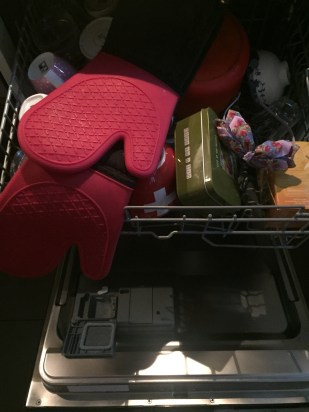
Yesterday my daughter and I did special time, and then I need to tidy up the kitchen a bit before going out. As soon as I started my daughter was complaining of being bored, and having nothing to do. I could of gently set a limit with her, and told her in a more serious way that I needed to tidy up, but my intuition was telling me that she needed to laugh.  I thought of another idea. I saw the oven gloves, hanging by the oven, and flung them into the dishwasher, and then said, ”oh no! What are they doing in there?”

She started laughing so I began repeating it with different objects, tea towels, food, tea bags, toys and even my mobile phone and a broom with the handle sticking out. The more outlandish the object, the more my daughter laughed.

Pretty soon, she’d forgotten all about that moment of boredom. I was able to tidy up in between the laughs as the game expanded and developed. As I put away stuff from the dishwasher I accidentally put mugs in the blender, or forks in the fridge, then I’d get a confused look on my face, and say, ”hang on, that’s not right! Let me try again.” In the end we did get everything tidied up, and the bonus was that after the laughter she felt much more connected, and getting out of the house was much easier.

I’ve been talking to my daughter about the ‘giggle games,’ that I write down to remember for later and as we were playing this one she told me ”you should write this giggle game down, this will make me happy.” It’s interesting as she gets older that she’s beginning to gain an awareness of the purpose of playlistening, simply to make our children happy! And when they are happy, life also becomes a little easier for the parents too 😉

Wondering what playlistening is?  Check out this intro here. And if you’re looking for fun ways to involve your children in the tidying up check out these 25 tips for having fun tidying up with kids 


15 Playful Tips To Help ‘Shy’ Children Shine

iStock Shy

Shyness is a label, often put on children, but actually it’s just a set of reactions to a certain situation. Who has a ‘shy’ child who can act totally confident and extrovert in some situations but not others? Have you noticed that sometimes it’s more about adults not knowing how to react to our children? They might try talking them and then label them shy when they don’t respond in the way they expect.

In her Ted Talk Susan Cain explains the distinction between shyness and introversion. How shy people have anxiety around social situations, whereas introverts naturally gravitate towards being alone. She explains that there is a bias towards extroverts in our society, and that we need to redress this balance to allow introverts the downtime they need. She talks about the creative gifts that introverts have to offer the world and why they need time alone for these gifts to flourish.

Our children’s early experiences and hurts can cause shyness as Patty Wipfler explains in her article here. So while we can embrace our child’s natural tendency to be introvert we can also help with any feelings that cause shyness.

 Playlistening is the perfect way to build our child’s confidence and help to release stress and anxiety around social situations. Below are 20 fun playlistening games that help our child release feelings of shyness. In playlistening your child gets to be in the more powerful role, the confident one instead of the shy one. Play these games for a long as the laughter flows  and watch shyness melt away as fun and giggles take over.

  1. Running away – In this classic game from Patty Wipfler we pretend that we are the shy one. We can pick up our child and run away from the situation, then slowly creep round the corner and have a look, with lots of exaggerated talk about how scared you are.
  2. Crazy Wind – In a variation on the first game, we act shy of a social situation and then a crazy wind comes along and tries to blow us there. We take our child’s hand and ask them to hold us so we don’t blow into the scary situation, then we can fling ourselves inside with our child and complain, ”oh no! Now that crazy wind has blown us here! Lets try to get back out. I hope it doesn’t blow us in again.”
  3. Shy Ladybug From Hand in Hand instructor Emily Gray Murray. A friend did an awesome game with a puppet – a shy ladybug. She and her daughter would help the shy lady bug explore the play space. If her daughter wasn’t feeling ready to try something or play with someone it would be the ladybug who wasn’t ready. Then her daughter got to show the ladybug how to do it.
  4. Pillow Fight or Roughhousing – Hand in Hand instructor in Romania Otilia Mantelers recommends doing something physical before a social situation because physical play with laughter is a great way to release stress and anxiety.  So grab your pillows for some fun pillow fighting or roughhousing. You might want to invite your child to knock you over, by saying, ”I really need to get up to go and see our friends now, I hope you don’t knock me down.” Or say, ”these pillows are stopping me from going to playgroup/school etc.”
  5. Silly Songs – If your child is getting nervous about going out somewhere you could try a few songs with actions as part of the getting ready process. The songs with physical movement can help your child build confidence and release feel good endorphins. For example here’s a list of silly action songs you could try with your child. Getting the moves wrong could give your child the perfect playlistening opportunity.
  6. Hit The Road Jack – My daughter was ill and missed her playgroup for a few weeks in January. Then she felt a bit nervous about going back. I put on the song Hit the Road Jack while we were getting ready and as the song was playing I would complain that it was making me put on my coat/scarf/hat etc, except that I would get everything wrong, I would put my daughter’s waterproof trousers on my head, my coat on backwards. I would go into the hallway complaining ”oh no! What’s this song going to make me put on next?” Then I’d keep dancing and running across the living room with new items of clothing complaining about how the song had made me put them on. I’d end up with hats on my arms and three coats on. My daughter laughed and laughed and got more connected and happy about going.
  7. Too scared to go in – We pretend to our child that we’re too scared to go in and invite them to push us into the room by saying, ”I really don’t want to go in there. I hope no-one pushes me in.” This game also encourages our child to release tension, by feeling physically strong and confident.
  8. Who are we going to see?  – This came from a discussion with my daughter about going back to the UK in the summer when I was telling her about all the places we were going and all the people we were going to see. My daughter told me, ”that’s too many people, and that’s too many places!” so I began to make up more places we were going. I’d say we were going to Spiffleland to see Oogalog and Bifflebosh, and Snookokland to see Bigabob and Hoodlebip. My daughter was in fits of giggles. This one might be good to try on the way to a new friends house or social engagement. We ask our child. ”Now, hmmm, who are we going to see?” I remember, it’s Kittlecop in riffraff land, is that right?” Then when our child corrects us we can say ”oh okay, I think I’ve got it now, it’s Miffmop who lives in Skinapland, is that right?” Our child will grow in confidence as they correct our mistake.
  9. Who’s Calling on The Phone? – Your phone rings, and you pretend to answer a real call. Act all shy and scared that someone you don’t know is on the phone. Say ”oh dear, it’s loola, oh I don’t know anyone called Loola, goodbye!” And ‘hang up’ the phone.  Repeat with different made-up names.
  10. Who’s Emailing Or Messaging? You could also play a similar game with receiving text messages, or emails, telling your child, ”I’ve just got a message from someone called Jigjog. Jigjog? I don’t know anyone called Jigjog. I’m going to delete this message right now, goodbye!” Or when you are writing out an email, say, I’m just going to write an email to ”bumbum,” and then catch yourself, ”oh bumbum! I don’t want to write to bumbum! I need to delete this right now.”
  11. Hands over eyes – From Otilia Mantelers. If you are in the middle of a social situation and your child feels shy about joining in then try this. Put both hands over your eyes and tell your child that you don’t want to look. Encourage your child to pull your hands away by saying, ”I hope you don’t pull my fingers away. I really don’t want to see anything!”
  12. Are they here now? – The following two games can help with shyness, or that kind of half-excited half nervous feeling that arises when we are expecting guests. They are lots of fun even if your child is rarely shy. Tell your child you thought you heard a knock and go and answer the door. Then say ”oh nobody’s there. Lets just look a little further.” Go outside on the front door step/garden/hallway, and tell your child you just need to take a look, and then walk along for a bit looking for them, then suddenly act all shy and say quick, lets run inside, they might be coming and see us!”
  13. Someone’s Knocking On The Door song – This morning we were just getting ready for our friend John who was coming to stay. I began making up a silly song, that went like this, ”someone’s knowing on the door now, is it John knowing on the door now?” Then I’d run to the door and open it and nobody would be there. My daughter would laugh and think how silly I was then.”Then I began singing, ”Someone’s knowing on the fridge now, is it John’s knocking on the fridge now?” and I’d open the fridge door. Then I’d sing that ”somebody’s knocking on the balcony door, John must have jumped off a cloud and landed on our balcony.” I repeated it with cupboard doors, the oven, dishwasher, freezer. My daughter found this very funny. You might even be able to try it without singing!
  14. Wild Teddy – We went on holiday recently with a wild teddy. The ‘wild’ teddy would do things like try to go up to the ticket collector on the train to get his own ticket, or try to check in at the hotel, or order drinks in a cafe. My daughter had a lot of fun chasing wild teddy to stop him from taking over and doing things for himself. This is a fun game to release tension if your child feels edgy around strangers who might interact with your child. Perhaps wild teddy can say, ”I’m just going to talk to the lady at the check in desk.” You can act all flustered and say, ”Oh no wild teddy! You can’t talk to her,” and then you can involve your child in chasing after him to stop him.  This can release some of the tension and embarrassment that occurs when strangers try to interact with your child.
  15. Wild Imaginary Friend – You can try a similar thing with your child by inventing a ‘wild imaginary friend.’ This gives you lots of scope and freedom as the wild imaginary friend can do pretty much anything. So perhaps the wild imaginary friend starts dancing at a playgroup or goes into a shop and tries to buy a new pair of shoes. You can have lots of fun and giggles chasing the imaginary friend and getting them to stop, and be more ‘sensible.’ This can help your child relax and feel safe to step out of their comfort zone.

I hope you find this list useful. For many of us parents using fun games in social situations can be a little nerve-wracking, especially if we’re on the shy side too. Listening time can  help us talk about what makes it hard, and our own chilldhood experiences of being shy. Then we can grow in confidence together with our children. If you’d like to share how you get on with these games I’d love to hear from you!

For more playful solutions to family challenges check out my Giggle Parenting Archives.

Playful Parenting by Dr. Lawrence Cohen is also packed full of ways to transform our parenting with laughter. 

What Happens When You Let Children Eat What They Want – Part 2

IMG_1665

You can read part 1 of this post here.

I made this menu for my daughter a while back before we started letting my daughter eat what she wanted. I felt that food just wasn’t working well for us. My daughter is a grazer and would constantly say she was hungry, and then ask me or her dad for a ‘list.’ Then we’d have to think of all the possible foods she might want and make suggestions. It got pretty tiring having to go through lists of foods the whole time!

So we got pictures of her favourite foods and made her a menu of things to choose from. Since my daughter is more of a snacker than a big meal eater there were lots of things we could get for her with zero preparation.

However the menu ended up being disappointing, when I realised that my daughter would immediately flick to the back of the menu where I had the ‘unhealthy’ options. Chocolate, ice cream and crisps. At this time I was only giving her chocolate sweetened with Stevia that I got when we were back in the UK, and I also made this delicious chocolate ice cream from avocados and bananas. More often than not these items were ‘out of stock.’ I didn’t always have the time to make ice cream, and the chocolate ran out. With crisps I didn’t keep them in the house, because unconsciously I was trying to keep her away from the ‘bad’ stuff, and try to control my own crisp addiction too!

The menu soon lost it’s appeal to my daughter when she realised that the items she wanted to choose weren’t freely available. She hadn’t picked it off the shelf for months.

However things have changed since we started to let my daughter eat what she wanted. Yesterday after a day’s travelling munching on french fries and croissants she came home, picked up the menu and asked for red and yellow pepper sticks and carrots!

The novelty of having chocolate hasn’t worn off yet. Every time she picks a chocolate bar for breakfast or a snack she looks at me with an uncomfortable expression like she’s waiting for me to tell her no, and suggest other foods that would be better options. But as I allow her to trust, and listen to the signals her body is giving, food isn’t a battleground anymore.

In the book Kids, Carrots, and Candy the authors say that when we have limited certain kinds of food in the past our children will eat lots more of it when we do relax the limits, but over time the novelty wears off. When children trust that we are no longer controlling what goes into their bodies, eating becomes out what children sense their body needs, rather than about power struggles.  We’re still on this journey, still learning to trust and let go of control. But when my daughter’s munching on carrots she chose without me lecturing her about nutrition, or making ‘healthy suggestions,’ then I’m at peace with where we are right now.


The Real Reason Our Children Misbehave

misbheaviour

A few weeks ago my daughter had to go to the doctor to get a blood test. A receptionist came to hold her arm as the doctor took the blood. He kept telling my daughter how ‘good’ and ‘strong’ she was because she didn’t cry.

All the while I was looking at her face and seeing the fear, confusion and pain she was feeling. I knew that she wasn’t keeping quiet because she was ‘strong’ but because she was too scared to express herself. I also knew that those cries that we weren’t hearing in the doctor’s surgery were going to come out later.

A week or so passed and my daughter started randomly just coming up to me and pushing me. It happened a few times before I thought ”this is different.” She’s been through a few aggressive phases, which I’ve always been able to help her out of thanks to Hand in Hand Parenting. Where had this one come from?

Then one day we were playing doctor, and she started pinching me and telling me it wouldn’t hurt. Suddenly I realised where the pushing had come from. This was her way of telling me about the fear and upset she’d experienced in the doctor’s surgery.

In all the parenting information out there, we hear a lot about setting firm limits so our children learn right or wrong, about using time out, or teaching consequences. However as much as children need limits (set in a compassionate way) they also need us to look a little deeper at the real reasons behind their behaviour.

Thirty years ago Patty Wipfler, the founder of Hand in Hand parenting made a revolutionary discovery. Guess what? Our children are born, naturally good, loving and co-operative, they don’t want to hurt each other, fight or have trouble sharing. It’s just that sometimes their hurt feelings get in the way.

When children experience hurt or upset, they need to process the fear and helplessness they feel. They have a natural healing process for doing so. When children cry stress hormones are released through the tears. Laughter, and connection, also play an important part.

Nowadays Patty Wipfler’s discovery is supported by the latest brain science. When children get upset, or disconnected their limbic system – the emotional part of the brain senses an ’emotional emergency.’ In those moments the pre-frontal cortex – the part of the brain responsible for rational behaviour, and reasoning, just can’t function well.  In these emotional moments they lack the ability to control their behaviour. When children are upset they literally forget that it’s wrong to hit, or to snatch toys from another child.

This is the real reason behind children’s ‘misbehaviour.’ The hurt feelings that get in the way of their thinking. It’s why time out and giving consequences are ineffective because they don’t get to the root cause.

Toddler aggression, or sharing struggles are often thought of as being normal developmental phases that we can simply wait for our children to grow out of. However this actually does our children a great disservice. My daughter pushing me wasn’t simply ‘normal.’ It was part of her way of telling me, ”hey, I got hurt, and I’m not thinking well now. I need to tell you a story about what happened through play, and I need to laugh and cry with you to get it out of my system”

Think of all the times are children get persuaded or distracted out of their tears by well-meaning adults before they’ve finished crying. Think of all the little, and big moments in their lives where they got scared, or confused. Stress in pregnancy, a difficult birth, or just the everyday experiences of being in this world. For a baby even a stranger picking them up, or coming close while they are lying in pram can be frightening. All these experiences can gather up and manifest as behavioural difficulties.

So when we set limits with our children on their behaviour, lets do so gently and compassionately. We can be firm about keeping everyone safe so siblings or friends don’t get hurt. We can also understand the brain science of why our children can’t control their behaviour, but that we can do something to help them out of it. We can tell our children, ”I’m sorry you feel so bad. I can listen to you if you need to cry.”

Need more help with aggression? Check out Hand in Hand parenting’s online self study course No More Hitting.

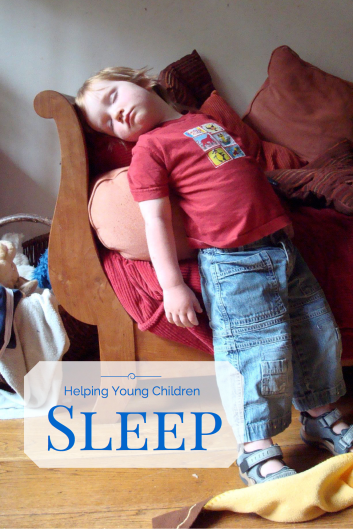
5 Sleep Secrets For Peaceful Nights

helpingsleep

Sleep advice for babies and toddlers usually comes in two forms. There is the strict ‘cry it out’ approach where we leave children alone till they learn we won’t respond at night, or the more gentle ‘wait it out’ approach where we simply wait until they naturally start sleeping through the night.

Neither of these approaches tend to be that affective. If we ‘cry it out’, research has found it’s simply a short term fix that results in more sleep disturbances further down the line. If we ‘wait it out’ our babies may also continue to wake regularly into the toddler years and beyond.

Most of the sleep advice out there doesn’t mention the major reason babies, and toddlers (and adults too!) have difficulty sleeping – stress and emotional tension. This unspoken cause is the reason that so many parents struggle with sleep.

Here are the 5 sleep secrets that most sleep advice doesn’t take into account. Follow these tips for peaceful nights.

  1. Children need a close sense of connection in order to sleep well. Children experience sleep as a separation, even if they sleep right next to us. They need a strong sense of connection in order to feel safe to let go into sleep. Try some special time as part of your evening routine. Spend 10-15 minutes 1-1 one with your baby or toddler, doing something of their choice. Whether it’s simply lying on a playmat together gazing at the ceiling or joining them in their explorations, being there while they take the lead helps them internalise a sense of connection to you, that keeps them feeling safe to sleep through the night.
  2. Upset feelings can cause babies and toddlers to wake – The emotional part of our human brain is fully formed even before a baby is born. So babies fully feel a wide spectrum of emotions, and experience stress and tension, during pregnancy, birth, and in the early days of their lives. Babies, and children have a natural healing process for releasing stress and tension through crying and stress hormones are contained in tears. When babies or toddlers  cry or tantrum for what appears to be no apparent reason, (or a very small reason!) they are often releasing stress and upset. Because the healing power of tears isn’t widely understood many parents try to stop their children from crying, through distraction, ignoring, or ‘shhhing.’ Sometimes there are times your baby just needs you to listen to them, and stay close. Doing so can help them release the feelings that cause them to wake at night.
  3. Laughter is the best natural sleeping pill – Laughter has been found to cause the brain to release melatonin – the hormone that induces sleep. It’s also nature’s way of releasing the stress and tension that interfere with sleep. Most sleep advice focuses on ‘winding children down,’ and this is where we make things much hard for ourselves. We actually need to ‘wind children up!’ and get some laughter and fun flowing so that they can naturally regulate their own sleep. If you don’t have giggles in your bedtime routine you should add them now!
  4. Early Waking isn’t inevitable – Early waking is so common for babies and children that many parents feel it’s just an inevitable part of parenting. Ever woken at 4am in the morning with your brain whirring and being unable to get back to sleep? This happens with children too. Listening to their feelings whenever they arise during the day can help them to process them so they don’t interrupt their sleep in the early hours.
  5. You don’t need a strict routine for your children to sleep well – Routine is often presented as the most important factor for getting children to sleep well. However as much as we have a natural rhythm to our days it’s not the ‘be all and end all’ when it comes to sleep. Connection and listening are much more important factors. When we connect with our children, and listen to their feelings on a regular basis both in the day and night, they will naturally sleep well.

Would you like to learn more about the Hand in Hand parenting approach to sleep struggles? Check out the online self-study course Helping Young Children Sleep 

Giggle Parenting Inspiration N.O 7 – Unsticking Limpets

IMG_1656

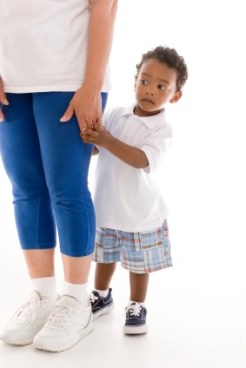
My daughter was going through a clingy phase, and we had invented a fun game to play to help her feel secure – I was the mummy limpet and she was the baby limpet and she had to stay stuck to me the whole time.

Then one day she was getting bored walking along. I sensed she had a lot of emotions attached to not wanting to walk rather than actual physical tiredness. Suddenly I had an idea. I suddenly got all unsticky, and wriggled my hand out of hers. Then I said to my daughter, ”oh no! Baby limpet, I’m unsticking, help quick catch me!” Then I’d run ahead of her, and tell her ‘quick, catch up with me!”

With a fun game to play she would fun forward chasing me. When we got stuck together I’d keep roleplaying being limpets, saying, ”phew, we’re stuck together. I hope we don’t get unstuck again. Please hold me tight!” And then I would keep repeating the game.

It’s funny how my daughter was complaining about being too tired to walk, but with a game she was able to run and chase me, so we got to where we were going much quicker. Kids have so much physical energy, but often find walking with grown-ups a bit too boring. A bit of playlistening can make it much more fun.

Wondering what playlistening is? Visit Hand in Hand parenting to learn more.

Playlistening Inspiration No.6 – Doctor Giggles

doctor'set

Does your child like playing doctor? It’s often the case that children try to work through difficult or traumatic experiences through play. Sometimes playing doctor can be a way to work through feelings about a difficult birth, or medical intervention in their early lives. Our children may not even consciously remember these incidents, but they can effect their overall wellbeing and confidence.

Bringing a bit of laughter to this kind of play using the Hand in Hand tool of playlistening helps children to heal. Through laughter they can work through their feelings, and release some of the stress and tension. It can also help build children’s confidence for when they really need to go to the doctor.

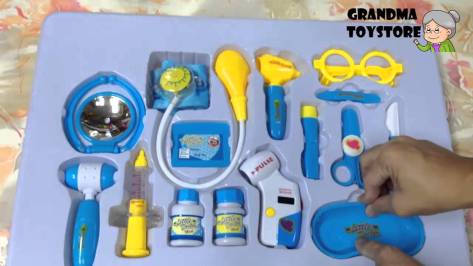
If your child had difficult early medical experiences it can be great to buy a doctor’s kit and see if this inspires any play. Then you can see if there are ways to bring laughter into the play. For example if you’re the doctor perhaps you can act silly and make mistakes. You could give yourself an injection instead of a teddy, or try to take the blood pressure and get all muddled up about what you’re supposed to do. Making mistakes helps your child to release tension, as the ‘all-powerful’ doctor isn’t so powerful at all.

If you child decides to treat you, perhaps you can try running away, but always get caught or, act all reluctant saying you don’t want to go to the doctor and would rather stay at home. If you’re playing with cuddly toys you might want to role play them ‘escaping’ from the hospital saying ”I don’t like it here, I think I’m going to go home.” Then your child can be in the more powerful role, catching the toy and bringing them back.

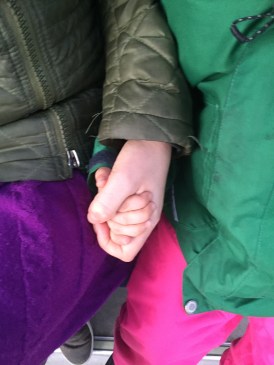
My daughter recently had a blood test, and today while we were travelling by train, she grabbed my hand, and put it into my rucksack strap and told me it had to go to the doctor. She started ‘pinching’ my hand, and I would wriggle around and object as she giggled and held me tight. I complained that it made me feel itchy and scratchy, so that I was acting powerless. It was clear to me that she was working on feelings about the blood test, this time in the more powerful role.

This play can build safety and trust for your child to show big feelings, about any times they were hurt or scared by medical intervention. If you notice that later after lots of giggly doctor play your child has a big meltdown or upset about something small, it’s possible that they are healing from their early experiences. In these moments, it’s good just to stay close and listen. You can read more about how children heal through play and crying on the Hand in Hand parenting website.