10 Ways To Use Special Time To Transform Your Day


specitla

Special time is a simple yet powerful tool that can transform family life. Simply tell your child they have 10-15 minutes to do whatever they like with you there to shower them with warmth love and attention.

Set a timer so you and your child has a clear idea of how long it will last. Don’t skip this step! There’s something magical that happens when we put the timer on, and set the intention to really give our child our complete  attention. No mobile phone checking or dinner preparing allowed!

Here are ten ways that you can use short bursts of special time to transform your day, and make things go more smoothly. Even 5-10 minutes can make a difference.

  1. First thing in the morning – If we have to rush out of the house to go to daycare and school then our focus can be on results rather than connection. But before trying to persuade our child to get dressed, brush hair and clean teeth, it can be really powerful to start the day on their terms instead. Connection builds co-operation with our children. It’s been scientifically proven. So if we spend 5-10 minutes doing special time, we’ll often find that it’s an investment of time that makes our kids more likely to co-operate when we tell them to get dressed etc. I love this story of how just 5 minutes can make a difference.
  2. Before doing household chores – When we do special time with our children something magical happens. They begin to internalise that close connection with us, so that after special time is finished they’ll be more likely to be happy to continue to play independently while we get on with a bit of cooking and tidying up. You can read more in  this story. This isn’t 100% guaranteed to happen all of the time. Sometimes our kids might be upset that special time has finished. This isn’t necessarily a bad thing. After soaking up our warm attention often children’s feelings of upset bubble up to the surface, and crying can be a healing process to let them go so they feel better connected to us. Staylistening through the upset can help us stay calm until we get to the other side.
  3. Coming home at the end of the day After a busy day out of the house, whether or not that involves being separated from us, our children may hunger for some warm 1-1 time with us. Special time can act as a bridge between the outside world and home life, helping our child to relax, and get connected to us again.
  4. When your child is whiney, moany or acting off-track – The brain science behind children’s ‘misbehaviour’ points to the fact that they don’t want to act in ways that drive us crazy. It’s just that when children feel disconnected from us, they literally can’t think. The emotional part of their brain, the limbic system senses a kind of ’emotional emergency’ so the pre-frontal cortex – the part of the brain responsible for rationalising and reasoning can’t function well. When children act off-track it’s like they’re sending a red flag saying, ”hey I can’t think I need some connection!” Giving special time during these moments is the ultimate unconditional connection, so our children know we will be there for them no matter how off-track they are. They can soak up our connection, and that along with the other Hand in Hand parenting listening tools is how their behaviour gets back on track.
  5. When you are feeling slightly off-track If you are not having a good day, and are feeling a bit low yourself, but still have a bit of attention to give, then special time can help the parent too! Just like our children long for deep, quality attention with us, we also of course long for those deep, connections with our children. It’s just that sometimes our own responsibilities, and stress can make it hard to give. If we take a leap, and offer a short 1o minute special time, then we get to soak up that warm sense of connection too. If even a short special time feels like too much, then we have a tool that can help!
  6. Before a playdate or when company are coming over Does your child have trouble sharing when their friends come over? Or do they struggle to let you have an adult conversation when extended family or your friends are round? Special time can help to give your child the warm sense of connection they need to be able to share you with others. Also when children are well-connected they can think well, they’ll be more likely to be able to share their toys naturally without us having to persuade them to do so.
  7. Before bed – Children experience sleep as a separation, and often it’s late at night that feelings bubble up that they need our help to deal with. Adding 5 or 10 minutes of special time to our evening routine can be really helpful for children who take a long time to fall asleep, or wake in the night. They internalise a close connection with us, so don’t wake in the night feeling disconnected and needing us.
  8. When you need your child to do something and they aren’t co-operating – If you need to leave the house, or brush your child’s hair and they just aren’t co-operating then special time can help you both take a breather from a frustrating power struggle. After a short special time, they may be feeling more connected and be more able to co-operate with you.
  9. If your child has been watching TV or using electronics – Sometimes the lure of a screen can make our children feel disconnected from us. They don’t seem to ask or need our connection as much while they’re having screen time, but later they may need an extra dose of connection with us. If I’m worried my daughter’s been glued to the screen a lot. I’ll offer her special time, and she often prefers this to TV! I just need enough energy myself to be able to give attention rather than rely on an ‘electronic babysitter.’ Listening time is essential!
  10. If you need to go out – So if you’re lucky enough to have the time and energy for a date night, or night out with friends, then special time can be the perfect way to say goodbye. A 5-10 minute dose of quality attention, can help your child to internalise that deep sense of connection with you, so even if you’re away for an evening or a night, they feel safe and secure.

I hope you’ve enjoyed this list of ways to make special time a part of your daily life.  Feel free to comment if you have any stories or questions. I’d love to hear how you get on with this wonderful tool!

Brilliant blog posts on HonestMum.com

Feeling and Thinking

waldspiellgrupee

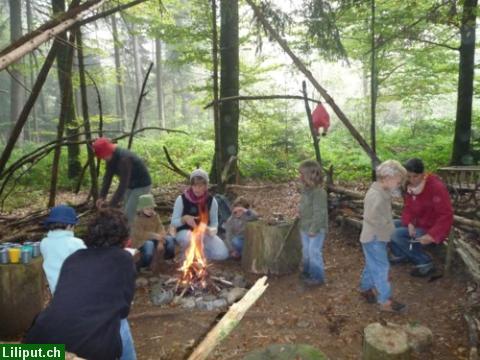
A few weeks ago my daughter R started at a German speaking forest playgroup. It’s a lovely group where they walk into the forest, build a fire, sing songs, and make crafts out of clay and natural materials. She looked happy setting off on the adventure for the first time without me, and returned happy and excited to see me again.

A few days later, my English friend told me she would be visiting the playgroup with her daughter K, (R’s best friend). They were thinking of starting in the next school year in August. A few days after that R said she didn’t want to go back to the playgroup. I wondered why as she’d seemed so happy with the whole experience. For a few days I talked about it with her from time to time, and she seemed adamant she didn’t want to go back, that she didn’t like the things they do there.

Although I was loving the time to myself, I didn’t want to go against my daughter’s wishes, so I sent a message to cancel her place. She had tried one forest playgroup before, that she hadn’t liked. It had been very different and much longer, but I became resigned to the fact that she just didn’t like forest playgroups!

I didn’t want to cancel the place entirely, as it really is a lovely group. So I asked R if she wanted to start in August instead when her friend K was starting, and she said yes. I then sent a message to the playgroup leader.

An hour later my daughter was swinging on the swing in our garden. I was pushing her really high, and she was having fun. Suddenly she said, ‘’I do want to go to the forest playgroup on Thursday!’’ I told her that I’d cancelled the place, that I wasn’t sure if she still could. She started to cry.

I’m so glad to have discovered the Parenting by Connection approach, and to know that when she does get upset, it’s a natural healing process, that releases stress and upset, and that it helps so much just to listen rather than fixing things immediately. So I hugged her and allowed her to finish crying, and said I was sorry I cancelled the place, I just thought she didn’t want to go. I didn’t rush off to sort out the issue immediately. In that moment I just concentrated on listening to her, as I felt that would help release whatever feelings were tied up in her indecisiveness about the playgroup. My mind was focused on listening rather than ‘’fixing’’ so it took me a few minutes to think about the fact that since I’d only just sent the message I could probably ask for the place back and it wouldn’t be too late, and Ruby was happy with that.

She finished crying, and as we walked back inside, she said to me, ‘’I think I should listen really carefully to what M says.’’ M is a German speaking girl she knows well from her dance class, and another playgroup they go to together. They seem to like each other a lot even though they can’t communicate verbally.

It always amazes me just how the brain works. That when we can release our emotions, in the natural process of crying, then we can often come up with new solutions to the problems we face. This was a perfect example of this. That the root of my daughter’s indecisiveness, was her feelings about being in an environment where she didn’t speak the language. The disapointment about the playgroup was like a trigger which seemed to release some of those feelings, so she could think more clearly and come up with a new plan – to listen carefully to her German friend, and start learning German.

Our children are amazing! They can often figure things out for themselves and come up with their own solutions, provided we are there, to help them through their emotional upsets.

After that my daughter was completely sure that she definitely wanted to go back. She enjoyed her second week at forest playgroup, and I’m so glad to have these tools, to help her overcome her anxieties, and worries, so that she can build confidence and resilience as she explores the big wide world.

What to do when your child ‘just’ wants your attention

beach2

We recently got back from a three week trip to the UK. Lots of travelling, and stressful at times, even if it was fun.

One morning, I started tidying up the house, as a friend was coming over. My two year old daughter immediately started ‘untidying,’ pulling books off the shelves and putting them on the sofa, and putting pillows in the kitchen. Suddenly all sorts of random objects appeared in random places, and all my time was taken up, rectifying the mess she was making! I felt frustrated, and only hoped my friend would forgive me for the state of my house!

This behaviour was certainly ‘attention-seeking’, but that didn’t mean it wasn’t for a good reason. I’d noticed in the evenings she’d take ages to fall asleep, sucking her fingers — a sure sign she was feeling tense. I suspected that the stress of the holiday was coming out in her behaviour. Making a mess became the theme of the next few days. She would pull all her alphabet letters off the fridge, and throw clothes onto the floor.

One mainstream response to ”attention seeking behaviour” is to ignore the bad and praise the good. But this doesn’t address the underlying upset feelings that are always beneath our child’s off-track behaviour. So these feelings are going to come up again at some point, possibly in worse behaviour, or our child will feel withdrawn and distance from us, angry, and hurt.

Attention is a biological need, the same as eating and drinking, and it literally builds a child’s brain, to have adults connecting with them. Contrary to popular opinion, children only ask for the attention they need, even if they ask for it in infuriating ways.

I responded by playing the role of the exasperated parent but in a very playful way. I’d exclaim”oh no, what are all these letters doing on the floor!!”, making sure she knew that I was turning it into a game, and not really annoyed. Then I’d pick all the letters back up and invite her to make mess again. Soon she was running around pulling books off the shelves, clothes out of my drawers, all the while giggling hysterically as I fumbled around making failed attempts to get her to stop.

Then when I sensed that my patience was beginning to wear thin, and the mess was starting to overwhelm me, I gently set a limit, and said it was time to stop playing. I asked my daughter to help clean up a bit, and she happily put books back on the shelf with me.

After a few evenings of playing this game, my daughter was back to her normal self, respecting our living environment and not making a mess just for the sake of it. She was always happy to help me clean up.

It might sound crazy to allow our children to do something ‘naughty,’ but this kind of ‘sanctioned disobedience,’ gets feelings out of their system, so it doesn’t result in larger off-track behaviours later on. If we can relax our limit of what is acceptable and have some fun, our children do understand it’s just a game. And afterwards, they’ll be more likely to co-operate with us, because they are no longer full of the upset feelings that were driving their misbehaviour. And they’ll be less attention-seeking because we’ve actually given them the attention they were asking for.

If you don’t want your child bashing up your favourite paperbacks, or messing up your clean laundry, then you can create a harmless scenario, and invite them to make a mess. You could put a stack of scrap paper on the table and say, ”I hope you don’t mess up my important paperwork!” in an inviting tone, or create a drawer of old junk, and say to yourself, ”I hope you don’t empty that drawer!”

Understanding the benefits can help us let go of those old ideas about behaviour being ‘just attention seeking,’ as can seeing the result of having a more co-operative child afterwards. Have fun, and monitor your own feelings, so you can end the game while you still have some patience left. Listening time helps too!

Remembering the language of children

Image

Yesterday morning we were due to leave the house and go to visit some friends. My daughter didn’t want to go and was quite adamant about it. I was surprised, as she normally loves visiting her friends, and enjoys going out. She’d had plenty of downtime at home this week, and I felt like we both needed to get out and be sociable. I was concerned that there were some upset feelings, making her feel like she didn’t want to leave the house. Should I listen to her, and just stay home like she appeared to want? I wasn’t sure I could face a long day at home without adult company!

I started explaining to her, explaining that we’d already said we would go, explaining that I didn’t want to let my friend down as she was cooking lunch for us, and explaining that needed to get out of the house. I started trying to persuade her to do the things she need to leave the house, like go to the toilet as she hadn’t gone all morning. No response.

Then I snapped out of lecture mode.  I held her hand and found myself leading her into the bedroom, saying in a mock serious voice, ‘we need to go to the toilet,” and then ”oh no that’s not the toilet!!’ She laughed. Then I would lead her to the sofa, and say the same thing, then to the balcony, a cupboard or outside. She laughed and laughed at my inability to find the toilet, and then when we went into the bathroom. she was happy to go. Five minutes later we were out of the house! She had a great time with her friends, with much laughter and giggling, as they all jumped on the beds together. By the end of the visit she was asking if she could stay there for a sleepover!

We adults can get serious sometimes. We have a lot of responsibility and weight on our shoulders. It can be hard to meet everyone’s needs at the same time. But when we can find the laughter, play, and connection, we can often find co-operation and a solution that works for everyone.

So if you find yourself slipping into lecture mode, just remember the language of children, and put on your clown hat instead!

The Wrong Way


Image

I went to the supermarket with my daughter, and it was so frustrating! She was constantly picking up things from the shelves, and running away from me, which she found hilarious. I was not so amused, although I tried to let her have a good laugh about pulling some toilet rolls off the shelves, because I know that she needed to release some emotions. But my self-consciousness was getting the better of me, and I quickly rushed us away to pay.

We hadn’t been laughing much together recently, and I was wondering when my ‘laughter inspiration’ was going to strike. It seemed like I just couldn’t seem to think of anything to get her laughing, and it was showing in her behaviour. I felt like I was constantly being serious, and setting limits, which wasn’t making us feel very well connected. I was feeling stressed by her whining, and other off-track behaviour, such as shouting ‘bum bum’ and ‘poo poo’ very loudly when we were in public!

On the way to catch the train home, my daughter started complaining that I was going the wrong way, because I’d chosen to go a slightly shadier route to stay out of the sun. Suddenly I had an idea, I saw a flight of steps, and turned her buggy, so we suddenly stopped in front of them. ”Whoops! We went the wrong way.” I said, and she started giggling. We carried on walking for a bit, and I saw an alleyway, so I turned down there, ”oh no, the wrong way!” I said, and she was giggling again. We carried on the game for the whole journey, bumping into lampposts and fences, spinning the buggy round in a circle, or tipping it up as we made a sudden turning and went the wrong way. My daughter joined in pointing out ways, and saying ‘lets try this way,” and every time I exclaimed, ‘whoops, it’s the wrong way!” she laughed and laughed. When we got home, we were still going the wrong way, bumping into the wall in the basement, and stopping suddenly in front of a doorway instead of the elevator.  We felt much more happy and connected.

Laughter is such a vital connection tool, and I’ve seen time and time again, that after my daughter laughs a lot, tears will come later. Like the rain after the sunshine, it’s all part of our innate natural healing process, to get rid of all the yucky feelings we can get filled up with. I’m not always filled with laughter inspiration, and it can sometimes be emotionally exhausting listening to my daughter’s upsets. But it’s a million times more rewarding than having to deal with the kind of behaviours that drive me crazy, and leave me feeling stressed and exhausted anyway! Listening partnerships help a lot, we need to release stress, with laughter and tears too.

If you have a toddler, and want to brighten up your day a bit, why not try going the wrong way? I’d love to hear how it goes. A variation of this game is if you are walking on a shopping street, holding hands with your child, you could try going into the wrong shop, turning and then stopping outside different shops. It’s even more amusing and a bit naughty if the shop has automatic doors, and the benefit in a bit of ‘prescribed naughtiness,’ is that it improves our child’s co-operation the rest of the time. So maybe next time that trip to the supermarket won’t be so frustrating after all.

And if you’re stuck for laughter inspiration too, then check out this list of laughter games, which is fantastic for young children.

“I didn’t want THAT cookie!” –A StayListening Guest Post from Sarah MacLaughlin

sweet boy

I had picked up my three-and-a-half year-old at preschool and we headed to a nicer café, you know, the kind where adult professionals are having coffee and potentially reviewing business documents. We were there to get a snack and spend some time together before heading home. Of course, the café was busy with people.

I lifted Joshua up and held him so he could peruse the cookie case and choose a treat. It was difficult for him to decide, and by the time he did I was nudging him and had grown a bit impatient. Eventually, we sat down; me with a lemon bar and him with a cranberry white chocolate cookie.

We sat, happily munching our snacks until Joshua’s cookie was about halfway gone. At this point he inexplicably stopped eating, set down his cookie, and said, “I didn’t want this cookie.”

“Oh, I’m sorry. That’s the cookie you chose.”

“I wanted the other one. This one is too sweet.”

“Well, you already ate half of this one.”

“No!!! I didn’t want this one!! I don’t like it!!!” As he flopped in his chair and the volume of his voice rose. I understood immediately that there would be no reasoning with my boy. I talked myself through some embarrassment with some reassuring self-talk—“Children are part of this community too. My three year-old is entitled to take up space and have feelings,” I repeated in my head.

I leaned in close and kindly told him,

“I’m so sorry you didn’t get the cookie you wanted. Next time you can pick a different one and I’ll be more patient while you choose. This is the only cookie for today.”

He started wailing and I calmly picked him up and carried him outside to our car. He kicked and screamed and I had to set him down in between my car and the next one to corral him. I crouched down to block him from running into the parking lot.

“I need to keep you safe,” I said.

Interestingly, I was concerned that people might think I had taken him outside to hurt, punish, or belittle him. I reminded myself that I was doing a good job. I got him safely into the backseat and then climbed in to join him.

He continued to kick and scream and he tried desperately to hit me. He said, “I want to hurt you,” “I hate you!” and, “I didn’t want that cookie,” over and over. I stayed near and blocked the blows while telling him,

“You are safe. I’m right here with you.”

After about fifteen minutes (that felt more like an hour) we mutually decided that he was ready to go back into the café because he wanted to eat the rest of his cookie. He also requested a glass of water to drink. We headed inside for both.

I was floored by his ability to reset and regulate once given the opportunity to offload a portion of big, messy feelings and restore his dignity with new choices and decisions.

Sarah MacLaughlin, LSW, is a certified Parenting by Connection Instructor near Portland, Maine. She is also a social worker, speaker, and author of the award-winning book: What Not to Say: Tools for Talking with Young Children. With a background in early childhood education, Sarah has worked with children and families for over twenty years. She is mom to a spirited five year-old boy who gives her plenty of opportunities to take her own advice. You can learn more about her work at www.sarahmaclaughlin.com.


Telling Your Life Story

Image

How we can overcome our present parenting challenges by telling stories about our past 

In Parenting by the Inside Out, Dan Siegal explains how the single most important factor that determines how well are children are attached to us, is our ability to tell a coherent life story of our own childhood. He explains the important fact that history does not have to repeat itself. No matter what challenges we experienced as a child, if we have made sense of our past, then it no longer comes to influence and dominate our present.

A coherent life story is one that is beyond simply labelling our childhood as ‘happy’ or ‘difficult,’ it is one that includes events and emotions, with an understanding of how both the positive and negative aspects of our childhood have formed us as adults, such as in this example (from this article by Siegal and Bryson)

 “My mother was always angry.  She loved us, there was never any doubt about that.  But her parents had really done a number on her.   Her dad worked all the time, and her mother was a closet alcoholic.  Mom was the oldest of six kids, so she always felt like she had to be perfect.  So she bottled everything up, and her emotions just boiled over anytime something went wrong.  My sisters and I usually took the brunt of it, sometimes even physically.  I worry that sometimes I let my kids get away with too much, and I think part of that is because I don’t want them to feel that pressure to be perfect.”

The good news is that history isn’t destined to repeat itself. If we can take some time to build a coherent narrative of our own childhood, we won’t pass down our emotional baggage to our own children.

If we take a look at any present difficulty in our parenting, we can almost always trace it’s roots back to our past, just as Patty Wipfler did in this story of how she began to form the Parenting by Connection approach. One important aspect of Parenting by Connection is the listening partnership, where two parents take time to talk and listen about how parenting is going. Since starting my first listening partnership when my daughter was 9 months old, I’m not sure how I’d live without them now! As we all know as parents, the tank of patience and energy to give our children is not infinite, but I’m always amazed how a few minutes of listening time can refuel me again.

A good way to start a new listening partnership is to tell your life story, following your mind’s stream of consciousness to talk about whatever emotions and events seem significant, stopping whenever you feel like laughing or crying, those places where we need some emotional healing.

I’ve recently started to tell my life story again, with a new listening partner, and it got me thinking, that our work of healing from the past is never over, that we can tell and retell our stories, using our present difficulties as keys, to unlock and release our past troubles. And each time we do we become a little bit lighter, a little more patient and present with our children.

Try taking turns to tell your life story with a friend, or find a listening partner through Hand in Hand parenting. Even better, Hand in Hand, have a new listening partnerships course, which explains all the nuts and bolts of how to make the most out of your listening partnership.

Getting Ready for Company: How tears made the difference!

A guest post by Angela Jernigan

It was a Sunday afternoon, shortly after we had moved to our new house. My four-year old daughter Leah had just come home from an overnight at her father’s house and we had two hours until our House Warming Party. We had been happily anticipating this party since our move. Leah was especially excited to share her new tree house with our friends. Leah had returned from her dad’s house chock full of feelings—she seemed sullen and sad and had lost all enthusiasm about the party.

I decided to help my daughter get in better emotional shape so that she would be able to enjoy our party. I asked her if she wanted some Special Time in order to help her really know that she had me. We did 10 minutes of Special Time, in which she wanted to hang out on my big bed and snuggle and wrestle. I offered lots of warmth and body contact. We did “flying airplane” and “trot-trot to Boston” and other physical games, with snuggles in between.

When the timer went off, I told Leah that Special Time was over and that it was time to start getting ready for our guests to arrive (I was already ready for the party, but wanted her to begin anticipating the arrival of our friends). She said that she only wanted to be with me and that she changed her mind about the party. I said, “You have a little bit longer to be alone with me, and the our friends will come over.” She insisted that she didn’t want to see anyone else. I repeated again (in a light, warm tone, while giving lots of eye contact) that soon lots of our favorite people would be coming to our house.

She became more adamant. “No! I only want to be with you! I don’t want anyone else!” She began to cry. I kept my words simple, saying that I was sorry it didn’t feel like what she wanted, but that our friends would be arriving soon. Soon she was crying mightily, telling me that she never gets enough time with me and that she misses me when she’s with her dad.” I stayed in close and told her, “You’ve really got me. And you get to be close to other people, too.”

Her cries were deep and hearty, with big tears streaming down her face, which was getting red. She cried like this for about twenty minutes, continuing to repeat that she didn’t want to see anyone else, that I was the only person she wanted. I reassured her again and again that she really has me, and that she has other people who love her, too.

After about twenty minutes her crying slowed down. I continued giving her eye contact, and staying in close. Suddenly her eyes brightened and she said, “Do you think Hazel will be coming to the party?” I said, “Yes!” She perked up and said, “Yay! Because I haven’t seen her all weekend!!”

Soon our friends did start to arrive, and Leah enthusiastically welcomed each person—squealing and hopping up and down as each new friend arrived. She played hard all afternoon—bringing her friends into her tree house, showing them her new bedroom, and the back yard. She thoroughly enjoyed herself, playing and laughing with friends for over three hours. That night she went to bed happily and easily, and slept deeply.

Angela Jernigan is `a Parenting by Connection Instructor based in the East Bay, find out more at her website here

What’s behind the ‘I wants’


photo-5

Yesterday we went on a beautiful overnight trip to a lake here in Switzerland. As soon as we got there my two year old daughter was saying, ”I want be carried,” ”I want food,” ”I want a drink.” There seemed to be no end to her ‘wants,’, and they all seemed to come in a rush. How could she be hungry, I thought, we’d just had a big lunch. And as soon as she’d claimed she was hungry, she was onto the next want, her need for food seemingly forgotten. ”I want to go home” she demanded, which was impossible, as home was three train rides away, and it seemed a shame not to enjoy the beautiful sunny day.

Recently when we’ve been out and about she’s been asking to go home a lot. It started when we tried out a new playgroup, and although the experience was exciting for her. it seemed to leave her feeling overstimulated, and needing down time. I wondered if it was a feeling of disconnection that was causing this barrage of ‘wants,’ and that what she really needed was to process some of her emotions.

”I want to ride” my daughter said pointing at a carousel we passed by the lake side. I thought about it for a moment, remembering how much she loved the carousel at the autumn fair in Basel, and how she’d spent weeks in imaginative play afterwards at home, making rides for her dolls and teddys. I also knew that sometimes when we want to help our children with their feelings, especially at times of disconnection, that it’s good to say yes for a while. So I bought some tokens for the ride, and we had a great time together. After the first go she didn’t want to come off, and I knew that a tantrum was coming. But the ride was quite short, and I didn’t want to interrupt her fun so quickly so I let her stay on for another two rides. Then I realised that it was actually quite expensive, and it was really time to stop!

As I told her it was time to go, she was clinging tightly to the car she was sitting in. She started crying. I didn’t want to seem like I was angry, and dragging her away, and usually I would wait till she felt better before we moved, but I did need to prise her hands away in a hurry, as we had to jump off before the carousel started going again. She was crying, as I went to sit on a wall by the lake. She kept crying, as I gently explained why we had left. I gave her time to finish crying, to get all of her upset out. I knew that although she loved the ride and wanted to stay on, it was about more than that. She’s often very flexible, and can understand and accept when we need to go, or when we can’t do something. But this time it was also about the upset feelings she’d been carrying with her all week, that were making her feel like she desperately ‘wanted,’ and ‘needed’ something, when in actual fact what she really needed was some warmth and connection to release her feelings. After crying, her kind of desperate ‘I want’ attitude had completely disappeared. We spent a lovely time, paddling in a pool by the lakeside.

So if you find your patience being tried by constant demands, perhaps see if your child actually needs a bit of extra connection. Special time, or doing something our child loves together is a great way to rebuild our connection with our children when they’re upset, or have experienced a separation from us. And what often happens is that afterwards our children may start to cry. Patty Wipfler refers to this as the ‘spoiled outing’ phenomenon, that amidst all the love and connection, and togetherness our children might have a meltdown. It may seem like our children are ungrateful or greedy or just spoiling everything by letting their feelings spill out over a day that was meant to be fun. But we can look at in a different way, that they’re soaking up our love and attention, and they feel safe to tell us how they’re feeling. They may not tell us in words. They may tell us by crying when we say no to an ice cream or tell them it’s time to go home. But I hope you’ll remember the message of this blog, that crying is a healing process, that our children shed upsets, and stress from the not so special times through tears. If we can wait till the end of the tears, without distracting or interrupting our children, but instead giving them lots of closeness, and connection, then we may find that the day, far from being spoiled, is even brighter than before.

Staylistening With An Infant – A guest post by Brooke March

Image

My sweet amazing baby had a scary thing happen 2 days ago and she is still processing it. It can feel so odd and confusing with a small baby but now I know this work and understand how healing it is for our babes to cry hard while we listen to them. I know this is what they NEED to do in order for the healing to happen. It is so clear this time around, her diaper is dry, she has a full belly, I hear the difference in her cry between being tired and needing to get some things out. I saw her get scared today a couple of times, things startle her, how can they not? She is so new and working hard to figure out this new world.

What is fascinating to me is most times she looks me right in the eye as she cries and then….after some time…she is done. She looks at me, she smiles, her way of thanking me for giving her the gift of full expression, and she often drifts off. More times then not, it is at the end of the day, like right now that she needs a big cry before bed. She has been a pretty great sleeper since the beginning and on the day she fell, she woke up over and over and over all night needing to cry hard. I would listen for a few minutes and then nurse her and help her get back to sleep. I knew she was not “done” that the feelings were still in there, but I also knew we needed to get some sleep. Her feelings would continue to wake her up until they were all gone, I knew this too, but it is hard to do this work in the middle of the night and I didn’t want our son to be woken up. So I just followed her lead, she would wake, I would listen for a little while, then we would go back to sleep, over and over and over. Every time helping her to chip away a little bit more of the fear.

With our son, we did everything we could to STOP the crying- we were “the happiest baby on the block” parents- opps!! The crying will stop once the hurt is healed and it gets healed through crying, crying releases a stress hormone in the body and helps it return to it’s natural healthy state. No baby cries for no reason, there is much to cry about for some. It is a delicate dance for infants and we always want to lean on the side of nurturance, but we also need to listen and tune in rather then offering the breast right away. Our loving arms, ears and presence is often what they are really needing and with our help, everything can heal. I am so happy to have these tools from day one this time around, the difference is profound and it has only been 3.5 months.

Further Resources

Sleeping Through The NIght  – Blog post on babies, sleep and emotional healing.

Helping Your Child Sleep – online self study course from Hand in Hand parenting

* Staylistening is the process of listening to our child’s emotional upsets, allowing them to cry freely until they feel better. You can read more stories about the healing power of staylistening here

Brooke March is a Parenting by Connection instructor based in Santa Cruz. Follow her on Facebook here where she shares wonderful anecdotes about life as a mother of two, all about staylistening with an infant, and how she helped her son adapt to having a sibling.